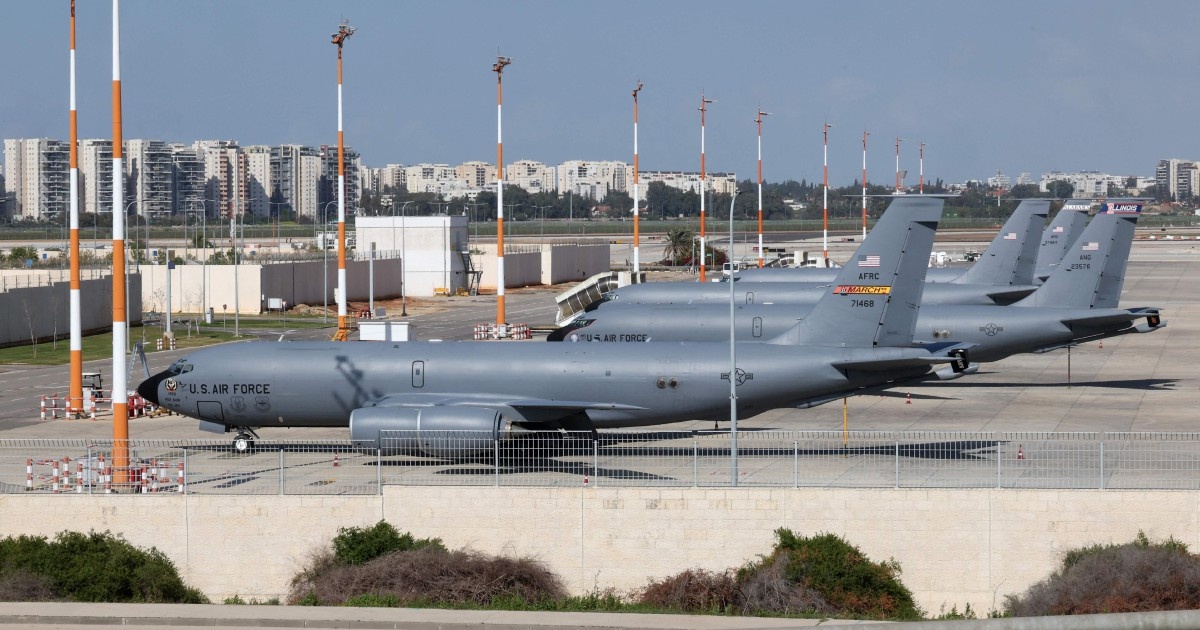
BAGHDAD — A US military KC-135 refueling aircraft crashed in western Iraq on Thursday, US Central Command confirmed, in an incident that involved another aircraft but was not caused by hostile or friendly fire. Rescue operations were immediately launched, while the second KC-135 landed safely. The crash occurred during Operation Epic Fury, the US-led campaign against Iranian targets in the region.
Read More: Iran-backed group claims downing of US refueling aircraft in Iraq
US officials said the downed aircraft carried up to six service members. The KC-135, built by Boeing in the 1950s and 1960s, remains a crucial component of the US air refueling fleet, allowing aircraft to extend missions without returning to base. The incident underscores the risks associated with ongoing US military operations over friendly skies in the Middle East.
A US KC‑135 refueling aircraft crashed in western Iraq, US Central Command said, highlighting the risks of intensified military operations across the Middle East https://t.co/r8pU3KsFHK pic.twitter.com/rHcmYEFXU6
— Reuters (@Reuters) March 13, 2026
Earlier, the Islamic Resistance in Iraq, an umbrella group of Iran-backed armed factions, claimed responsibility for downing the aircraft, describing the action as a defense of Iraq’s sovereignty and airspace. Analysts caution that such claims may further complicate the operational environment and heighten tensions in the region.
Since February 28, when the US and Israel launched strikes on Iran, seven US service members have been killed, and more than 6,000 Iranian targets have reportedly been hit. Reuters recently reported that up to 150 US troops have been wounded in the ongoing conflict. The crash comes on the same day two sailors were injured aboard the USS Gerald Ford in a separate, non-combat-related fire incident.
Read More: US military prepares final phase against Iran
The Pentagon continues to assess the crash, coordinate rescue efforts, and investigate its cause. Military officials emphasize that despite the incident, operations in Iraq and surrounding areas will continue as part of broader regional strategies.
The event highlights the operational risks faced by US forces during large-scale military campaigns in volatile regions, even when flying over allied or friendly territory.