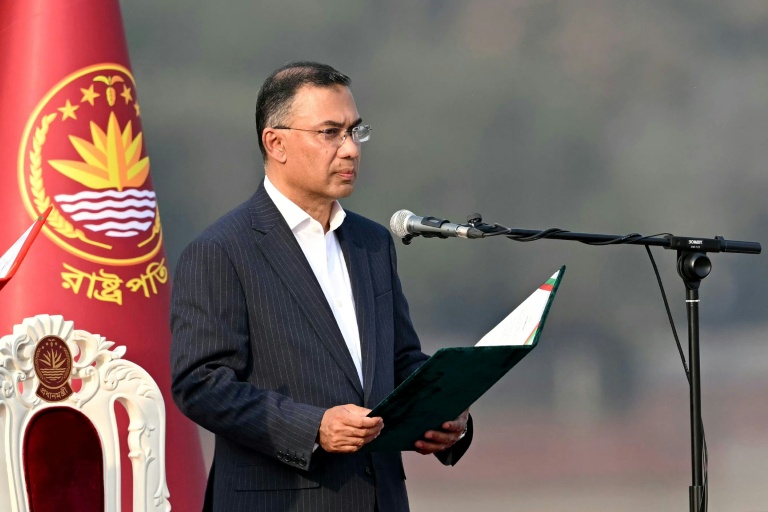
Bangladesh’s parliament convened on Thursday for the first time since the deadly 2024 uprising, marking the start of legislative activities under a newly elected government. The session follows last month’s elections, which brought Prime Minister Tarique Rahman and the Bangladesh Nationalist Party (BNP) to power after an interim administration led the country for nearly seven months.
Addressing lawmakers, Rahman emphasized that the new parliament represents the will of the people after “more than a decade and a half of fascist and subservient rule.” He called on all political parties to work collaboratively to restore democracy, stability, and growth in the country of 170 million citizens.
Read more : Bangladesh dominates Pakistan in ODI opener
Rahman criticized the previous government led by Sheikh Hasina and the Awami League for undermining parliamentary function and rendering it ineffective. Hasina, 78, is in self-imposed exile in India following a death sentence handed down in absentia for crimes against humanity.
The BNP-led alliance secured 212 seats in the recent elections, with the BNP alone winning 209, while the opposition, led by Shafiqur Rahman of the Jamaat-e-Islami-led alliance, holds 76 seats. New parliamentary leadership includes Speaker Hafiz Uddin Ahmad and Deputy Speaker Kayser Kamal, both members of the BNP.
Read more : Bangladesh’s BNP wins sweeping election majority, promises stability
The parliament building, damaged and looted during the August 2024 uprising, has been repaired ahead of the reconvening. Rahman pledged to make parliament the central platform for debate and policy-making, tackling issues such as economic stagnation, investor confidence, and rising energy costs following global oil price spikes.
Rahman’s message of unity and cooperation aims to bridge deep political divisions and foster national reconciliation after years of bitter rivalry. The session signals the government’s commitment to stabilizing governance, reviving economic growth, and strengthening democratic institutions across Bangladesh.