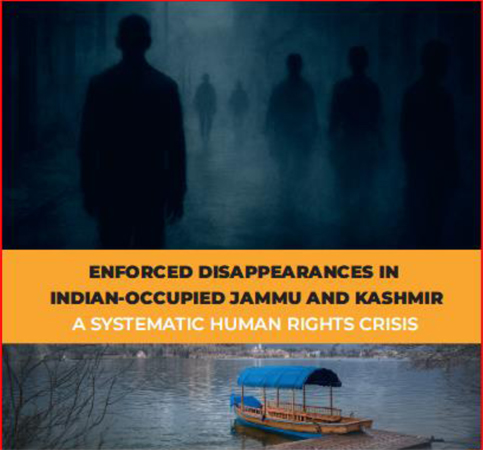
 Enforced disappearances have become a major human rights concern in Indian Illegally occupied Jammu and Kashmir(IIOJK), dating back to the 1947 partition. The region’s disputed status and Kashmir’s right to self determination have fueled decades of tension. Enforced disappearances in (IIOJK) are characterized by a systemic, long-term failure of accountability, largely driven by legal immunity for security forces, denial of the scale of the crisis, and the suppression of local advocacy groups. Reports estimate that over 8,000 to 10,000 individuals have disappeared after being detained by Indian security forces since the early 1990s.
* Institutionalized Impunity: The Armed Forces (Special Powers) Act (AFSPA) grants legal immunity, shielding personnel from disappearances and abuses. prosecution for
*Unmarked Graves & Denial: Thousands of unmarked graves found by rights groups are largely ignored by authorities, who often attribute disappearances to cross-border militant activity.
* Suppression of Activism: Organizations like the APDP and JKCCS, which document abuses, face raids, office closures, and imprisonment of personnel.
* Legal Limbo & Non-Cooperation: Thousands of “half widows” remain without closure, while India has failed to ratify the UN convention against enforced disappearances or permit international visits.

* Burial Policies: Post-2020 policies involving the secret burial of killed individuals have been described as “disappearance in death”.
Devastating Impact: Shocking Cycle of Torture & Trauma
This approach has fostered a culture of fear, severe psychological distress, and, according to reports, has left nearly 1.8 million adults in the region suffering from trauma. Enforced disappearances are a brutal tactic used by Indian authorities to suppress the Kashmiri freedom struggle. Victims are arrested, detained, or abducted, with their fate and whereabouts unknown. Families are left in uncertainty, and victims are denied justice and dignity. The Kashmir Institute of International Relations is an independent research and advocacy organization documenting human rights conditions and conflict related developments in Jammu and Kashmir. Exposed Indian brutalities destroying mental health of people of Kashmir.

8 The report links mental wellbeing with living conditions and guaranteed human rights.

8 Ishtiyaq Ahmad Khanday, aged 15, was killed June 29, 2010.His mother Jameela Banu was diagnosed with depression and PTSD.
8 Over 100,000 people died in three decades of armed conflict.
8 More than 8,000 enforced disappearances are documented in IIOJK.
8 Article 370 and 35A were revoked on August 5, 2019.
8 Post August 2019, Kashmir faced prolonged curfews and the longest internet ban.
8 One study reports 45 percent adults, about 1.8 million, suffer distress.
8 Depression affects 41 percent, anxiety 26 percent, PTSD 19 percent.
8 Around 47 percent of surveyed adults experienced significant traumatic events.
8 Childhood psychiatric disorders affect 22 to 27 percent aged 8-14.
8 Suicide attempts increased over 250 percent between 1994 and 2012.
8 Only about 10 percent of mental health patients receive treatment.
8 2011 Census records Jammu and Kashmir population at 12.5 million.

8 The region has only 41 psychiatrists, mainly in Jammu and Srinagar.
8 Mental services center on GMC Srinagar and SKIMS hospital.
8 There are 140 psychiatric indoor beds across ten districts.
8 District consultants number only five to six statewide.
8 IMHANS reported over 77,000 mental health patients during 2020.
8 Dr. Arshad Hussain cited rising anxiety and depression during COVID-19.
8 National Family Health Survey shows 61 percent women report reproductive problems.
8 National average for reproductive health issues stands at 39 percent.
8 Premature ovarian failure ranges 20-50 percent versus national 1-5 percent.
8 SKIMS study found 65-70 percent PCOS patients had psychiatric illnesses.
8 At SMHS and Government Psychiatric Hospital, 75 percent daily patients are women.

8 Ninety one percent widows surveyed never considered remarriage in Valley.
International Concerns and Gaps in Indian Response:

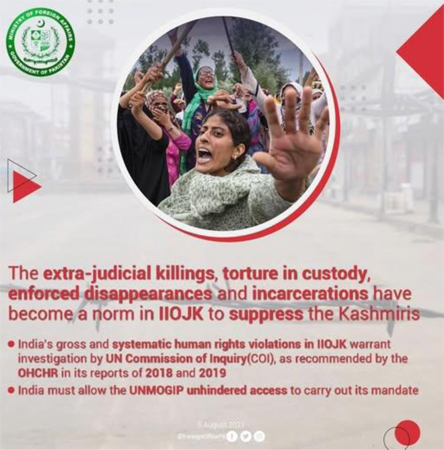
8 Enforced disappearance constitutes a crime against humanity under international law.
8 UN WGEID defines enforced disappearance as a continuing crime.

8 The UN General Assembly designated August 30 as the International Day of the Victims of Enforced Disappearances in 2011.
8 The UN Working Group on Enforced or Involuntary Disappearances (WGEID) has formally requested India to take action.
8 India signed the International Convention for the Protection of All Persons from Enforced Disappearance (ICPPED) in 2007 but hasn’t ratified it.
8 The Indian government rejected recommendations to ratify ICPPED in 2017.
8 India reclassifies enforced disappearances as administrative “missing persons” cases.
8 Rajya Sabha reported 7,151 missing persons in 2023.
8 Official data records 4,190 individuals remaining untraced in 2023.
8 Over 8,000 enforced disappearances were documented since the 1990s.
8 Jammu Kashmir Coalition of Civil Society reported thousands of cases.
8 “Missing persons” terminology implies voluntary absence or criminal victimhood.
8 Reclassification shifts responsibility away from alleged state agency.
Final Words; Modi Following Netanyahu Footsteps in IIOJK
The Modi government has been widely criticized for adopting the “Israel model” in IIOJK, which involves using state-sponsored atrocities and enforced disappearances to suppress the Kashmiri freedom struggle. This approach includes heavy surveillance, military dominance, and strict administrative controls, mirroring Israel’s tactics in Palestinian territories.
Reports indicate that Indian authorities have detained thousands of Kashmiris, and have employed tactics like pellet guns, resulting in numerous casualties including blindings pushing masses to trauma.
Growing warmth in Indo-Israel ties especially the recent visit of Indian PM to Tel Aviv just ahead of Israeli strikes on Iran, diplomatic support to Gaza atrocities and meaningful silence on assassination of Ayatullah Khamenei vis a vis brutal strike on Irani school causing martyrdom of more than 165 primary student girls reflects deeper affection of Modi with Netanyahu. The Modi led BJP government’s actions have been criticized by human rights organizations, with some drawing parallels between India’s policies in Kashmir and Israel’s actions in Gaza and the West Bank.