Pakistan on Thursday voiced concern over a newly announced uranium supply agreement between India and Canada, warning that the arrangement could have implications for regional strategic stability and the global nuclear non-proliferation framework.
Read More: India, Canada seal $2.6b uranium deal
India and Canada recently signed several agreements, including a 10-year nuclear cooperation deal, following a meeting between their prime ministers in New Delhi aimed at improving diplomatic relations after a period of tension. As part of the agreement, Canada will supply uranium to India under a deal reportedly valued at about $1.9 billion. The two countries also discussed cooperation in the development of small modular reactors and advanced nuclear technologies.
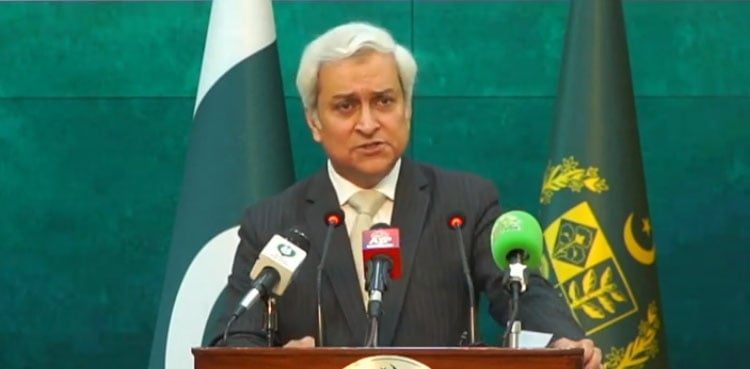
Responding to media queries, Foreign Office spokesperson Tahir Andrabi described the arrangement as another country-specific exception in the field of civil nuclear cooperation. He said the development was particularly notable given India’s 1974 nuclear test, which used plutonium produced in a reactor originally supplied by Canada for peaceful purposes.
According to Andrabi, that test had directly contributed to the creation of the Nuclear Suppliers Group (NSG), a global body designed to regulate nuclear exports and prevent proliferation.
“A state whose actions necessitated the establishment of global export controls is now being granted preferential access under selective arrangements,” he said.
The spokesperson also noted that India has not placed all of its civilian nuclear facilities under safeguards of the International Atomic Energy Agency, nor has it made binding commitments to do so under the new agreement.
Read More: Canada’s Carney set to visit India in March
He further argued that assured external uranium supplies could free up India’s domestic reserves for potential military use, potentially enabling the expansion of its fissile material stockpiles and nuclear arsenal.
Pakistan reiterated that civil nuclear cooperation should be governed by a non-discriminatory and criteria-based framework applied equally to all states outside the Nuclear Non-Proliferation Treaty.