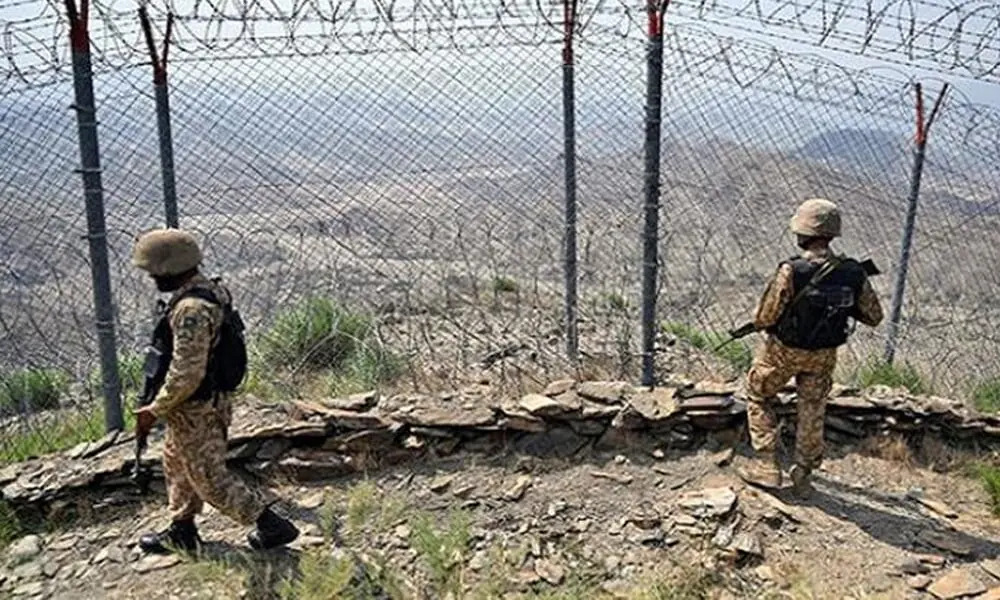
Heavy shelling and explosions along the Pakistan-Afghanistan border have forced residents to consider fleeing homes. Fighting entered its seventh day, raising fears of civilian casualties and widespread displacement. The escalation affects families on both sides and adds tension to an already volatile region.
Residents in Pakistan’s northwest, including towns near Torkham, reported that fighting often erupts at sunset during Ramadan iftar. Farid Khan Shinwari said families open their fasts amid danger, not knowing when shells might strike homes. On the Afghan side, families have also fled, with hundreds sheltering in open fields under makeshift tents. Officials estimate around 1,500 families displaced so far.
Read more: 331 Afghan combatants killed in Operation Ghazab lil-Haq: Tarar
The week-long conflict along the 2,600-km (1,615-mile) border has seen both sides claim heavy losses and ground gains. Pakistan says its airstrikes target Taliban support for terrorists attacking Pakistani soil. The Taliban denies aiding militant groups and reports shooting down a Pakistani drone while capturing seven border posts.
International mediation efforts are underway, with Turkish President Recep Tayyip Erdogan offering to help reinstate a ceasefire. Other countries’ diplomatic efforts have been overshadowed by concurrent Gulf tensions. Both sides continue heavy exchanges of fire, while civilian casualty numbers remain contested. Pakistan’s Attaullah Tarar says no civilian structures have been targeted, emphasizing operations against terrorist infrastructure only.
Read more: 464 Afghan Taliban killed in border Operation Ghazb lil Haq: Tarar
Earlier, Pakistan targeted the Bagram air base north of Kabul, claiming strikes hit ammunition and critical equipment. The base served as a key American command centre during the 20-year Afghan war. The border clashes highlight growing instability amid ongoing regional conflicts and international diplomatic pressure.