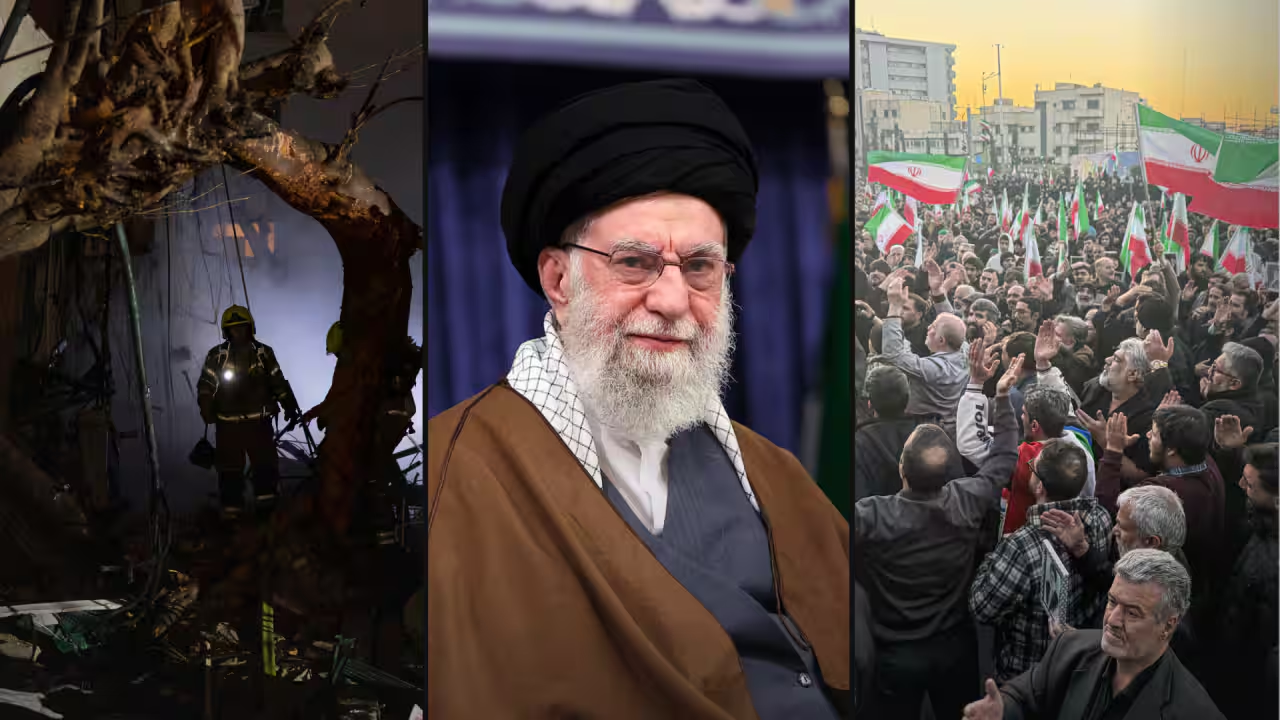
Following confirmation of the reported martyrdom of Ali Khamenei in joint US and Israeli strikes, Iran launched renewed attacks targeting American military bases in the region. Iranian officials announced immediate retaliatory action, stating that the response would continue as long as necessary. Explosions were reported in several Gulf cities, including Dubai, Doha, and Manama, raising regional alarm. Authorities across the affected areas increased security measures and monitored airspace closely after the incidents.
Read more : Trump warns Iran of unprecedented force after strikes –
According to initial reports, blasts were heard near strategic locations connected to US forces in the Gulf region. Emergency services in Dubai, Doha, and Manama responded quickly as security units secured sensitive zones and restricted public movement. While officials have not yet released detailed damage assessments, early statements confirmed heightened alerts across military facilities. Consequently, regional governments activated contingency plans to manage any further escalation.
At the same time, Iran’s government declared a 40-day period of national mourning along with a seven-day public holiday to honor the slain leader. Officials described the measures as a sign of national unity and collective grief during a period of intense confrontation. Public institutions suspended regular activities, and state media broadcast special programming reflecting the mourning period. Therefore, domestic attention focused both on national remembrance and ongoing military developments.
Read more : Joint strikes on Iran spark massive Middle East conflict –
Military analysts noted that renewed strikes against US positions could widen the conflict beyond Iran’s borders if exchanges continue. In response, American and allied forces reportedly increased defensive readiness at overseas bases, preparing for potential follow-up attacks. Regional air traffic authorities also reviewed flight routes to ensure civilian safety amid the security alerts. As tensions intensified, diplomatic channels remained under pressure to prevent further expansion of hostilities.
The latest developments signal a sharp escalation in an already volatile situation across the Middle East. Governments in neighboring countries urged restraint while calling for immediate de-escalation to protect civilians and infrastructure. Meanwhile, international observers continue tracking military movements and security updates from both sides. Ultimately, the combination of retaliatory strikes, regional explosions, and national mourning highlights the deepening crisis and its wider geopolitical consequences.