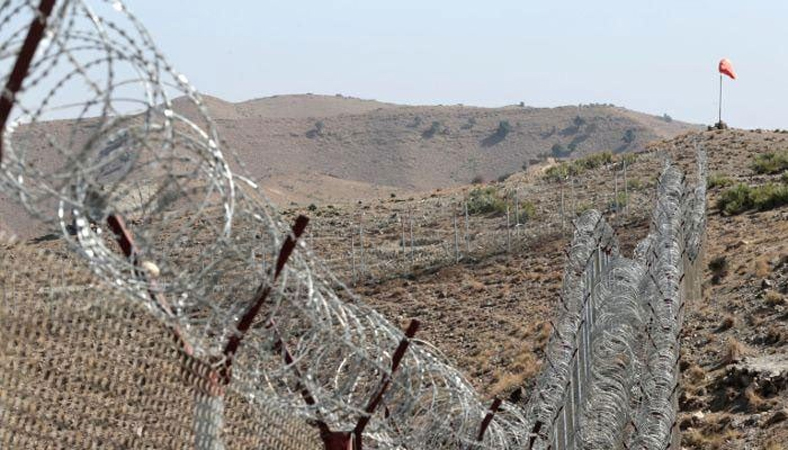
 Security forces responded immediately to stop unprovoked firing by the Afghan Taliban at the Pakistan-Afghanistan border on Tuesday amid intense friction between the two countries, according to the prime minister’s spokesperson.
“The Afghan Taliban regime initiated unprovoked firing along the Pakistan-Afghanistan Border in Torkham and Tirah sub-sectors. Pakistan’s security forces responded immediately and effectively, silencing the Taliban aggression,” said Mosharraf Zaidi, who is Prime Minister Shehbaz Sharif’s spokesperson for foreign media.
He warned that any further provocation would be responded to “immediately and severely”, adding that Pakistan would continue to protect its citizens and guard its territorial integrity.
The federal government has been consistently raising its voice on international forums against terrorist sanctuaries operating in Afghanistan and using its soil to launch attacks on Pakistan.
Following a series of suicide bombings, Pakistan carried out intelligence-based strikes on seven terrorist camps along the Afghan border early on Sunday morning.
According to sources, jet aircraft struck terrorist shelters in Bermal district of Paktika, where loud explosions were heard across the area. Facilities used by terrorists were reported heavily damaged.
In 2023, a UN report also revealed that the banned Tehreek-e-Taliban Pakistan (TTP) had established a new base in KP in mid-2023. The report shed light on close ties not only between the TTP and the Afghan Taliban but also with anti-Pakistani groups and al Qaeda.
The report further revealed that some Taliban members had also joined the TTP, perceiving it as a religious obligation to provide support.
Importantly, the UN report noted a significant increase in Afghan nationals in the TTP ranks. This supported Pakistan’s stance that a growing number of Afghan nationals were involved in suicide attacks in the country.
More recently, a UNSC report said that attacks on Pakistan by the TTP from Afghanistan have increased, endorsing Islamabad’s long-running complaints about militant sanctuaries across the border. The 37th report by the Analytical Support and Sanctions Monitoring Team, dated February 4, not only endorsed Islamabad’s stance that Afghanistan had become a sanctuary for militants who used its territory to launch attacks on Pakistan, but also came at a time when the country is facing a renewed spate of violence.
Separately, Russia’s Foreign Ministry has said that between 20,000 and 23,000 terrorist fighters are currently operating in Afghanistan, with more than half of them foreign nationals.
According to the ministry’s report, the total number of terrorists from international organisations active in Afghanistan is estimated at 20,000 to 23,000, and more than half are foreign fighters.
Key groups include ISIS, with about 3,000 members; the Tehreek-e-Taliban Pakistan (TTP), with between 5,000 and 7,000 members; Al-Qaeda, numbering between 400 and 1,500 members; the Islamic Movement of East Turkestan (ETIM), with 300 to 1,200 members; the Islamic Movement of Uzbekistan (IMU), now called the Islamic Party of Turkestan, with 150 to 500 members; and Jamaat Ansarullah, with around 150 to 250 members.
The report said the TTP, mainly based in Afghanistan’s southeast and east, continues to focus its attacks on Pakistan, heightening tensions between the two countries.