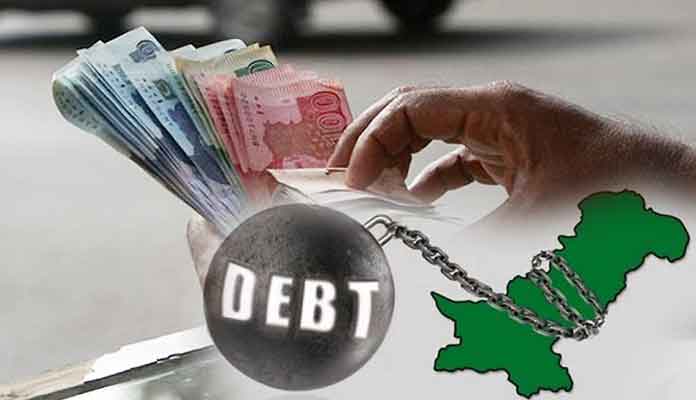
ISLAMABAD: Pakistan’s Ministry of Finance on Monday clarifies assertions regarding the country’s external debt and interest payments following a recent press commentary. Officials said the figures cited in the report require context to accurately reflect Pakistan debt profile.
Read More: Pakistan’s debt rises to $138 billion
The Ministry stated that Pakistan’s total external debt and liabilities currently stand at $138 billion, which includes public and publicly guaranteed debt, debt of public sector enterprises, private-sector external debt, bank borrowings, and intercompany liabilities. However, External Public (Government) Debt accounts for around $92 billion.
Pakistan’s External Debt Profile Remains Predominantly Concessional and Long-Term
The Ministry of Finance wishes to clarify certain assertions made in a recent press commentary regarding the country’s external debt position and associated interest payments. The figures presented…
— Ministry of Finance, Government of Pakistan (@Financegovpk) February 22, 2026
پاکستان کا بیرونی قرضہ زیادہ تر رعایتی اور طویل مدتی نوعیت کا ہے، وزارت خزانہ کا اعلامیہ
وزارتِ خزانہ نے واضح کیا ہے کہ پاکستان کا بیرونی قرضہ زیادہ تر رعایتی اور طویل مدتی نوعیت کا ہے، مجموعی 138 ارب ڈالر کی رقم میں نجی اور دیگر واجبات بھی شامل ہیں جبکہ بیرونی عوامی (حکومتی)…
— Ministry of Finance, Government of Pakistan (@Financegovpk) February 22, 2026
Of this public debt, nearly 75 percent comprises concessional and long-term financing from multilateral institutions and bilateral development partners. Commercial loans and long-term Eurobonds each represent roughly 7 percent of the debt. The Ministry emphasized that claims of Pakistan paying interest “up to 8 percent” are misleading, as the overall average cost of External Public Debt is about 4 percent due to its concessional structure.
Interest payments on public external debt rose from $1.99 billion in FY2022 to $3.59 billion in FY2025, an increase of 80.4 percent, not 84 percent as reported. The rise in absolute terms was $1.60 billion, not $1.67 billion. Specific creditors include the IMF ($1.50 billion, $580 million interest), Asian Development Bank ($1.54 billion, $615 million interest), World Bank ($1.25 billion, $419 million interest), and external commercial loans ($3 billion, $327 million interest).
The Ministry noted that the increase in interest payments is partly due to global monetary trends. Following the 2021–22 inflation surge, the U.S. Federal Reserve raised rates, keeping international borrowing costs high and impacting Pakistan’s debt servicing.
Read More: ‘Pakistan’s external debt profile remains concessional, long-term’
Officials highlighted that debt inflows since FY2022 have primarily come from concessional sources and IMF programs, which helped stabilize foreign exchange reserves during balance-of-payments pressures. The government reaffirmed its commitment to prudent debt management, transparency, and strengthening macroeconomic stability.