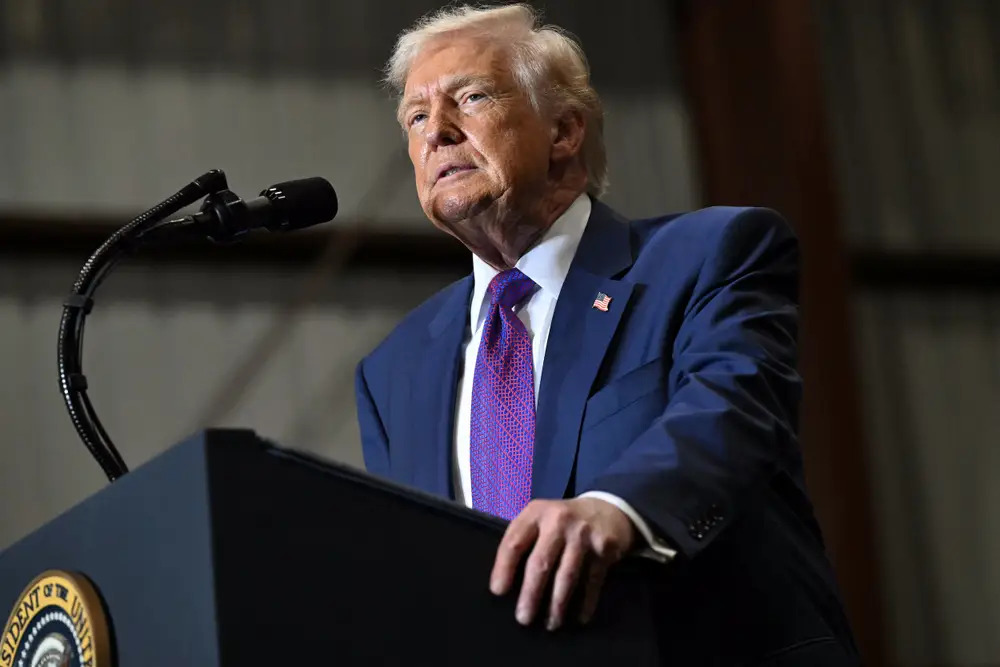
President Donald Trump expressed disappointment after the US Supreme Court struck down most of his tariffs, calling the ruling a major rebuke. This matters because it limits Trump’s ability to use tariffs as a key trade policy tool. The decision directly affects US trade strategy, importers, and businesses relying on tariff revenue.
In a 6-3 ruling, the Court said Trump exceeded his authority under a 1970s law when imposing sweeping tariffs in April 2025. Chief Justice John Roberts wrote that the president must have “clear congressional authorization” for such actions, which Trump lacked.
Read more: US top court blocks Trump tariff plan
Trump criticized the justices, saying some should be “absolutely ashamed” for siding against him. While the ruling overturns many tariffs, some imposed under other authorities remain valid. This significantly constrains Trump’s preferred method of broad, unilateral tariffs in trade negotiations.
Treasury data show the US has collected over $133 billion from tariffs as of December. Officials warned that if refunds are required, the process could be complicated. Justice Brett Kavanaugh noted in dissent that the Court did not clarify how or whether collected funds would be returned, calling it “likely to be a mess.”
Read more: Trump set to visit China from March 31 to April 2
Trump, known as “Tariff Man,” has used tariff revenue to fund initiatives such as refund checks, paying down debt, and childcare programs. Analysts suggest the ruling may force his administration to seek alternative trade leverage or push for congressional approval for future tariffs.
Trump is expected to address the ruling in his upcoming State of the Union speech, where justices historically occupy front-row seats. Observers anticipate strong remarks as the president frames the Court’s decision in his broader trade agenda.