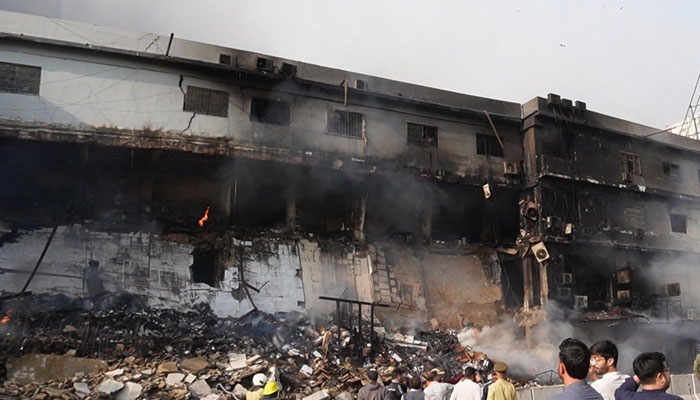
The Chief Fire Officer of Karachi revealed shocking details to the judicial commission investigating the Gul Plaza tragedy, stating that many lives could have been saved if the power had not been cut. The commission, chaired by Justice Agha Faisal, heard that announcements to guide people during the fire were also lacking, worsening the casualties. Officials emphasized that poor visibility, blocked exits, and smoke contributed to the high death toll.
According to DG Rescue 1122 Wajid Sabghatullah, the fire alert was received at 10:35 pm, and the fire brigade reached the site by 10:52 pm. Initial firefighting started using ladders, while KMC fire trucks and snorcles joined later. The ground floor to first and mezzanine floors were heavily occupied, with shopkeepers trying to salvage goods while visitors underestimated the fire’s intensity.
Read more: Investigation confirms 79 deaths in Gul Plaza fire
The Chief Fire Officer, Humayun Khan, described extreme conditions, noting that temperatures exceeded 1,000 degrees Celsius and fume-filled interiors blocked natural light. He said the use of foam would have been ineffective due to the high heat. Rescue teams faced blocked windows and iron grills, forcing them to cut grills to extract bodies. Limited water supply and delayed fire hydrant availability compounded the challenges.
Officials also revealed that fire-fighting resources were hampered by traffic, with fire tenders, snorcles, and bowsers delayed in reaching the site. Despite fully functional equipment, the intense heat, narrow exits, and obstructions in stairways made rescues extremely difficult. The commission questioned preparedness, training of firefighters, and emergency response mechanisms, highlighting that quick announcements and emergency lighting could have saved lives.
Read more: Sindh forms judicial commission after deadly Gul Plaza fire
The judicial commission emphasized preventive measures, noting that false ceilings, poor ventilation, and blocked exits accelerated the fire spread. Humayun Khan stated that if security staff had been instructed to open doors and emergency lights remained active, casualties could have been significantly reduced. The report underlines critical gaps in building safety, fire response coordination, and infrastructure that contributed to the catastrophic outcome.