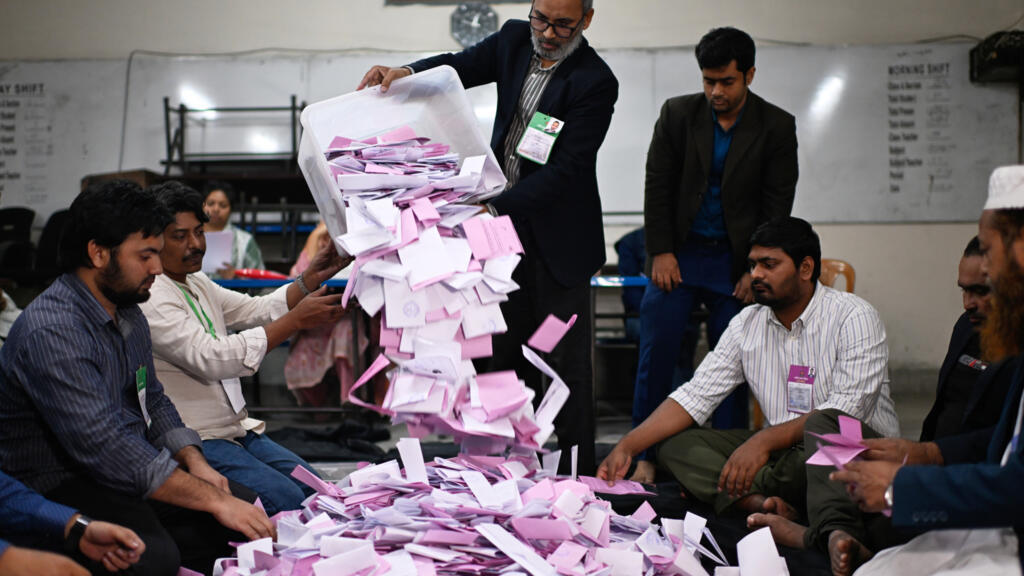
The Bangladesh National Party (BNP) clinched a decisive two-thirds majority in Friday’s general election, marking a dramatic return to power after two decades and signalling a potential period of political stability following months of unrest.
Tarique Rahman-Led BNP Heads For Gigantic Bangladesh Win: NDTV’s @ParmeshwarBawa Breaks Down the Impact on India pic.twitter.com/SDTjvUp8xV
— NDTV (@ndtv) February 13, 2026
According to domestic television projections, the BNP and its allies secured at least 212 of the 299 contested seats in the Jatiya Sangsad, or House of the Nation. The Jamaat-e-Islami and its partners won 70 seats, while smaller groups and independents shared the remainder.
Read More: Early counts show BNP ahead in Bangladesh polls after strong turnout
In a statement issued after the overnight vote count, the BNP thanked voters and called for nationwide prayers, urging supporters to refrain from victory rallies. The landslide outcome follows months of turmoil that erupted after the ouster of former prime minister Sheikh Hasina in a youth-led uprising. Hasina fled to India in August 2024 and remains in exile in New Delhi.
BNP leader Tarique Rahman, son of party founder and former president Ziaur Rahman, is widely expected to be sworn in as prime minister. He returned to Dhaka in December after 18 years abroad. Nobel laureate Muhammad Yunus had been serving as interim head of government following Hasina’s departure.
The BNP’s tally surpasses its previous best of 193 seats in 2001, though Hasina’s Awami League won 230 seats in 2008. The Awami League was barred from contesting this election.
Read More: Bangladeshis vote today since the bloody 2024 uprising
Turnout was reported to have exceeded 60%, significantly higher than the 42% recorded in 2024. Alongside the parliamentary vote, a referendum on constitutional reforms — including term limits for prime ministers and enhanced judicial independence — was also held, with preliminary media reports indicating strong participation.