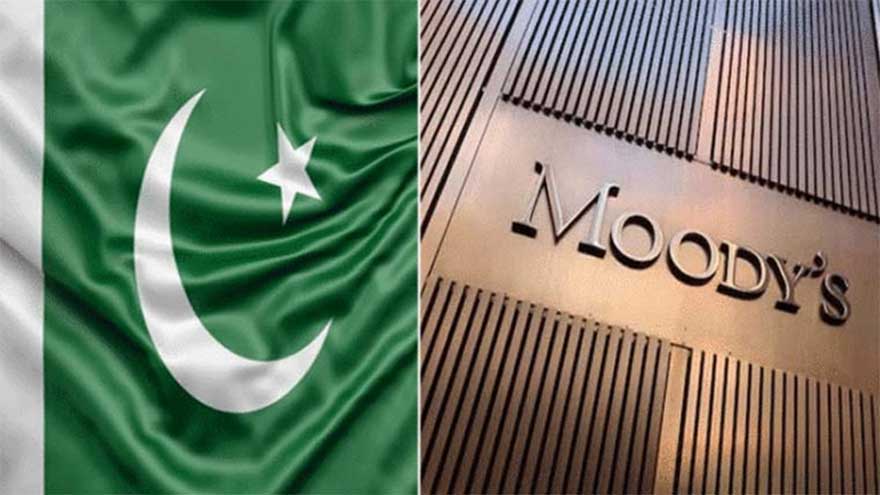
ISLAMABAD – International credit rating agency Moody’s has revised the outlook for Pakistan banking sector from positive to stable, citing both gradual improvements in the economy and persistent structural risks.
In its latest assessment, Moody’s noted that Pakistan’s banking sector has remained resilient despite a challenging operating environment. The agency highlighted strong profitability, largely driven by elevated interest rates and banks’ significant exposure to government securities, as a key factor underpinning stability.
Read More: Why Pakistan’s Banking Model is Failing Modern Businesses?
Moody’s projects that Pakistan’s economic growth will gradually recover, estimating GDP growth of around 3 percent in 2025, rising to approximately 3.5 percent in 2026. The growth is expected to be supported by moderating inflation, relative exchange rate stability, and improved access to external financing.
Moody’s Investors Service on Monday revised Pakistan’s banking sector outlook to stable from positive, citing a slow but steady economic recovery and improvements in the
Read More: https://t.co/eoMcJM7XdW pic.twitter.com/SipuGfrNyc
— ProPakistani (@ProPakistaniPK) February 9, 2026
However, the agency cautioned that fiscal vulnerabilities remain high. Weak revenue mobilisation, elevated public debt levels, and continued dependence on external funding contribute to ongoing sovereign exposure, which Moody’s identified as a significant risk for the banking sector.
The report also flagged policy implementation challenges, pressures on external financing, and lingering inflationary concerns as factors that could weigh on the economic outlook. High borrowing costs and credit risk constraints continue to limit private-sector lending and investment, Moody’s added.
Read More: Banks struggle with weak loan recovery system
Overall, while acknowledging signs of economic stabilisation, Moody’s emphasised that sustained structural reforms, prudent fiscal management, and effective policy execution will be critical for maintaining financial stability and supporting long-term growth in Pakistan.