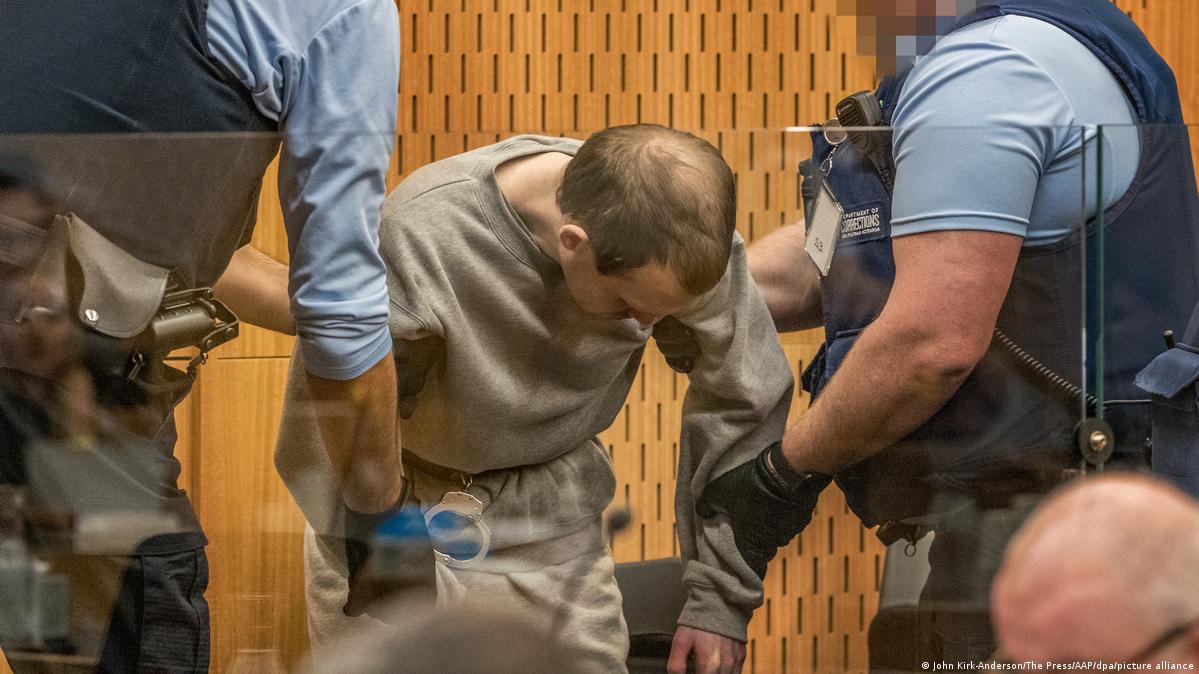
WELLINGTON, New Zealand: Brenton Tarrant, the white supremacist who killed 51 worshippers at two Christchurch mosques in 2019, launched an appeal on Monday seeking to overturn his conviction, citing his mental state and detention conditions at the time of his guilty plea.
Read More: New Zealand bans video game glorifying Christchurch mosque
Tarrant, an Australian former gym instructor, carried out New Zealand’s deadliest modern-day mass shooting on March 15, 2019, targeting two mosques with semi-automatic weapons. His victims included children, women, and the elderly. Prior to the attack, he published an online manifesto and livestreamed the killings for 17 minutes.
کرائسٹ چرچ میں مساجد پر حملہ کرنے والے شخص کا اعترافِ جرم واپس لینے کے لیے عدالت سے رجوع
تفصیلات: https://t.co/aFZx7X97Oa pic.twitter.com/JmgyvCwSeg— BBC News اردو (@BBCUrdu) February 9, 2026
Mosque attacker to address the New Zealand’s court of Appeal.
Brenton Tarrant the Australian was sentenced to life in prison … 🤬😡well he can rot there who cares !#ChristchurchMosqueAttack #abcnews pic.twitter.com/BhtG7dffsk— Ella Cooper (@EllaCoo55777104) February 8, 2026
Convicted and sentenced in August 2020, Tarrant received life imprisonment without parole—the stiffest sentence in New Zealand history. He is currently held in a specialist unit for high-risk prisoners at Auckland Prison, with minimal interaction with other inmates.
In court, Tarrant argued that his “torturous and inhumane” detention conditions affected his ability to make rational decisions, making him incapable of providing informed consent when he pleaded guilty. He told the Court of Appeal in Wellington that he had even contemplated implicating former U.S. President Donald Trump in the attacks, highlighting his disturbed state of mind at the time.
The appeal is being heard by three judges of the Court of Appeal. Due to the sensitive nature of the case, only counsel, media, and court officials are permitted in the courtroom. Families and friends of victims are able to watch proceedings remotely from Christchurch, with a one-hour video delay. Members of the public can also view the hearing via a delayed video link from Wellington.
Read More: New Zealand bans video game glorifying Christchurch mosque
Aya Al-Umari, whose brother Hussein was killed in the attack, said she was “not prepared” for the appeal, adding that she had thought Tarrant’s sentencing would bring closure.
A decision from the Court of Appeal is unlikely this week, as judges typically reserve verdicts for later publication. Following the attacks, the government tightened gun laws and pressed social media platforms to curb online extremism.
Tarrant’s current lawyers remain unnamed, with their identities suppressed by the court.