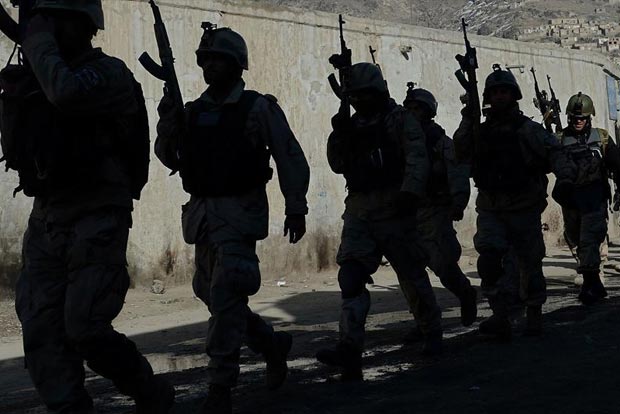
ISLAMABAD/KHYBER PAKHTUNKHWA: Pakistan security forces killed 24 terrorists in two separate intelligence-based operations in Khyber Pakhtunkhwa (KP) on February 4–5, the Inter-Services Public Relations (ISPR) announced on Friday.
Read More: President, PM praise security forces after Khyber Pakhtunkhwa
According to the ISPR, the operations targeted militants belonging to the banned Tehreek-i-Taliban Pakistan (TTP), referred to by the state as Fitna al-Khawarij. The first operation in Orakzai district resulted in the killing of 14 terrorists following a fierce exchange of fire. The second operation in Khyber district led to 10 more militants being neutralized.
سکیورٹی فورسز کی خیبر پختونخوا میں 2مختلف کارروائیاں، 24 خوارج جہنم واصلhttps://t.co/Tn8xuYqRLe pic.twitter.com/o77f6nRSCZ
— PTV News (@PTVNewsOfficial) February 6, 2026
The military statement highlighted that sanitization operations were conducted after the engagements to eliminate any remaining militants in the affected areas. The operations were carried out under the “Azm-e-Istehkam” plan, approved by the Federal Apex Committee on the National Action Plan, aimed at countering foreign-supported terrorism in the country.
The ISPR emphasized that Pakistan’s security forces and law enforcement agencies remain committed to wiping out the threat of foreign-sponsored terrorism from the region.
These operations come amid a surge in militant activity since the TTP ended its ceasefire with the government in November 2022, pledging to increase attacks. Despite significant militant casualties, terrorist attacks in Pakistan rose 34 percent in 2025, with terrorism-related fatalities increasing by 21 percent, according to a report by the Islamabad-based Pak Institute for Peace Studies.
Read More: 11 India-backed terrorists killed in KP IBOs
Earlier in January, 11 terrorists were killed in two other operations in KP, demonstrating the continued intensity of counter-terrorism efforts in the province.
The military has vowed to maintain the pace of such operations to secure the country and prevent cross-border terrorism, while reinforcing intelligence-based strategies to neutralize threats before they can harm civilians or law enforcement personnel.