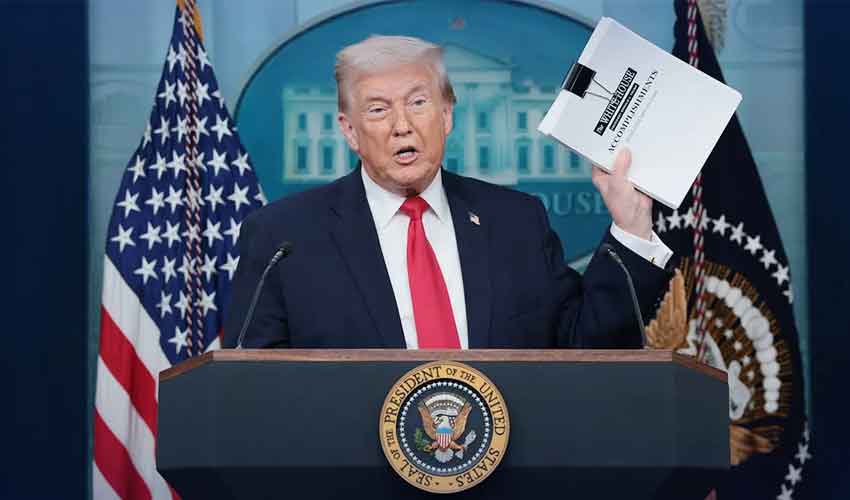
United States President Donald Trump on Wednesday suggested that a “softer touch” may be needed in immigration enforcement, while affirming that mass deportations would continue despite a partial withdrawal of federal officers from Minnesota.
The announcement follows widespread outrage after the fatal shootings of two protesters by federal officers in Minneapolis last month. Trump said in an NBC “Nightly News” interview that while he had learned the approach could be tempered, enforcement still needed to remain firm.
Read More: Trump signs $4B Israel aid, blocks UN funding
Trump’s border chief, Tom Homan, earlier confirmed that 700 federal officers would be pulled from Minnesota, reducing the contingent from roughly 2,700 to 2,000 agents. Homan said the drawdown reflects increased cooperation with local authorities and a shift toward taking custody of criminal aliens directly from jails rather than on the streets.
2,000 federal agents isn’t a de-escalation. My ask remains: Operation Metro Surge needs to end. pic.twitter.com/mBxC2PcC0B
— Mayor Jacob Frey (@MayorFrey) February 4, 2026
Despite the reduction, Homan stressed in a Fox News interview that removals of undocumented migrants would continue. “Mass deportations are here, they’re coming, we’re already breaking records, and we’re not going to stop,” he said.
Minneapolis Mayor Jacob Frey and Minnesota Governor Tim Walz — both Democrats — welcomed the partial drawdown as “a step in the right direction,” but called for a faster end to the federal operation, known as Metro Surge, and independent investigations into the killings.
The two victims, Renee Good and Alex Pretti, both 37, were US citizens killed by federal immigration officers in separate incidents. Trump expressed regret over the deaths, calling them “very sad incidents,” but defended ICE agents and law enforcement, saying, “We have to back them. If we don’t back them, we don’t have a country.”
Read More: Trump warns of ‘new terrifying world’ over treaty
The incidents have drawn international condemnation, intensified public scrutiny of federal immigration operations, and prompted leadership changes, including the replacement of Customs and Border Protection commander Gregory Bovino with Homan, who has pledged a conditional reduction of enforcement activity in Minnesota.