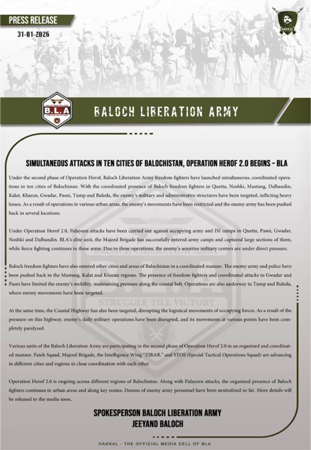
 The blood-soaked weekend of January 31, 2026, will be remembered as the moment the state’s counter terrorism resolve met the full force of a coordinated insurgent campaign.
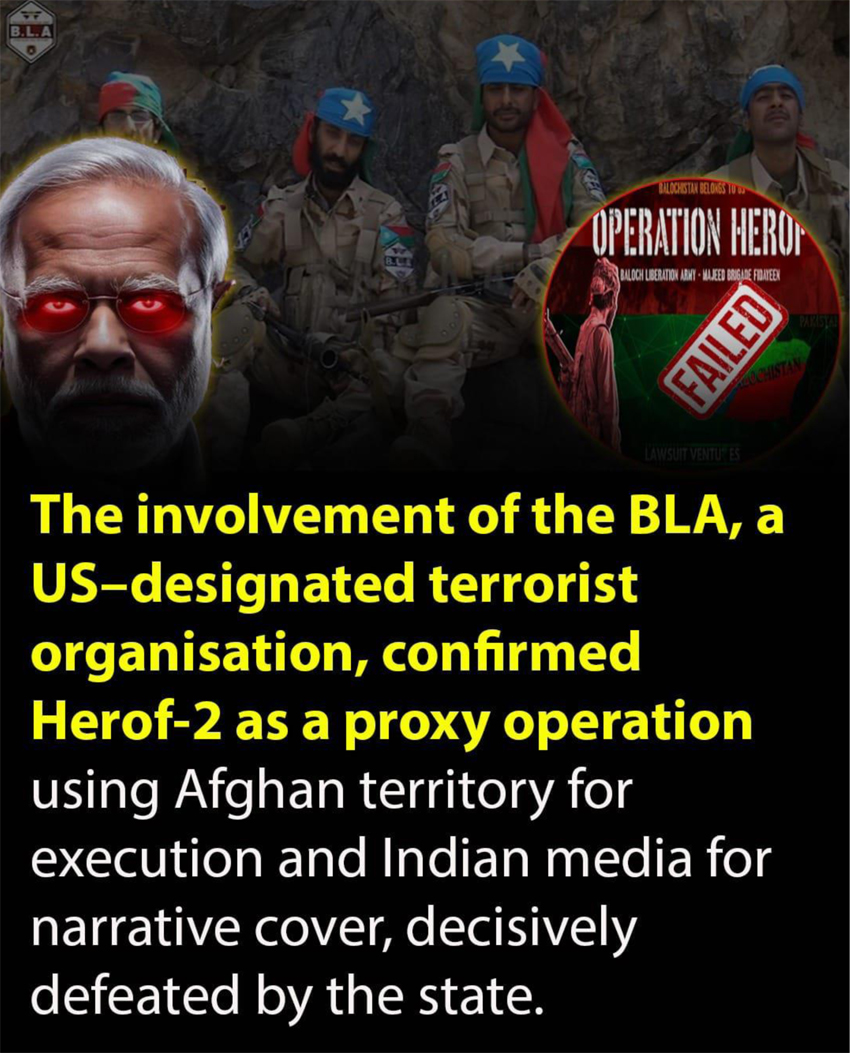
The Baloch Liberation Army (BLA), a group designated as a Foreign Terrorist Organization by the United States and proscribed under Pakistani law, launched what it termed Operation Herof 2.0. However, the surgical response by Pakistan’s security forces has turned the tide, exposing the tactical fragility of the militants and the deep-seated foreign facilitation behind the carnage.
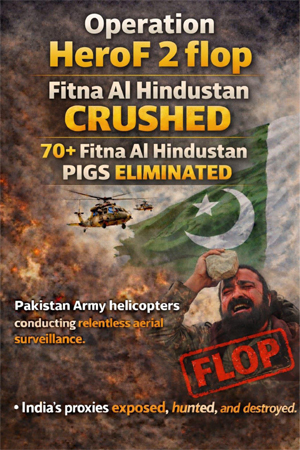
A Weekend of Fire
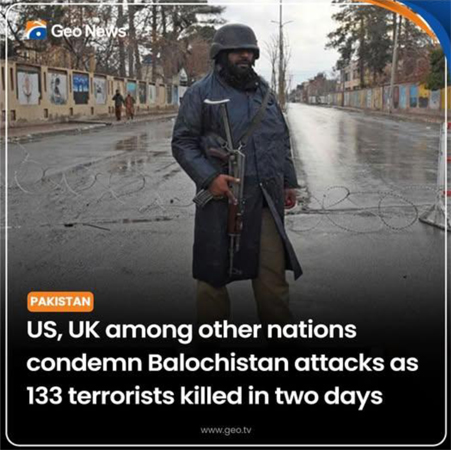
The scale of the violence was unprecedented. Between January 29 and 31, the Inter-Services Public Relations (ISPR) reported that 133 militants were neutralized across the province.
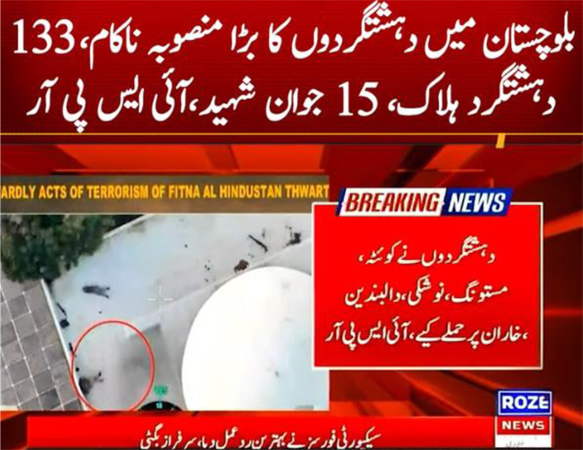
The breakdown of the three-day engagement reveals a staggering casualty rate for the insurgents:
n January 29-30: 41 militants killed during Intelligence-Based Operations (IBOs) in Panjgur and Harnai.

n January 31: 92 militants killed during assaults on various locations, including Quetta, Gwadar, Noshki, Kharan, Panjgur, Pasni, Tump, Dalbandin and Mastung.
n Security Forces: 15 personnel, including 11 from the Frontier Corps (FC), laid down their lives in the line of duty.

The military’s sanitization operations successfully thwarted attempts to seize administrative installations. In Panjgur, the operation even yielded a symbolic victory: the recovery of millions in looted cash stolen during a bank robbery in December 2025, further blurring the line between freedom fighting and common banditry.

The Civilian Toll
If the BLA claims to fight for the Baloch people, their choice of targets on Saturday told a different story. The violence claimed the lives of 18 civilians, including women and children. In Gwadar, a single family lost three women and three children to militant crossfire. Elsewhere, Punjabi laborers were targeted in targeted killings-a recurring, brutal tactic designed to spread ethnic discord and stall development.
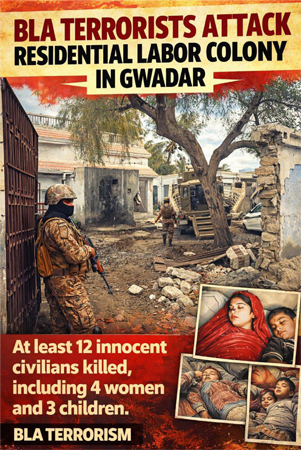
The operational pattern, which includes raids on police stations, bank heists, and attacks on labor settlements, aligns with terrorist coercion rather than political mobilization. You do not build a nation by murdering its mothers and its workforce. Targeting of civilians undercuts any claim of political representation these groups might make to the international community.
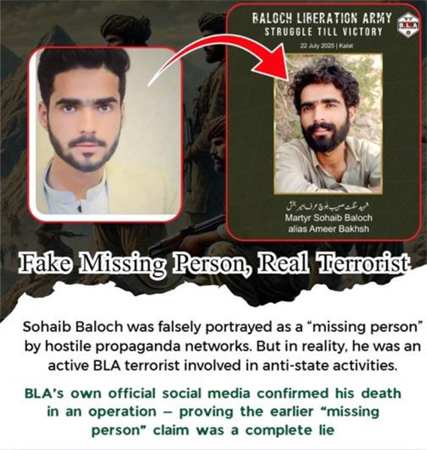
The “Missing Persons” Paradox
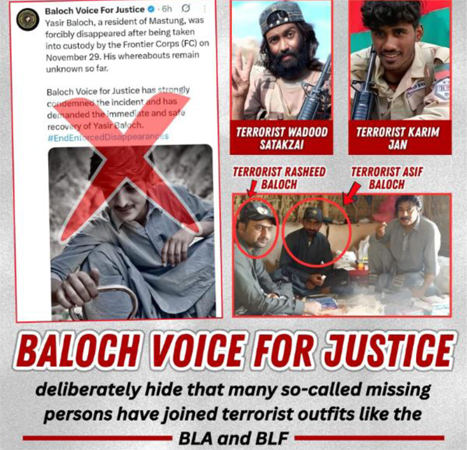
Proxy groups and commentary from activists often highlight disappearances to garner international sympathy. However, recent battlefield recoveries tell a more complex story.
Several individuals previously listed as “forcibly disappeared” by activist networks have surfaced as combatants in the BLA’s ranks. Some were among the 133 neutralized over the weekend, while others were captured alive during raids on military intelligence offices and police stations.
This documented overlap suggests that terrorist groups are effectively converting emotive human rights narratives into recruitment tools, obscuring the accountability of those who have voluntarily joined an armed insurgency.
India’s Hand
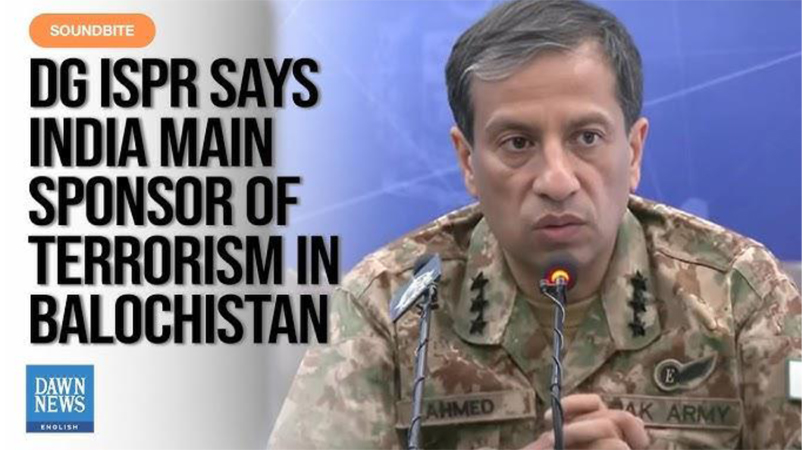
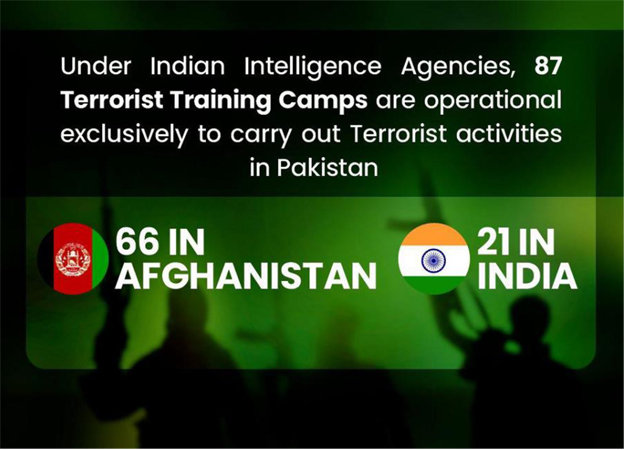
BLA and other proxies are not a homegrown resistance movement but a tool for Indian-sponsored regional destabilization.
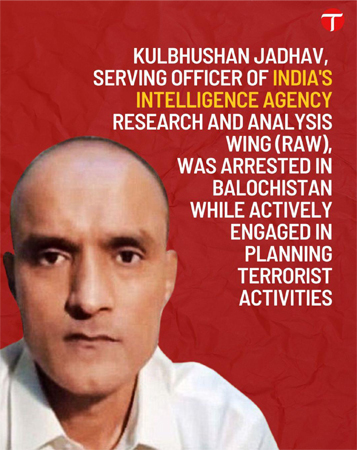
This is backed by historical evidence, most notably the 2016 arrest of serving Indian Naval Officer Kulbhushan Jadhav in Balochistan, who confessed to operating a network tasked with sabotaging the China-Pakistan Economic Corridor (CPEC).
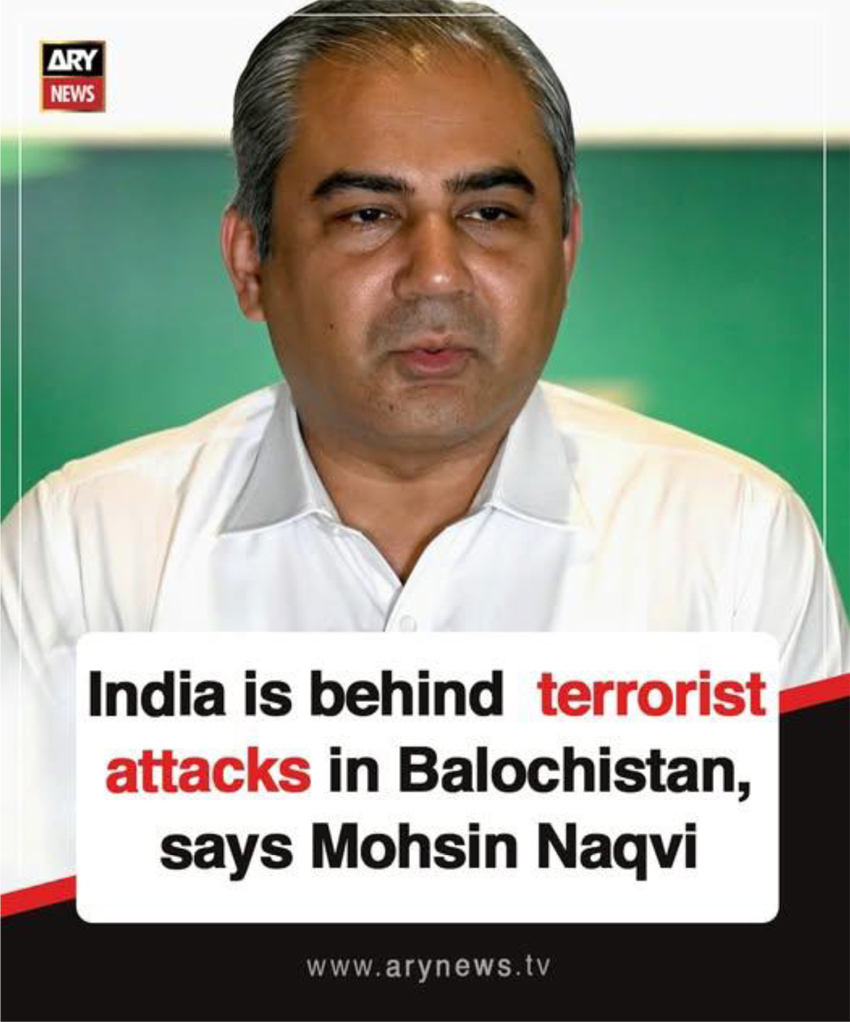
Federal Interior Minister Mohsin Naqvi on January 31, 2026, reinforced this stance by directly linking the weekend’s coordinated attacks to India. He stated unequivocally that India is the architect behind these assaults, aiming to derail the province’s progress and the Reko Diq project.
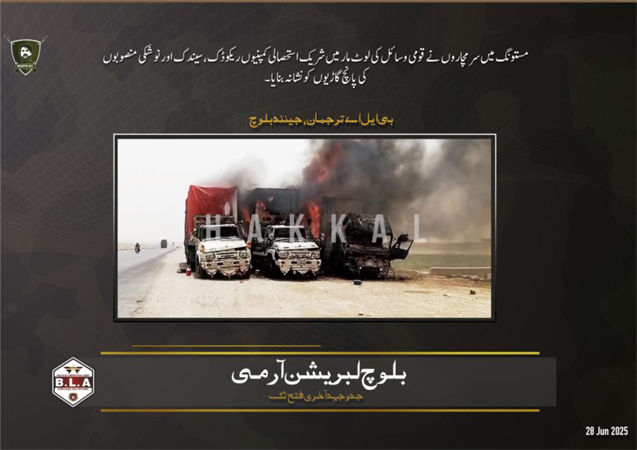
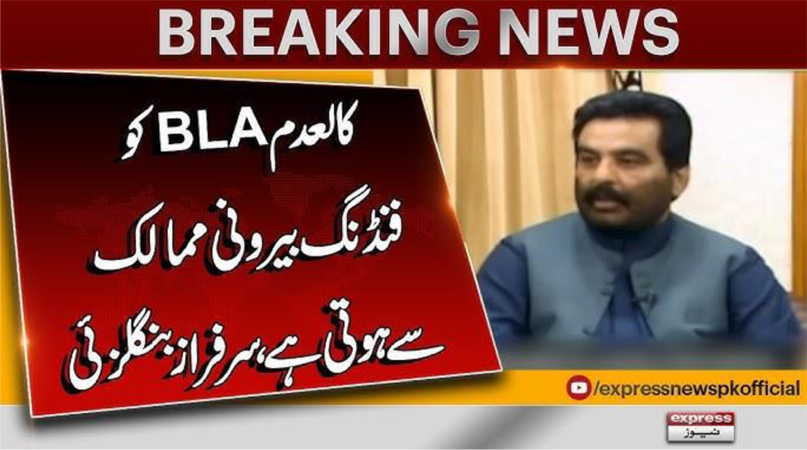
He emphasized that the scale and digital sophistication of the BLA’s propaganda reflect the deep pockets and intelligence support of RAW (Research and Analysis Wing), operating from sanctuaries beyond Pakistan’s borders to convert local grievances into a front for foreign aggression.
Economic Stability Factor
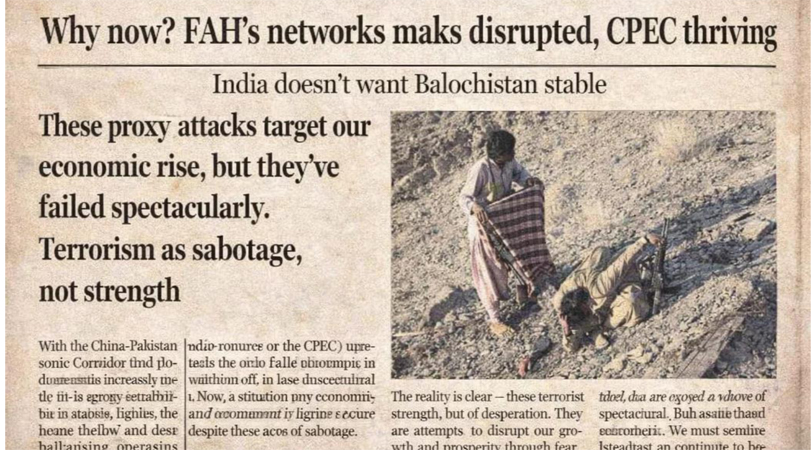
The geographic focus of the attacks-specifically near Nushki, Panjgur, and Gwadar-was not accidental. These areas are the heart of major economic initiatives like the Reko Diq copper-gold project.
Valued as one of the world’s largest undeveloped mineral deposits, Reko Diq represents a test case for Pakistan’s ability to attract global capital. The project is governed by constitutional safeguards that ensure 25% ownership for the Government of Balochistan, with significant revenue-sharing and local employment mandates. By targeting the security apparatus around these sites, the BLA seeks to signal to international investors that Balochistan is a “no-go” zone.
However, the international community has largely rejected this narrative. The United States has reaffirmed its support for lawful investment in the region, while Turkey and the UK issued swift condemnations of the January 31 attacks.
The Path Forward
The central policy question for Islamabad remains: Can grievances, however legitimate, justify the path of armed violence? The state’s current stance is a firm “no.” Under the broader Azm-e-Istehkam campaign, the military is moving beyond simple skirmishes to dismantle the “ecosystem” of militancy-targeting the financing, digital amplification networks, and foreign sanctuaries that sustain the BLA.
While the need for political engagement and rights based governance in Balochistan is recognized by all stakeholders, the weekend’s events have drawn a clear line in the sand. Armed violence against the state and its people cannot be framed as dissent. For the people of Balochistan, the promise of the future lies in the constitutional development and economic inclusion of projects like Reko Diq, not in the scorched-earth tactics of an insurgency that has, once again, failed to hold the ground it claimed to represent.