 In January 2026, the Taliban implemented a new Criminal Procedure Code that serves less as a judicial framework and more as a mechanism for total ideological and social control. Signed by Mullah Haibatullah Akhundzada, this document formalizes a distorted interpretation of Islam that abandons the core principle of equality before the law. Critics and human rights organizations have identified several negative aspects of the Taliban’s newly enforced Criminal Procedure Code of January 2026, describing it as a tool for institutionalized repression rather than a framework for justice.
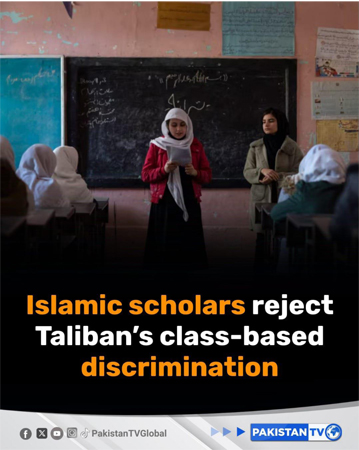
Whole scheme of document gives a strong impression of class-based justice system. The self -style code formalizes a four-tiered social hierarchy that determines punishments based on status rather than the crime itself. One class is religious scholars who are liable to receive only advice or admonition. This is clear discrimination and obviously suits to the ruling quarters which comprise of self-style breed of religious clergy. Second category is identified as Elites (Ashraf) which can be summoned and advised as and when felt appropriate by the ruling authorities, however, there is no mention of awarding punishments. Third category classified as Middle Class is liable to hard punishments including imprisonment. Fourth category in the controversial criminal procedure code labelled as Lower Class will face both imprisonment and severe corporal punishments such as public flogging. Besides class based accountability system , this procedure code has opened the avenues for sectarian religious discrimination as well. Reportedly, the code only recognizes the Hanafi school of Sunni Islam, labeling followers of other sects (such as Shia, Ismaili, and Ahl-e Hadith) as “heretics” or “innovators”. Changing one’s sect or spreading “heresy” is criminalized and punishable by years of imprisonment.
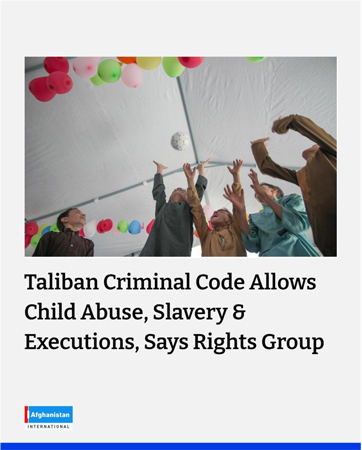
Surprisingly, the document in question repeatedly uses terms like “slave” and “master,” authorizing the later to administer punishments and explicitly recognizing slavery as a legal status, which remains in sharp contradiction to prevailing Islamic interpretations as well as International law. From an Islamic perspective, most serious violation lies in destruction of justice as equality. Islamic law is unequivocal that all individuals are equal before law regardless of status, lineage, or position. Quran, Sunnah and practice of Rightly Guided Caliphs affirm that punishment is determined by actions, not by social rank. Taliban Code openly contradicts this principle by dividing society into legal classes punishments.
Dissent has been explicitly criminalized in recently imposed concept. To be more precise, any sort of public criticism of Taliban leaders or policies is a crime. Furthermore, “rebels” (opponents of the system) are labeled as “agents of corruption” who can be sentenced to death because they supposedly cannot be reformed. In a unique way the criminal procedure code has made it mandatory for all citizens to act as informant of the current government. All Citizens are legally bound to report any “subversive meetings” or activities of opponents; failing to do so would be liable to two-year imprisonment. According to legal experts, this code lacks basic legal safeguards, including the right to a defense lawyer, the right to remain silent, and protection against arbitrary detention or torture. As a matter of routine, this document presents a very controversial vision about domestic violence specific to women. Violence against women is only considerable in cases of severe visible injury (like broken bones), while psychological and other physical abuses have been ignored. Additionally, women are criminalized for visiting their parents without a husband’s permission and can be imprisoned if they refuse to return.

Description of moral offences is very vague lacking clear definitions which provides vast space of exploitation. Swords of arbitrary arrests and the personalized implementation of undefined portion of criminal code might lead to destruction of businesses like barbershops and beauty salons. From a modern governance perspective, Taliban’s Code represents institutional failure. States depend on legal uniformity, accountability, clarity and basic rights. Taliban framework rejects these principles in favor of vague offenses, unchecked authority and ideological enforcement, deepening Afghanistan’s isolation and internal instability. In reality, this Criminal Procedure Code is not implementation of Shariah but document of fearful rule. It reflects secluded leadership imposing perverted interpretation of Islam to preserve power. Islam came to challenge oppression; this Code sanctifies it. Such system cannot deliver justice, stability, or moral legitimacy, nor can it represent Islam in any meaningful sense.

Ironically, Afghan Taliban regime is suffocating the society with enforcement of self-style controversial interpretations under the banner of Islamic system. Such harsh acts of an unelected government have pushed the Afghan masses to seek the refuge in other countries. It is about time for the international community and concerned Afghans to resist the controversial enforcements of Taliban regime.