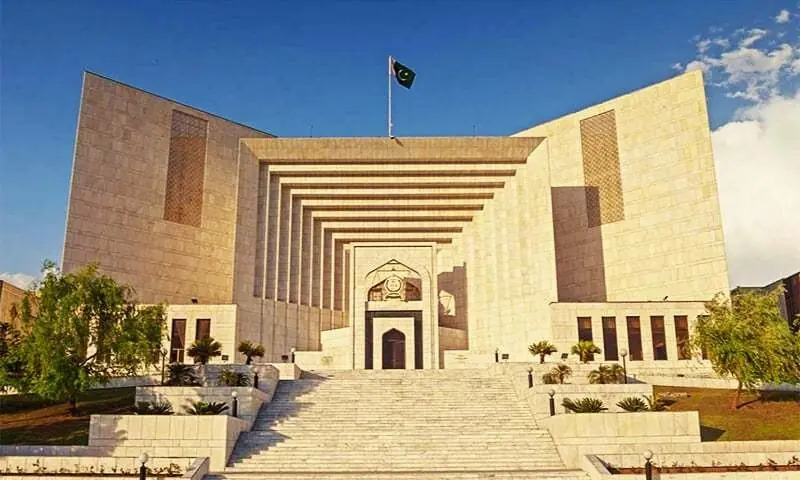
 The Supreme Court of Pakistan has issued a major and precedent-setting ruling on delays in the promotion of government employees, declaring that an eligible officer has the right to promotion from the date of the first Departmental Promotion Committee (DPC) meeting, and cannot be penalized for administrative negligence or delay.
Setting aside the decision of the Punjab Service Tribunal, the Supreme Court ruled that the promotion of government employee Fakhar Majeed will be effective from January 21, 2012. The tribunal had earlier dismissed his appeal, holding that an employee was not entitled to promotion from the date a vacancy arose.
In its ruling, the apex court emphasized that timely consideration for promotion through the DPC is a fundamental right of eligible public servants. It stated that employees cannot be made to suffer due to administrative incompetence, carelessness, or institutional delays.
The seven-page written judgment was authored by Justice Ayesha Malik. The case was heard by a three-member bench comprising Justice Ayesha Malik, Justice Muhammad Hashim Kakar, and Justice Ishtiaq Ibrahim.
The court noted in its detailed verdict that promotion is a basic right of government employees, and that delays caused by administrative lapses cannot undermine this right. It clarified that if an employee meets all eligibility requirements, promotion must take effect from the date of the first DPC meeting, regardless of subsequent delays.
The Supreme Court also directed government institutions to ensure timely processing of promotions and stressed that no employee should bear the consequences of bureaucratic inefficiency or institutional sluggishness.
In its concluding observations, the court underlined that public servants cannot be punished for administrative failures, and reiterated that it is the responsibility of state institutions to maintain efficient, transparent, and timely systems for personnel management.
Legal principle on tenancy
The Supreme Court of Pakistan has laid down a definitive legal principle on tenancy, ruling that after the death of a property owner, legal heirs automatically become the rightful owners and no new rent agreement is required.
The court further held that depositing rent in the name of a deceased landlord does not constitute a valid legal payment.
Upholding the Sindh High Court’s decision, the Supreme Court maintained the eviction order against tenants, directing them to vacate the shops and hand over possession to the legal heirs within 60 days.
The case was heard by a two-member bench comprising Chief Justice Yahya Afridi and Justice Shakeel Ahmed. Justice Shakeel Ahmed authored the four-page written judgment, which has been approved for official reporting.
According to the detailed verdict, following the original owner’s death, his son – as a legal heir – served notices to the tenants demanding payment of rent and outstanding dues. The court noted that the tenants acknowledged both the owner’s death and their attendance at his funeral, yet failed to pay rent to the rightful heirs.
The judgment stated that despite receiving formal notice, the tenants continued depositing rent in court under the deceased owner’s name, which the court declared legally invalid. The Supreme Court clarified that once legal heirs notify tenants, rent must be paid to them, and payments made in the name of the deceased do not fulfill legal obligations.
The court ruled that failure to pay rent to the legal heirs, combined with intentionally depositing rent under the deceased landlord’s name, amounts to willful default. Such conduct, the court held, makes tenants liable for eviction.
Rejecting the tenants’ argument that depositing rent in court protects them from eviction, the Supreme Court ruled that deliberate defaulters cannot claim legal protection. The court emphasized that willful default nullifies any claim to statutory relief and affirmed that eviction in such cases is both lawful and mandatory.