Israel’s decision to recognise Somaliland as an independent state has sparked strong reactions across the Muslim world and renewed concerns about the long-term consequences of external involvement in fragile regions.
Read More: Somalia terms Israeli FM visit to Somaliland an ‘incursion’
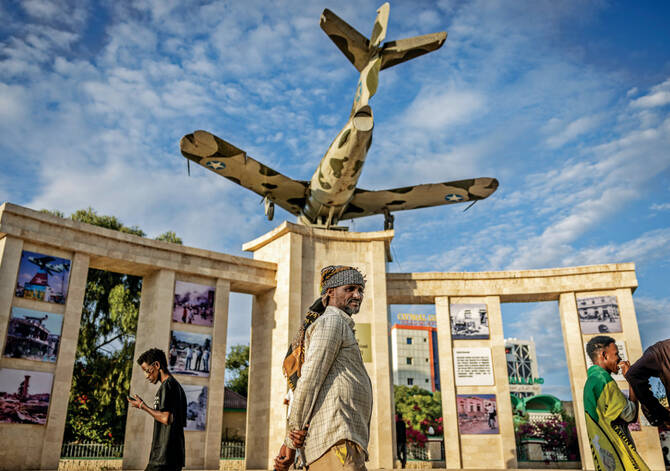
Somaliland, a self-declared republic in northwestern Somalia, declared independence in 1991 but remained unrecognised internationally until Israel’s move in December 2025. The region’s strategic location near vital maritime routes has led analysts to argue that the recognition is driven by geopolitical considerations rather than legal or historical grounds.
Israel formally recognized the self-declared Republic of Somaliland as an independent state, a move that challenges Somalia’s opposition to secession and could shift regional alliances https://t.co/paFrEyllKH pic.twitter.com/7op2UtFyVI
— Reuters (@Reuters) January 6, 2026
Israeli analysts have suggested that formal ties with Somaliland could open avenues for intelligence cooperation and access to naval and air facilities. Critics, however, warn that such a step risks destabilising Africa further by encouraging separatist movements in a continent already burdened by conflict, tribal divisions, and weak central governance.
Somaliland’s population shares language, religion, and culture with the rest of Somalia, with tribal affiliation cited as the principal dividing factor. Observers argue that recognising a breakaway entity on such grounds could set a precedent in Africa, which is home to thousands of tribes and numerous unresolved fault lines shaped by colonial legacies.
Africa currently hosts a significant proportion of the world’s active conflicts, with millions displaced due to violence. Analysts caution that legitimising secessionist entities may intensify fragmentation, not only in Africa but also in other volatile regions where ethnic and religious divisions persist.
Former Somali minister Abdi Aynte has described Israel’s move as part of a broader strategy that leverages weakened states and breakaway regions to secure strategic footholds and expand political influence. While this approach may offer short-term gains, he and others warn it could backfire by alienating regional and international actors.
Read More: Pakistan, 20 other nations reject Israel’s Somaliland recognition
The African Union, Arab League, Organisation of Islamic Cooperation, European Union, and several global powers have reaffirmed their support for Somalia’s territorial integrity. Despite this, concerns remain that unresolved internal grievances in fragile states may continue to provide openings for external interference, deepening instability across already vulnerable regions.