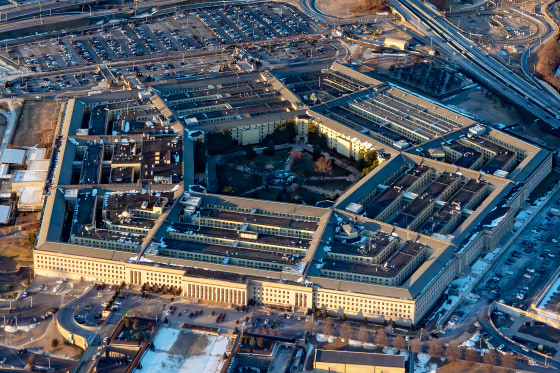
The United States (US) has downgraded China as its top military priority, shifting its strategic focus toward the Western Hemisphere, according to the 2026 National Defence Strategy released by the Pentagon on Friday.
The quadrennial strategy document marks a significant departure from the previous 2022 defence strategy, which had identified China as the US military’s foremost strategic competitor. In the new framework, China has been placed second on the list of priorities, while homeland defence and the Western Hemisphere have taken precedence.
Read More: Internal Contradictions in US National Security Strategy
The Pentagon stated that securing unrestricted commercial and military access across key regions from the Arctic to South America is now the primary objective. These areas include Greenland, the Panama Canal, and the Gulf of America, underscoring Washington’s renewed emphasis on regional influence and security closer to home.
🚨 🇺🇸 HISTORIC SUMMIT: ALL 34 WESTERN HEMISPHERE MILITARIES CONVENING FEBRUARY 11
General Dan Caine just called the first-ever full assembly of military leaders from every nation in the Western Hemisphere.
This doesn’t happen by accident.
You don’t summon every military… pic.twitter.com/aU2gMb9Spv
— Mario Nawfal (@MarioNawfal) January 24, 2026
The document also reaffirms the US commitment to the Monroe Doctrine, a 19th-century policy asserting American dominance in the Western Hemisphere. Officials framed the shift as a strategic realignment rather than a retreat from global engagement, stressing that the United States is “not pursuing an isolationist agenda.”
China remains a major concern for US defence planners, but the strategy places greater emphasis on encouraging allies to assume increased responsibility for regional security. Burden-sharing among partners, including Canada, European allies and Mexico, was listed as the third major priority.
Rebuilding and strengthening the US defence industrial base was identified as the fourth key objective, reflecting concerns about long-term military readiness and supply chain resilience.
Notably, Russia received limited attention in the strategy document. The Pentagon stated that US forces are prepared to defend the American homeland against potential Russian threats but made little reference to Moscow’s ongoing war in Ukraine. Analysts view the brief mention as a shift in emphasis that could raise concerns among European allies amid continued tensions with Russia.
Read More: Caribbean tensions surge as US launches military operation
The updated strategy signals a recalibration of US defence priorities in response to evolving geopolitical and domestic considerations.