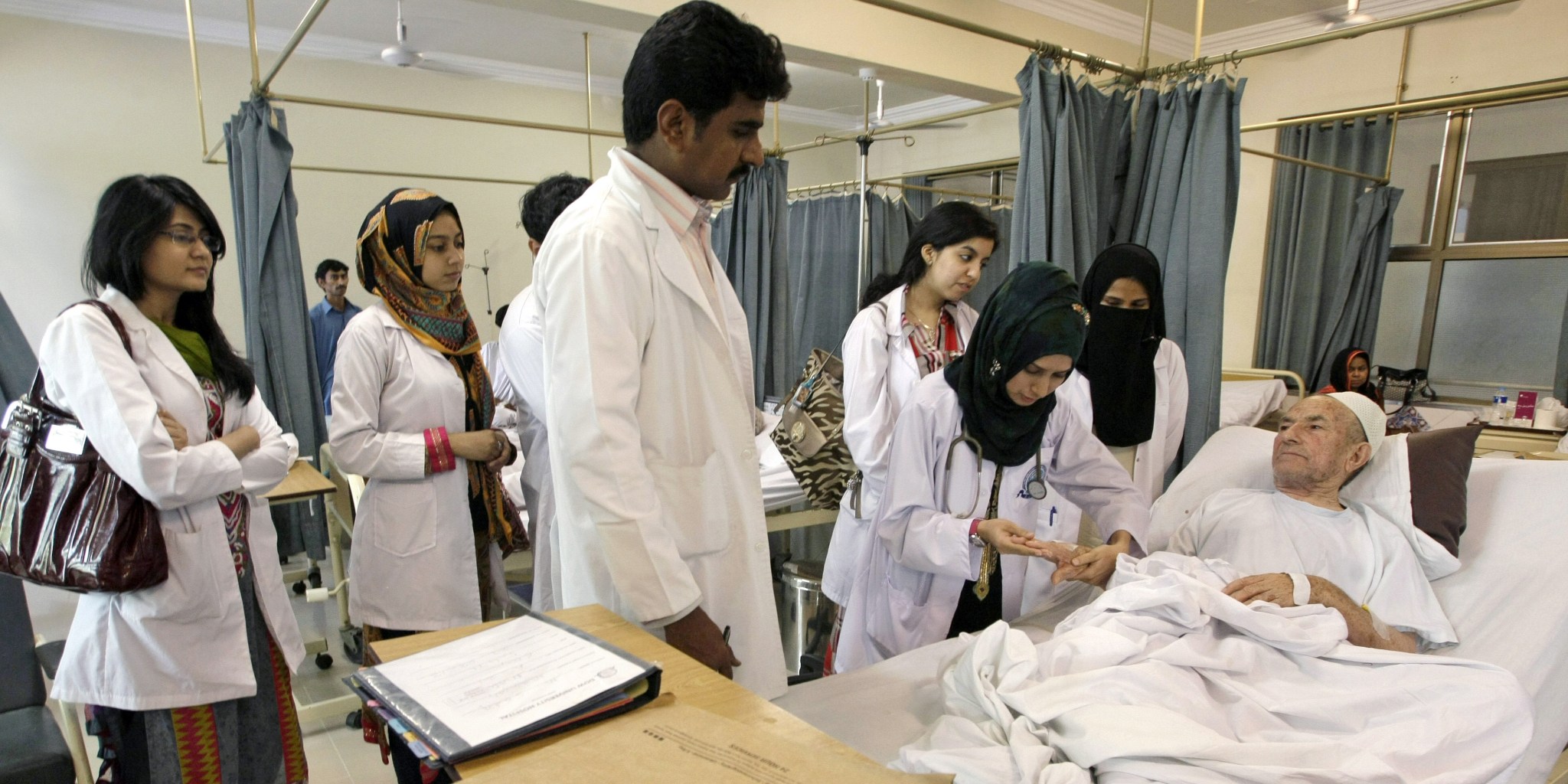
Pakistan is facing a public health crisis as an estimated 600,000 unqualified doctors operate clinics across the country, posing severe risks to patients, medical experts warn. These “fake doctors” often learn a few procedures from legitimate hospitals before opening their own practices, but lack proper knowledge of medicine, dosage, and sterilization protocols.
Read More: PHC seals 832 illegal treatment centres across Punjab
In Tando Saeed Khan, on the outskirts of Hyderabad, Abdul Waheed runs a small roadside clinic in the evenings, charging Rs300 per consultation, despite holding only a nursing diploma and a homeopathy certificate. The facility has no registration, no signboard, and no legal authority to operate, yet locals continue to trust his services.
Pakistan battles legions of fake doctors.
Unlicensed clinics are often the first, or only, point of care for the poor, but Pakistan Medical Association chief warns: “Unqualified doctors don’t know the side effects and exact dosage of medicines. If a disease is not properly… pic.twitter.com/D6ubaMkj3O
— AFP News Agency (@AFP) January 23, 2026
Pakistan Medical Association Secretary General Abdul Ghafoor Shoro described the phenomenon as a “public health epidemic,” highlighting risks such as misdiagnosis, improper treatment, and the reuse of unsterilized instruments. “They simply wash syringes with water, increasing the spread of hepatitis and AIDS,” Shoro said.
Civil Hospital Karachi regularly treats patients whose conditions worsen after receiving care from unqualified practitioners. Hospital head Khalid Bukhari said such cases overload public hospitals and impose lifelong medical and financial burdens on families.
Regulatory authorities acknowledge the difficulty of controlling the problem. Sindh Healthcare Commission head Ahson Qavi Siddiqi explained that even when unregistered outlets are shut down, new ones often open immediately, and weak laws allow accused practitioners to secure bail easily. Inspection teams also face threats from influential local operators, complicating enforcement.
Read More: Number of cardiac doctors stands at 1 in KP, 40 in Punjab, SC told
Experts warn that unchecked fake medical practices endanger millions, particularly in poor communities where clinics run by unqualified individuals are often the first — and sometimes only — point of care. Shoro emphasized that many patients die or suffer permanent disability due to these practices, creating both social and economic fallout for families.