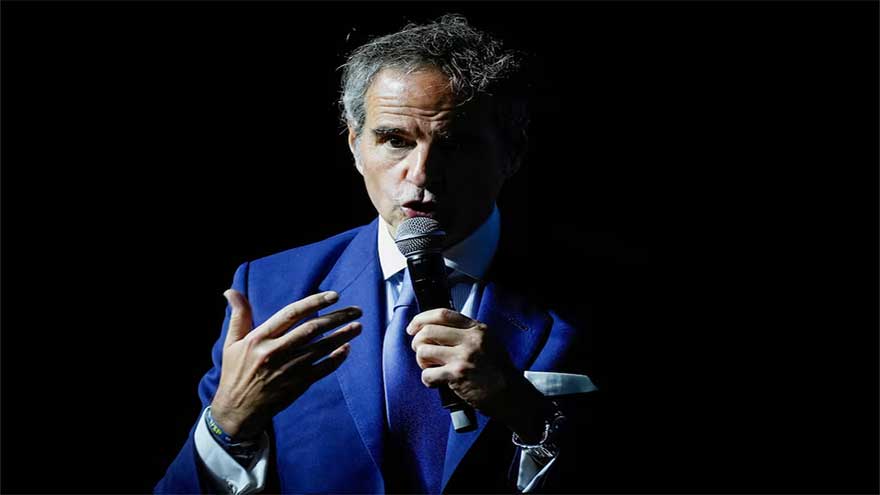
UN nuclear watchdog chief Rafael Grossi warned on Tuesday that the standoff with Iran over highly enriched uranium and inspections at bombed nuclear sites cannot continue indefinitely. The International Atomic Energy Agency has inspected 13 declared facilities that were not attacked, but three critical sites—Natanz, Fordow, and Isfahan—remain uninspected following June bombings. Grossi emphasized that the situation poses serious risks if unresolved, highlighting the need for Iran to provide full transparency about its nuclear material.
Iran has yet to submit a report detailing what happened at the bombed sites, including an estimated 440.9 kilograms of uranium enriched to 60 percent purity, close to weapons-grade material. According to IAEA standards, this is sufficient, if further enriched, for roughly 10 nuclear bombs. Grossi warned that without verification, the agency cannot confirm whether the material has been diverted, hidden, or misused, raising global security concerns.
Read more : IAEA praises Pakistan’s nuclear fight against cancer
“This cannot go on forever because at some point, I will have to acknowledge uncertainty over the material,” Grossi said, stressing that Iran must meet its obligations under the nuclear Non-Proliferation Treaty. He clarified that parties to the treaty cannot selectively comply and stressed that diplomatic prudence cannot replace full adherence to reporting and inspections. Grossi suggested a resolution could reasonably be expected by spring.
The IAEA’s last inspections of Iran’s nuclear facilities were completed in late December, though disruptions during civil unrest prevented continuous monitoring. Grossi noted that Iranian officials have indicated the situation is now calm, providing an opportunity to resume inspections without the interruptions that occurred during protests and government crackdowns.
Read more : Pakistan hosts IAEA training on nuclear-aided crop improvement
Diplomatic efforts led by U.S. special envoy Steve Witkoff are ongoing to achieve a broader agreement between Iran and the United States. Grossi said he cannot ignore these talks but reaffirmed that independent inspections remain critical. He also indicated he plans to meet Iranian Foreign Minister Abbas Araqchi in the coming days or weeks to press for full compliance and transparent reporting.
Failure to resolve the standoff could lead the IAEA to declare Iran in non-compliance, escalating international tensions. Grossi underscored that inspections, reporting, and adherence to treaty obligations are essential to prevent nuclear escalation, maintain global trust, and reduce the risk of conflict in the region.