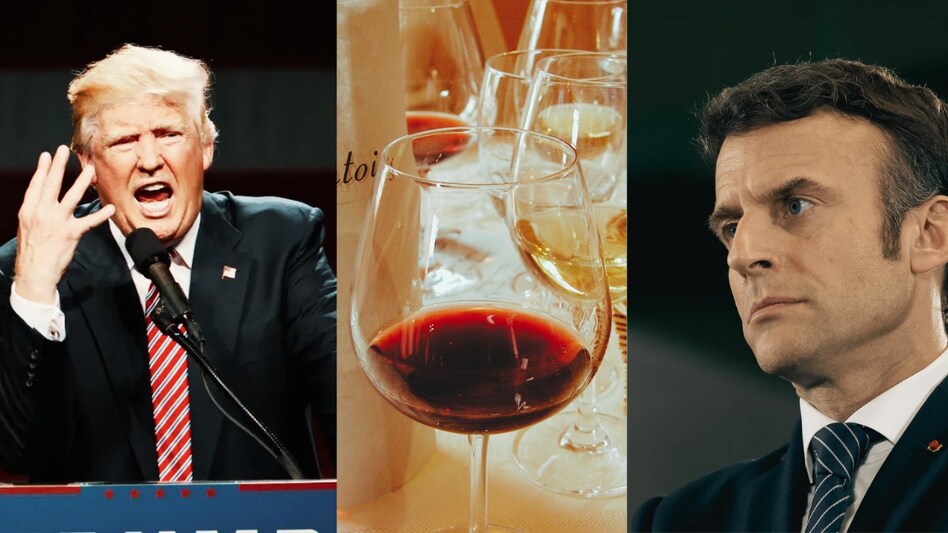
WASHINGTON: Former US President Donald Trump on Monday threatened to impose 200 percent tariffs on French wine and champagne after France indicated it would decline his invitation to join his “Board of Peace.”
Read More: US invites global powers to join Gaza ‘Board of Peace‘
The Board of Peace, conceived by Trump to oversee the rebuilding of Gaza, has drawn criticism for its scope, with sources noting that its charter “goes beyond the sole framework of Gaza.” French President Emmanuel Macron’s office confirmed that France “does not intend to answer favorably” to the invitation.
ABSOLUTE CINEMA 😳
Trump threatens 200% tariffs on French wine and champagne after Paris signals it may decline his invitation to join his proposed “Board of Peace.”
Trump also shared on Truth Social a private message he received from President Macron regarding Greenland. pic.twitter.com/i8MSN28DwW
— Sharp Sighter (@SharpSighter) January 20, 2026
Trump told reporters in Florida, “I’ll put a 200 percent tariff on his wines and champagnes. And he’ll join. But he doesn’t have to join,” referring to Macron.
The US leader also confirmed that Russian President Vladimir Putin had been invited to the Board, following Moscow’s earlier reporting of the invitation. “Yes, he’s been invited,” Trump said.
On broader European relations, Trump claimed he did not expect strong resistance to his plans regarding Greenland. “I don’t think they’re gonna push back too much. We have to have it. They have to have this done,” he said.
The dispute comes amid rising tensions between Washington and Paris over the scope of US-led initiatives in the Middle East, and questions about the legality and influence of extraterritorial boards such as Trump’s proposed peace body. Analysts suggest the tariff threat reflects Trump’s preference for using economic pressure as a foreign policy tool.
Read More: Trump wants nations to pay $1bn to stay on his ‘Board of Peace‘
While France has historically maintained close ties with the US, the country has pushed back against measures that could compromise its autonomy in international diplomacy. The tariff threat on French wines, a key export sector, could have significant economic and political implications if implemented.