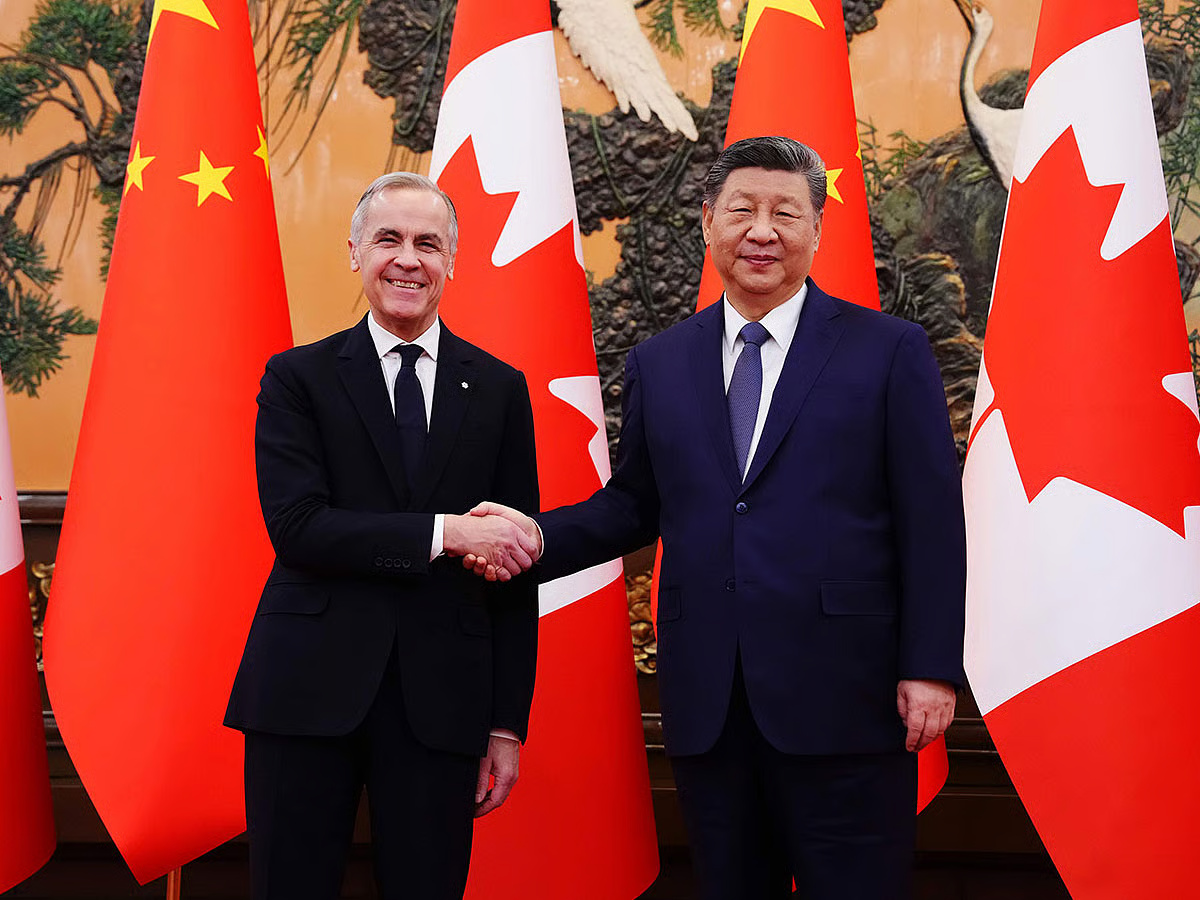
BEIJING: Canada and China have reached a “landmark” agreement covering trade, tourism, and economic cooperation, marking the first high-level meeting between the two nations’ leaders in eight years. Canadian Prime Minister Mark Carney met Chinese President Xi Jinping on Friday at the Great Hall of the People in Beijing, turning a page on years of diplomatic tensions.
Read More: Xi hails Canada visit as breakthrough
Under the deal, China will reduce tariffs on Canadian canola products from 84 percent to around 15 percent by March 1, and Canadian visitors will be granted visa-free access. In return, Canada will import 49,000 Chinese electric vehicles under preferential tariffs of 6.1 percent, restoring rates to pre-trade-friction levels. Carney described the agreement as a key step in a “new strategic partnership” with Beijing and a move to diversify Canada’s economic ties beyond the United States.
President Xi said the meeting marked a turning point in China-Canada relations, adding that “the healthy and stable development of China-Canada relations serves the common interests of our two countries.” He highlighted ongoing discussions aimed at restoring cooperation after previous years of disputes, which included Canada’s arrest of Huawei executive Meng Wanzhou in 2018 and China’s retaliatory detention of two Canadian citizens.
The agreement comes as Canada faces steep US tariffs on steel, aluminum, vehicles, and lumber, prompting Carney to seek alternative trade partners. While Washington has expressed concern, US Trade Representative Jamieson Greer called the Chinese EV deal “problematic” for Canada.
Observers note that the deal signals a warming of bilateral ties, combining trade, tourism, and broader economic cooperation. Analysts say it may also serve as a model for Canada’s strategy of balancing traditional alliances with emerging global markets.
Read More: China, Canada move to reset strained ties
The China-Canada pact underscores both nations’ willingness to move past past disputes and strengthen cooperation in the economic and diplomatic spheres.