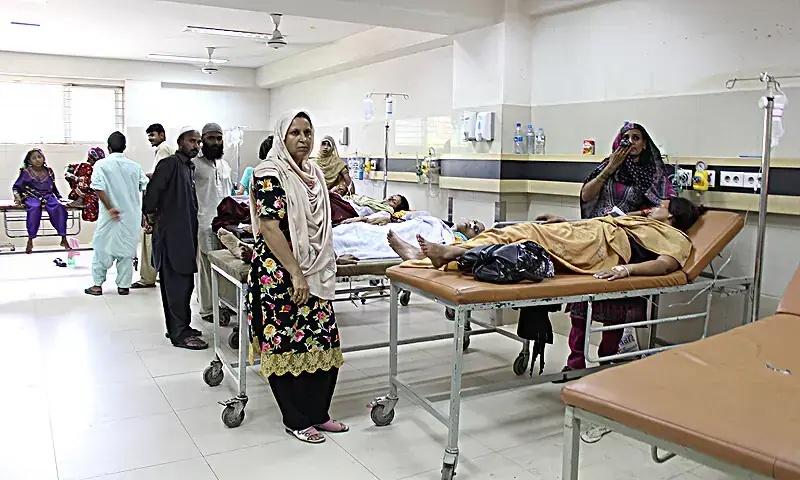
LAHORE: Healthcare officials and workers in Punjab have raised serious concerns over the provincial government’s decision to make body cameras mandatory for hospital staff, warning that the move risks violating patient privacy and staff rights.
Read More: Hospital staff to wear body cams as Punjab tightens rules
Punjab Chief Minister Maryam Nawaz announced the decision on Friday, applying it to nurses, ward boys, security guards, and pharmacy staff, while excluding doctors. The measure comes in response to complaints about hospital negligence and misconduct, including a recent incident at Lahore’s Nishtar Hospital, where a doctor was dismissed after a viral video showed him misbehaving with a patient’s family.
Punjab Chief Minister Maryam Nawaz has directed public hospital staff across the province to wear body cameras during duty hours to enhance transparency, accountability, and patient care. The directive applies to nurses, ward attendants, security personnel, and pharmacy staff,… pic.twitter.com/eGKpIA7dxh
— Voiceup Pakistan (@VoiceupPakistan) January 11, 2026
Officials and associations strongly criticized the policy as hasty and impractical. Pakistan Medical Association President Dr Izhar Ahmed Chaudhry described it as “illogical, insane, and against fundamental rights of patients and healthcare professionals.” He said the move compromises professional confidentiality and does not address the sector’s broader systemic issues.
Young Doctors Association Punjab President Dr Shoaib Niazi echoed these concerns, questioning the funding and practicality of the rollout. He warned that bodycams could violate patient confidentiality in sensitive areas like gynecology and labor wards. Staff members, including nurses and allied health workers, said they had not been consulted and were unclear about the cameras’ purpose, but would follow orders if mandated.
Former Punjab health minister Dr Javed Akram called the decision “inconceivable,” highlighting practical challenges such as monitoring staff in private spaces. Globally, bodycams in hospitals are rare and usually limited to security personnel or high-risk situations. Trials in countries like Australia and the UK focus on staff safety during violent incidents, not routine patient care.
Read More: Punjab hospitals introduce strict new rules and reforms
Healthcare experts warn that while accountability is important, solutions must respect patient privacy, professional autonomy, and operational realities, rather than imposing blanket measures that may hinder care and morale.