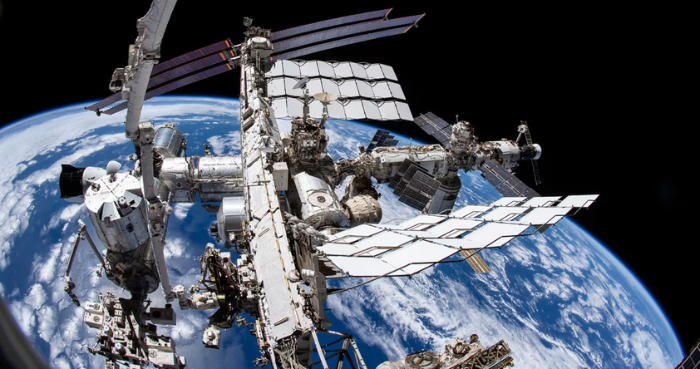
WASHINGTON: Four NASA astronauts will return from the International Space Station (ISS) over a month earlier than planned due to a medical issue affecting one of the crew members. NASA confirmed the astronaut is in stable condition but did not disclose further details, citing privacy concerns.
Read More: Stranded Nasa astronauts to return to Earth tomorrow
The affected crew member’s situation prompted the decision to bring the team home, as the ISS, while equipped with advanced medical facilities, cannot provide the full capabilities of a hospital emergency room. Dr. James Polk, NASA’s chief health and medical officer, said returning to Earth is the safest way to complete the medical evaluation.
For the first time in the 25-year history of the International Space Station, we’ve had a serious enough medical emergency in space to bring a crew home early.
Big decision by @nasa leadership, with multiple domino impacts on operations, but I’m glad to see, as always, crew… pic.twitter.com/p3ObJh497D— Chris Hadfield (@Cmdr_Hadfield) January 8, 2026
The early return involves SpaceX Crew-11 astronauts Mike Fincke and Zena Cardman, JAXA astronaut Kimiya Yui, and Roscosmos cosmonaut Oleg Platonov. NASA Administrator Jared Isaacman stated the crew would be back on Earth within “days.”
To maintain staffing on the ISS, NASA will expedite the launch of the Crew-12 mission, originally scheduled for mid-February. Meanwhile, NASA astronaut Chris Williams will remain aboard the station as the sole U.S. representative, working alongside Russian colleagues.
The postponement of a scheduled spacewalk on Wednesday first indicated that a medical concern existed aboard the station. NASA has emphasized that health privacy is a consistent practice in spaceflight. A similar situation occurred in October 2024 when a Crew-8 astronaut required medical attention upon return, with details withheld to protect privacy.
Read More: Astronauts from India, Poland, Hungary return after historic ISS trip
NASA continues to monitor crew health closely and maintains protocols to respond to emergencies in space. The agency said that astronaut safety remains its highest priority, highlighting the unique challenges of medical care in orbit.