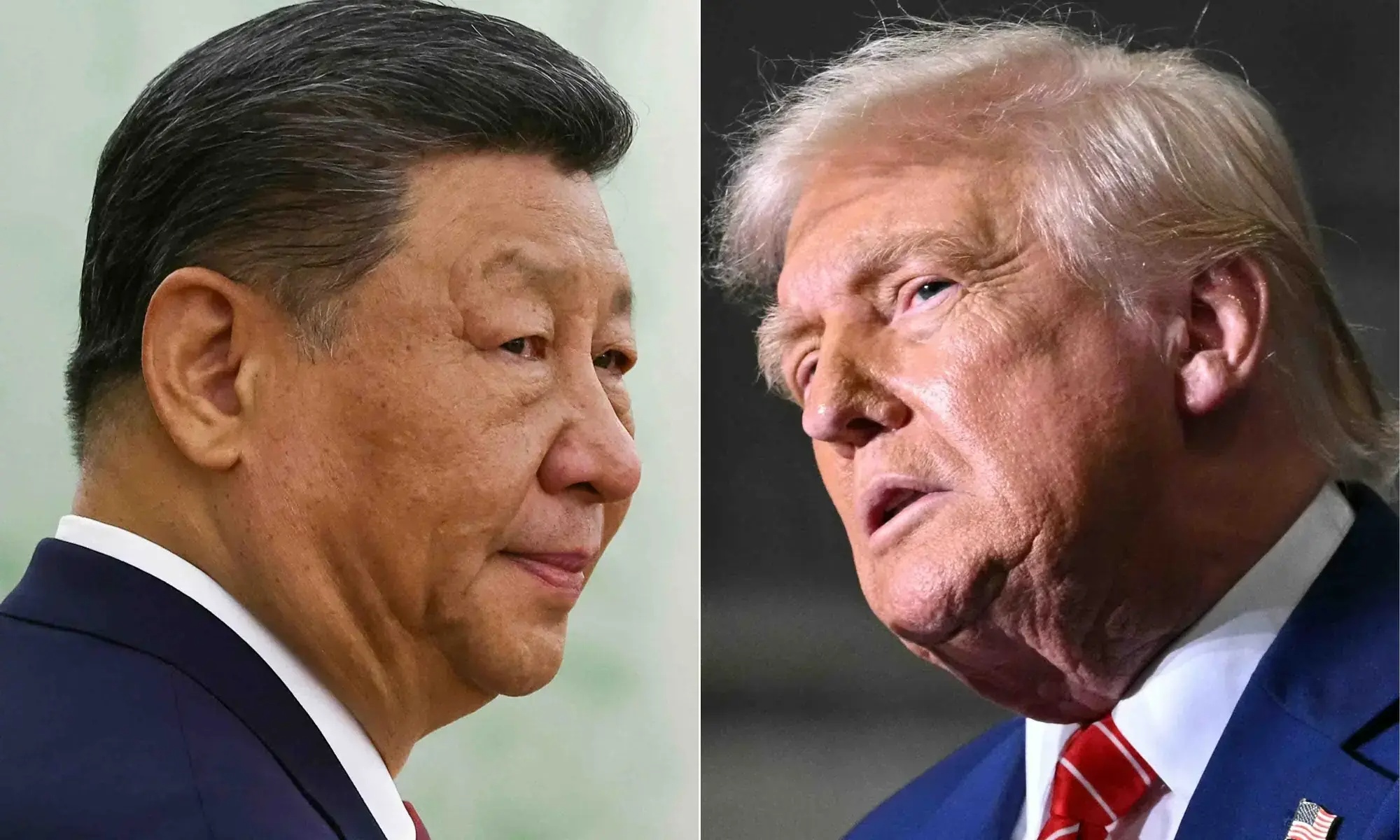
US President Donald Trump said decisions about China policy toward Taiwan are ultimately for Chinese President Xi Jinping to make, but stressed he would be “very unhappy” with any change to the status quo. Trump made the remarks in an interview published by The New York Times, where he linked the topic to recent US actions in Venezuela while drawing a distinction between the two situations.
Read More: Trump unveils strategy to deter China over Taiwan
Trump said Xi considers Taiwan part of China and that “it’s up to him what he’s going to be doing,” but asserted that he had communicated his opposition to any aggressive moves. He added that he does not expect Beijing to alter the status quo regarding Taiwan during his presidency, which runs through 2029.
Trump sold Taiwan to China
Donald Trump says it is “up to” Chinese President Xi Jinping whether China takes over Taiwan.
“He (Xi) considers it to be a part of China, and that’s up to him what he’s going to be doing,” Trump told The New York Times. “But I’ve expressed to him… pic.twitter.com/uJy7M3WOjj
— Geotactix (@Geotactix) January 9, 2026
The comments came in the context of discussing Trump’s bold military operation in Venezuela and whether that action might set a precedent for China on Taiwan — a comparison he rejected. He argued that Taiwan poses a different situation from what he described as a threat the Venezuelan government posed to the United States, underscoring his view that the two cases are not analogous.
Trump reiterated his belief that Xi is unlikely to take military action against Taiwan while he remains in office, though he suggested such a move could occur under a future US administration. His administration’s 2025 strategy aims to deter conflict with China over Taiwan and the South China Sea by strengthening US and allied military capabilities.
Read More: Xi to host South Korea’s Lee amid Japan tensions
China views democratically governed Taiwan as its own territory and has never renounced using force to achieve unification, a stance that Taiwan rejects. Though Washington has no formal diplomatic ties with Taiwan, US law requires it to provide the island with the means to defend itself — making the issue a central point of tension between Beijing and Washington.