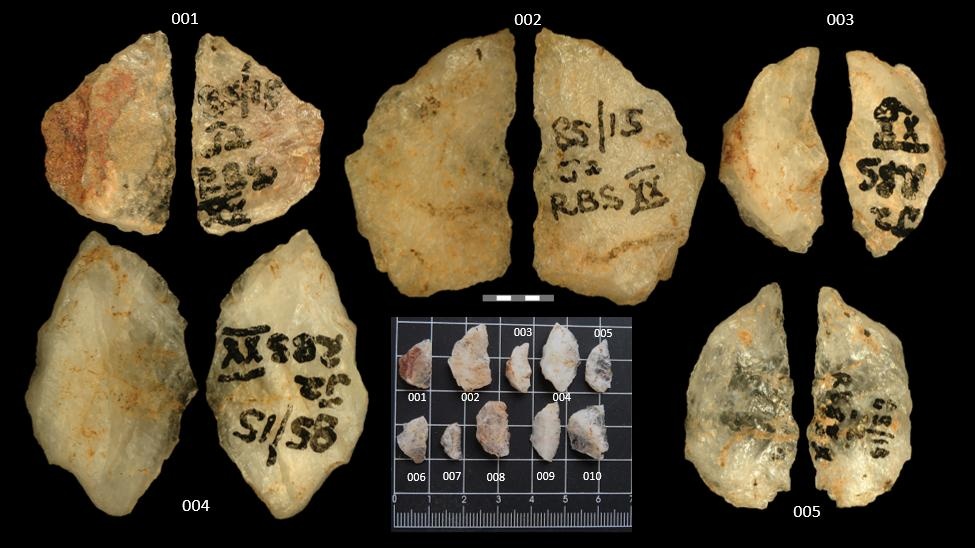
Researchers have discovered the earliest known evidence of poison tipped arrowheads, pushing back the timeline of toxic hunting by tens of thousands of years. Stone Age quartz arrowheads, around 60,000 years old, were found with traces of plant toxins, revealing that hunter-gatherers in South Africa used sophisticated hunting methods.
Read More: Punjab launches partridge hunting amid salt range opposition
The finding, published Wednesday in Science Advances, comes from an analysis of arrowheads excavated in 1985 at the Umhlatuzana Rock Shelter. Sven Isaksson of Stockholm University led the study, which identified residues from the Boophone disticha plant, locally known as the “poison bulb,” still used by traditional hunters today.
The use of poison in the Late Pleistocene indicates early humans had advanced cognitive skills. Hunters applied the toxins to weaken prey over time, a method known as persistence hunting. This required understanding cause-and-effect, as well as anticipating delayed results, reducing the energy needed to track and subdue animals.
Chemical analysis identified two alkaloids, buphandrine and epibuphanisine, on five of the ten arrowheads. These compounds survived millennia due to their water-resistant properties. For comparison, 250-year-old arrowheads also contained the same toxins, showing a long-standing tradition of using this specific plant poison.
Before this discovery, the oldest confirmed use of poison on hunting tools was around 6,700 years ago in South Africa and 4,000 years ago in Egypt. Indirect evidence, such as poison applicators, dated back 24,000 years. The Umhlatuzana find therefore dramatically extends the confirmed history of toxic hunting techniques.
Read More: Climate ministry approves trophy hunting quotas for 2025-26 season
The study highlights early Homo sapiens’ advanced planning and reasoning abilities, setting them apart from other hominins. Archaeologist Ludovic Slimak, not involved in the research, said, “The bow is not a recent invention but a fundamental and complex technology with origins extending back at least 80,000 years.” Future research at other South African sites may shed further light on the use and spread of poison arrows during this era.