China has rejected the notion of any country acting as the “world’s judge” following the US military operation that captured Venezuelan President Nicolas Maduro.
Read More: China judge blasts Trump as ‘enemy of rule of law’
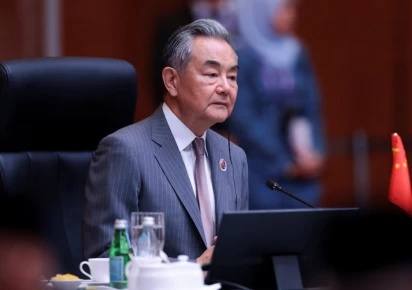
Speaking to Pakistani Deputy Prime Minister Ishaq Dar in Beijing on Sunday, Chinese Foreign Minister Wang Yi said, “We have never believed that any country can act as the world’s police, nor do we accept that any nation can claim to be the world’s judge.”
China condemns the U.S.’s blatant use of force against Venezuela, which seriously violates international law and basic norms in international relations, infringes upon Venezuela’s sovereignty, and threatens peace and security in Latin America and the Caribbean region.
China… pic.twitter.com/9G2DIzyNrb
— CHINA MFA Spokesperson 中国外交部发言人 (@MFA_China) January 5, 2026
He emphasized that “the sovereignty and security of all countries should be fully protected under international law,” marking China’s first official comment since images of a blindfolded and handcuffed Maduro emerged. Maduro is currently in a New York detention centre awaiting a court appearance on drug-related charges.
China, which has long sought to position itself as a diplomatic heavyweight, has significant economic and strategic ties with Venezuela. Beijing purchased approximately $1.6 billion worth of Venezuelan goods in 2024, with nearly half in crude oil, and state-owned oil firms had invested around $4.6 billion in Venezuela by 2018.
Analysts note that President Donald Trump’s assertion that the US will temporarily oversee Venezuela’s government challenges China’s role as a reliable partner to Caracas, following the two countries’ “all-weather comprehensive strategic partnership” established in 2023.
Read More: China remains world’s biggest executioner: AI
A Chinese official briefed on the situation described Maduro’s capture as “a big blow to China,” noting efforts to portray Beijing as a dependable friend. The development underscores the growing geopolitical tension in Latin America and the broader contest between Washington and Beijing for influence in the region.