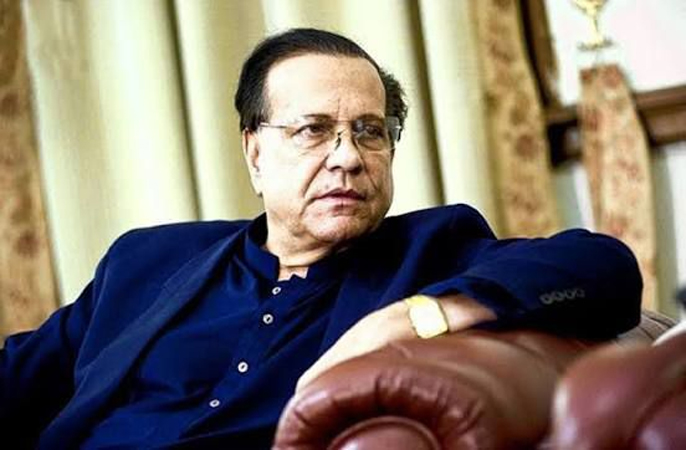
 Fourteen years after his assassination, Salmaan Taseer’s legacy remains a powerful reminder of what one person can achieve through determination, vision, and unwavering principle. As we reflect on his life, what stands out most is not just his courage in the face of death threats but the remarkable journey of a man who built everything from scratch.
A Self-Made Beginning
Born in 1944 in Shimla to poet M.D. Taseer and British-born Christobel George, Salmaan grew up in an intellectually rich but financially modest household. His father’s literary achievements brought prestige but not wealth. Young Salmaan understood early that success would come only through his own efforts.
After studying chartered accountancy in Britain, he returned to Pakistan in the 1970s with qualifications but no capital or powerful connections. What followed was a masterclass in entrepreneurial drive. He worked his way up in the financial sector, learning, building relationships, and spotting opportunities. By 1994, he had established his own brokerage house in a market dominated by established families and old money.
His success came from bringing something rare to Pakistani business: professionalism, transparency, and a commitment to genuine value creation. He didn’t inherit industrial assets, wasn’t connected to military brass, and didn’t secure government contracts through political favours. Every rupee was earned through calculated risk and hard work.
The Telecom Visionary
In 1996, Taseer made his boldest move yet, founding the Worldcall Group when Pakistan’s telecommunications industry stood at the threshold of transformation. The venture required massive infrastructure investment and navigating complex regulations while competing against state enterprises and well-funded rivals.
Worldcall grew into one of Pakistan’s largest telecommunications companies, offering broadband, data services, and telephony nationwide. Taseer’s hands-on leadership style set him apart. He remained directly involved in strategic decisions, pushed for technological innovation, and insisted on quality service. While other business leaders stayed in the shadows, Taseer was visible, accessible, and unafraid to stake his reputation on his ventures.
Creating Space for Liberal Voices
Perhaps Taseer’s most enduring contribution came through the media. Recognising that public discourse was dominated by state-controlled outlets or ideologically narrow platforms, he decided to create alternatives. He launched Business Plus and founded this very newspaper, the Daily Times.
The Daily Times was different from its inception. Its editorial stance championed women’s rights, minority rights, and moderate Islam. It gave space to columnists who challenged religious extremism and military overreach. This wasn’t just brave but financially risky. Advertisers often avoided liberal media, and religious groups organised boycotts. Yet Taseer persisted, often subsidising operations from his other businesses because he believed Pakistan needed these voices.
For young Pakistanis in the 2000s, the Daily Times proved that dissent was possible, that not everyone agreed with the conservative tide sweeping the country. Taseer himself occasionally wrote columns marked by clarity, wit, and fearlessness, taking on military budgets, religious hypocrisy, and political corruption with equal vigour.
The Courage That Defined Him
When Taseer became Governor of Punjab in 2008, he refused to be ceremonial. He was visible, engaged, and used his platform to advocate for change. But it was his defence of Asia Bibi, a Christian woman sentenced to death, that would define his final years.
While other politicians stayed silent, Taseer visited Asia Bibi in prison. Religious parties declared him an apostate. Even party colleagues distanced themselves. Death threats poured in daily. Friends begged him to moderate his tone.
He refused. Those close to him recall his clear awareness of the danger, but also his conviction that someone in his position had to speak. If a provincial governor with security and visibility wouldn’t defend a poor Christian woman facing death, who would?
On January 4, 2011, his own bodyguard, Mumtaz Qadri, shot him 28 times at Kohsar Market in Islamabad. The assassination shocked the world.
After Taseer’s murder, Pakistani politicians fell silent on reform. The space for liberal discourse shrank dramatically.
His family paid doubly. His son Shahbaz was kidnapped by the Taliban and held for five years, tortured because of his father’s stance. Qadri was eventually executed in 2016.
A Legacy That Endures
Salmaan Taseer proved that success in Pakistan didn’t require inherited wealth or political connections. Vision, integrity, and relentless work could build empires even in the most challenging environment. His businesses stand as a testament to entrepreneurial brilliance. His media ventures created lasting space for progressive thought. His political courage showed that principle could still triumph over fear.
His daughter Shehrbano continues his legacy, speaking truth to power on women’s rights and religious tolerance. His children were not broken by tragedy but strengthened by their father’s example.
Taseer failed to reform the blasphemy laws. His death made such reform even harder. But he succeeded in something more fundamental: demonstrating that moral courage remains possible in Pakistan. At a time when cynicism and fear dominate, he showed that individuals can choose principle over safety, conviction over calculation.
What He Asks of Us
Fifteen years later, the question Taseer’s life poses remains unanswered: What kind of Pakistan do we want? One that celebrates people like Salmaan Taseer or one that venerates their assassins? One that values self-made success and moral courage or one ruled by conformity and fear?
The debate continues, and that itself is part of Taseer’s legacy. He built everything himself: his fortune, his platforms, his political career, his principles. When the time came to stand for something larger than himself, he didn’t hesitate or calculate the cost.
In an age of compromise and careful positioning, Salmaan Taseer reminds us that some things are worth fighting for, even at the ultimate price. His life poses an uncomfortable question to each of us: What would we be willing to risk for our convictions?
Taseer didn’t just answer that question. He lived it, died for it, and left behind a legacy that will outlive the shrines built for his murderer. That is the measure of a life fully lived, and the challenge he leaves for those of us still living.