
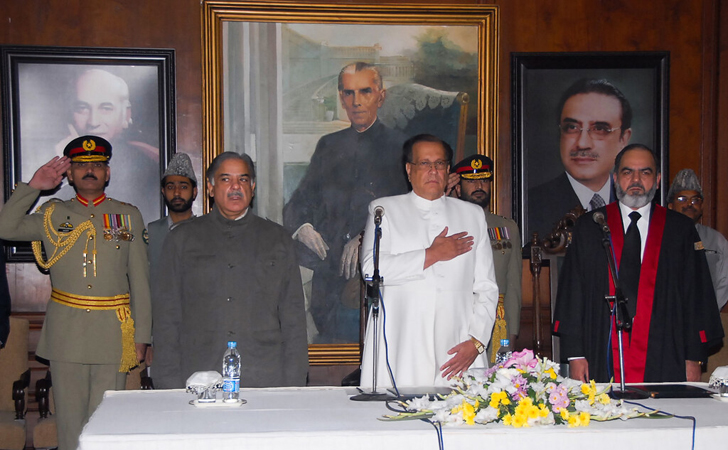
 On January 4, 2011, Punjab Governor Salmaan Taseer was assassinated in broad daylight by one of his own elite police guards –an act that laid bare a “vein of deep-rooted extremism” running through Pakistan’s society. The killer, Mumtaz Qadri, emptied two magazines into the outspoken governor, later calmly confessing that he did it because Taseer dared to condemn Pakistan’s blasphemy laws. Taseer’s “crime” was speaking up for a Christian farm worker, Asia Bibi, who had been sentenced to death under a deeply contested blasphemy charge. Fifteen years later, as Pakistan marks Salmaan Taseer’s anniversary, the courageous stand he took still haunts the nation’s conscience – and the hard questions he raised remain unanswered.
Salmaan Taseer was one of the very few senior officials willing to publicly challenge the country’s blasphemy statute – a law widely misused as a weapon of persecution. In late 2010, Taseer visited Asia Bibi in prison and vowed to seek a presidential pardon for her, declaring the verdict against her “inhumane.” His stance infuriated Islamist hardliners, who falsely branded him a blasphemer for questioning not faith, but the law’s weaponisation.
Unlike many politicians, Taseer backed his words with damning facts. “If you examine the cases of the hundreds tried under this law,” he noted, “you have to ask how many of them are well-to-do? Why is it that only the poor and defenceless are targeted? How come over 50% of them are Christians when they form less than 2% of the country’s population. This clearly points to the fact that the law is misused to target minorities.”
He minced no words about the real problem: the government’s reluctance to confront organised religious fanaticism.
He understood the personal danger of this position, yet he refused to back down. On December 31, 2010, just days before his assassination, Taseer defiantly tweeted, “I was under huge pressure, sure, to cow down before rightist pressure on blasphemy, refused, even if I’m the last man standing.”
It was a line drawn in the sand. He would not be silenced by fear, and ultimately paid with his life for that principle.
Taseer’s killing sent shockwaves through Pakistan’s liberal circles and jubilation through extremist ranks. Large vigils were held by human rights activists mourning a martyr of tolerance.
Fifteen years on, Pakistan’s reckoning with the forces Taseer defied has yet to materialise. If anything, the law’s grip has tightened. Instead of heeding Taseer’s call to prevent misuse of these provisions, Pakistan’s leaders have largely capitulated to extremist sentiment.
This is the country Salmaan Taseer tried to warn was coming into being – one where an intolerant fringe could hold justice hostage. People like Salmaan Taseer are real heroes of the Pakistani nation,” said Bilawal Bhutto Zardari, “who laid down their lives for the protection of the weak and did not care about threats to their own lives.”
Many in Pakistan and beyond still revere Taseer as a profile in courage – “the bravest of the brave.” Yet honoring his legacy requires more than anniversary statements. It requires facing the uncomfortable truth he highlighted. Pakistan was founded on the promise of religious freedom and equal citizenship; those ideals cannot coexist with laws that function as blunt instruments of fear, easily wielded by anyone with a grievance or an extremist agenda.