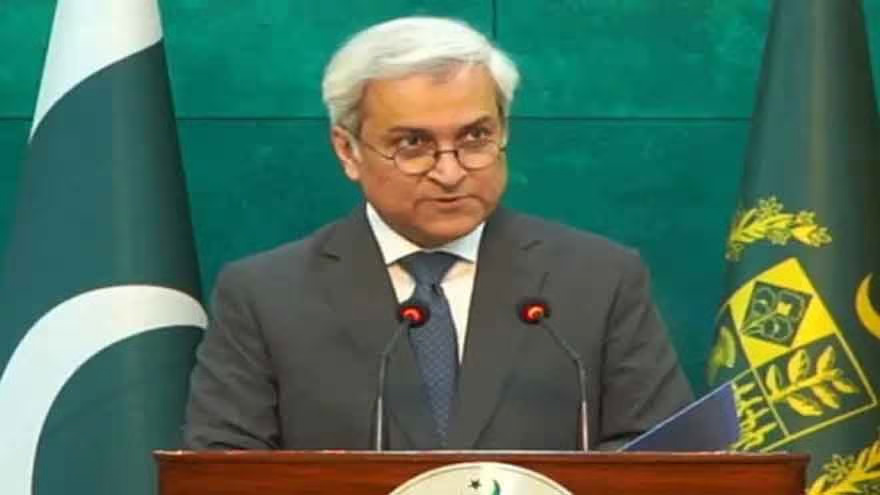
ISLAMABAD: Pakistan on Saturday strongly rejected what it called “irresponsible assertions” by Indian External Affairs Minister Subrahmanyam Jaishankar, accusing New Delhi of attempting to divert attention from its own conduct as a neighbour. The Foreign Office said India was once again deflecting scrutiny from policies that undermine regional peace and stability.
Read More: FO rejects Indian FM’s baseless remarks about Pakistan military
The response followed remarks attributed to Jaishankar in Indian media, where he referred to “bad neighbours” while asserting India’s right to defend itself against terrorism. His comments were widely interpreted as targeting Pakistan, particularly in the context of recent regional tensions.
Jaishankar also spoke about the Indus Waters Treaty, suggesting that goodwill arrangements could not continue in the face of what he described as decades of terrorism. He was quoted as saying that water-sharing and hostile actions could not coexist, reigniting a sensitive diplomatic issue between the two countries.
🔊PR No.0️⃣6️⃣/2️⃣0️⃣2️⃣6️⃣
Press Remarks by the Spokesperson https://t.co/Iv3sVuoDk2
🔗⬇️ pic.twitter.com/MG2tg45bnJ— Ministry of Foreign Affairs – Pakistan (@ForeignOfficePk) January 3, 2026
In its statement, Pakistan’s Foreign Office said India had a “documented record” of promoting terrorism in the region, especially against Pakistan. It cited the case of Kulbhushan Jadhav as evidence of what it described as state-sponsored espionage and subversive activities.
The statement further alleged that India had been involved in extraterritorial actions, covert operations, and support for proxy networks, warning that such behaviour contributed to instability across South Asia. Pakistan said these actions reflected extremist tendencies that threatened regional harmony.
On Kashmir, the Foreign Office reiterated that India continued an “illegal and violent occupation” of Jammu and Kashmir. It reaffirmed Pakistan’s political, moral, and diplomatic support for the Kashmiri people’s right to self-determination under UN resolutions.
Read More: India initiates first high-level contact since May war
Addressing the Indus Waters Treaty, Pakistan said the agreement was concluded in good faith and remained binding under international law. It warned that any unilateral violation would undermine regional stability and India’s credibility as a responsible state.
The exchange comes shortly after rare contact between senior officials of the two countries at an international event in Dhaka, highlighting ongoing diplomatic strains despite limited engagement.