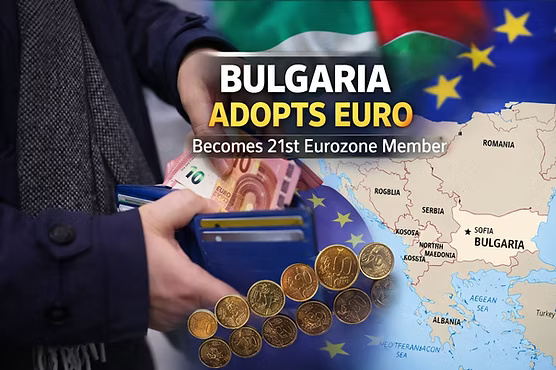
Bulgaria on Thursday officially adopted the euro, becoming the 21st member of the eurozone nearly 20 years after joining the European Union, a landmark step welcomed by EU leaders but met with mixed feelings at home.
At midnight, the Balkan nation retired its long-used currency, the lev, which had been in circulation since the late 19th century. Celebrations marked the transition in Sofia, where Bulgarian euro coins were projected onto the façade of the central bank building as the new year began.
Read More: Bulgaria adopts euro amid fear and uncertainty
European Central Bank President Christine Lagarde welcomed Bulgaria into the eurozone, calling the common currency a “powerful symbol” of shared European values and collective strength. Early signs of the switch were visible as residents withdrew euros from ATMs, with some expressing cautious optimism.
Bulgaria joined the eurozone, becoming its 21st member, as fireworks and crowds celebrated outside the central bank in Sofia https://t.co/XlWxaruYtb pic.twitter.com/sQNfBXhwF5
— Reuters (@Reuters) January 1, 2026
Successive Bulgarian governments have promoted euro adoption as a way to strengthen the country’s economy, deepen integration with Western Europe and reduce exposure to Russian influence. Bulgaria, with a population of 6.4 million, has long been the EU’s poorest member state.
However, public opinion has remained deeply divided. Many citizens fear the switch could drive up prices and worsen inflation at a time of prolonged political instability. Bulgaria has held repeated elections in recent years, with another vote expected soon after anti-corruption protests toppled a conservative-led government in mid-December.
In a televised address shortly before the changeover, President Rumen Radev described euro adoption as the “final step” in Bulgaria’s European integration. At the same time, he criticised the absence of a referendum, saying it highlighted the growing disconnect between the political elite and the public.
Read More: Turkey and Bulgaria have been named as the cheapest resorts in Europe for family fun
Across Sofia’s markets, prices were displayed in both levs and euros as shoppers adjusted to the new system. While some voiced concern about rising living costs, others expressed confidence that Bulgaria would adapt, noting that other EU countries had successfully managed the transition.
European Commission President Ursula von der Leyen said Bulgaria’s eurozone entry would ease travel, enhance market transparency and boost trade across the bloc.