
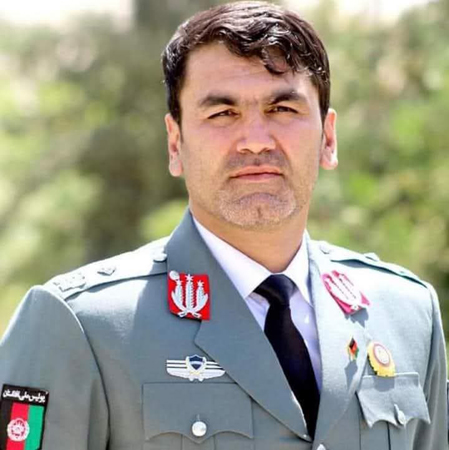
 A former Afghan police commander and outspoken Taliban opponent was shot dead in the heart of Iran’s capital last week, prompting sharp criticism from Afghan political figures and opposition groups, who have pointed the finger at the Taliban’s intelligence apparatus. Former General Ikramuddin Saree, who served as police chief under the previous US-backed government, was gunned down by unknown assailants on the evening of December 24 near his office in Tehran, alongside former army officer Mohammad Amin Almas. Iranian police say an investigation is underway, but so far no arrests or findings have been announced.
The Taliban regime in Kabul has not officially commented on the killing, which opposition groups have roundly condemned, urging Tehran to identify and punish the perpetrators.
Saree, who served as police chief in Takhar and Baghlan provinces before the Taliban’s return to power in 2021, had relocated to Iran after the collapse of the former Afghan government, advocating for former security personnel and openly criticising Taliban policies in media interviews.
Afghan opposition groups, including the National Resistance Front (NRF), the Afghanistan Freedom Front (AFF) and Jamiat-e Islami Afghanistan, have condemned the killing as a “targeted terrorist act” and urged Iranian authorities to conduct an independent and transparent investigation to identify and prosecute those responsible. In statements posted on social media and official platforms, these groups warned that the attack reflects growing risks faced by former Afghan military and security officials in exile.
The NRF said Saree’s killing was not an isolated incident, noting that another former Afghan security commander, Maruf Ghulami, close to veteran anti-Taliban leader Ismail Khan, was assassinated in Mashhad earlier this year. These successive shootings have heightened fears among former Afghan security personnel residing in Iran.
Ahmad Massoud, leader of the NRF, urged Iran to “cut off the hands of terrorists” on its soil and draw parallels with historical attacks on dissidents elsewhere, while the Afghanistan Freedom Front pledged to pursue accountability through all available channels, describing the assassinations as part of a sustained campaign against former Afghan security officials.
In response to the Tehran attack, Naseer Ahmad Faiq, Afghanistan’s charge d’affaires to the United Nations, described the assassination as an “organised crime” and a serious warning sign, calling on Iranian authorities to pursue justice. Former intelligence chief Rahmatullah Nabil and former lawmaker Fawzia Koofi echoed these concerns, saying the episode underscores growing insecurity and uncertainty for Afghan exiles.
The United Nations has also weighed in. Richard Bennett, the UN Special Rapporteur on human rights in Afghanistan, expressed “deep concern” over the killings of Saree and Almas and stressed that those responsible must be identified and held accountable. He called for an independent investigation into the assassinations to ensure transparency and justice.