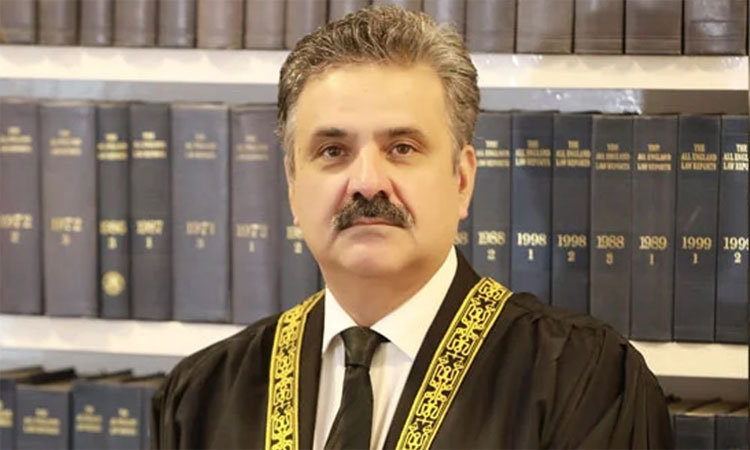
 Reaffirming the Constitution’s promise of equality, inclusion and peaceful coexistence, the Chief Justice of Pakistan, in his capacity as Chairman of the Law and Justice Commission of Pakistan (LJCP), undertook a field visit to District Tharparkar-one of the country’s most remote and climate-stressed regions, marked by a low human development index and a significant religious minority population. The Chief Justice of the High Court of Sindh accompanied his lordship during the visit. The visit underscored the Supreme Court’s commitment to ensuring that access to justice, institutional attention and constitutional protection extend to all citizens, regardless of faith, geography, or socio-economic status.
At the Civil Court Complex, Nangarparkar, the Chief Justice reviewed court functioning and emphasized that dignity in justice delivery is inseparable from functional public facilities. He appreciated the provision of basic amenities in the area, including a women’s facilitation center, clean drinking water, solar power solutions and an e-library-particularly significant in a resource-constrained and climate-vulnerable district.
An interactive meeting was also held with representatives of the High Court Bar Association Mirpurkhas, as well as the bar associations of Mithi, Umarkot and Nangarparkar. The Chief Justice highlighted the importance of constructive bench-bar collaboration as a cornerstone of public trust and effective justice delivery. During the visit, the Chief Justice also paid respects at the historic Kasbo Temple and Churrio Jabal Durga Mata Temple, reaffirming the judiciary’s constitutional role in safeguarding religious freedom, protecting cultural heritage and promoting interfaith harmony. The visits symbolized Pakistan’s pluralistic social fabric and the State’s obligation to protect minority rights.
At the District Court Complex, Mithi, the Chief Justice reviewed court operations, case management practices, infrastructure requirements and women-friendly facilities. Stressing the need for inclusive and gender-responsive judicial environments, his lordship directed that gaps related to accessibility, sanitation and overall functionality be formally documented for remedial action under the LJCP’s development frameworks.