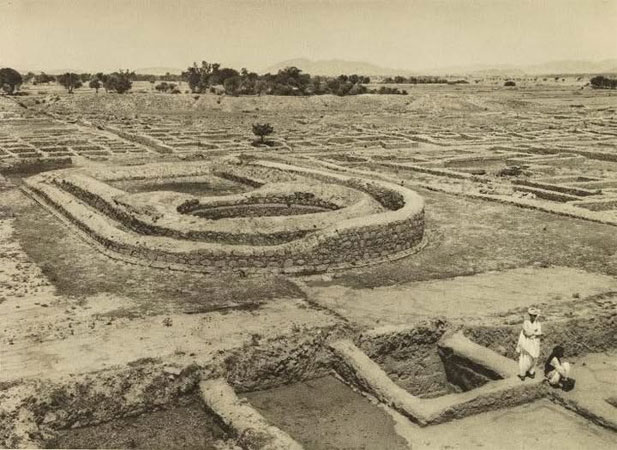
 Archaeologists have recovered a rich collection of antiquities dating back to the 2nd century BC during ongoing excavations at the ancient remains near Taxila, shedding new light on the region’s early urban history and its role as a major centre of civilisation in South Asia. Officials of the Punjab Department of Archaeology told newsmen that the discoveries include finely decorated pottery, ancient coins and seals from the 2nd century BC, along with stone and metal tools, beads, and large storage vessels. The artifacts point to a well-developed social and economic system, supported by organised craftsmanship and active trade networks. The excavations are being carried out at Bhir Mound, regarded as the earliest city of the Taxila civilisation. Archaeologists have also uncovered remains of stone and mud-brick walls, carefully planned streets, and an advanced drainage system, indicating a sophisticated urban settlement that predates the 6th century BC. Cultural layers from the 2nd, 4th, and 6th centuries BC have been identified, while deeper trenches may reveal even earlier phases of habitation. Deputy Director of the Punjab Department of Archaeology Aasim Dogar described the findings as one of the most significant discoveries in recent decades.
2nd Century BC antiquities recovered from Taxila
Published on: December 28, 2025 3:30 AM