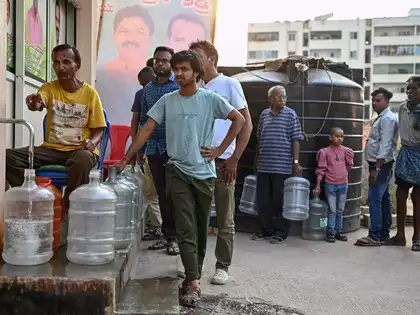
Global beverage companies operating in India are facing mounting challenges as water scarcity intensifies, particularly in the desert state of Rajasthan, where dwindling groundwater levels are colliding with industrial demand and local community needs.
Read More: WWF-Pakistan continues greenwashing beverage company
Rajasthan, nearly two-thirds of which is covered by the Thar Desert, is among India’s most water-stressed regions. Groundwater extraction in the state ranks among the highest in the country, driven largely by agriculture, tourism and industry, even as many residents receive piped water only once a week. For multinational brewers such as Heineken, Carlsberg and Diageo, operating in such conditions has become increasingly complex.
5. Groundwater and Food Security
Indian agriculture depends heavily on groundwater irrigation. Excessive withdrawal, combined with unpredictable rainfall, is exhausting aquifers. Without a shift towards efficient irrigation and sustainable farming practices, water scarcity could… pic.twitter.com/FiJW9vuql5— SA News Channel (@SatlokChannel) December 22, 2025
India’s regulations prohibit the movement of liquor across state borders without special permits, effectively forcing beverage companies to establish production facilities in each state where they sell their products. As a result, despite acute water stress, major firms maintain factories in Rajasthan to serve the local market.
Industry executives acknowledge that water stress is a growing national concern. India supports about 17 per cent of the world’s population but has access to only 4 per cent of global freshwater resources. Rapid economic growth has further increased pressure on already strained water supplies.
In Alwar, an industrial hub in Rajasthan where many beverage plants are located, groundwater extraction is running at nearly double the aquifers’ natural recharge rate, according to government data. While industry accounts for only around 2 per cent of Rajasthan’s total water use, companies are required to install rainwater harvesting and aquifer recharge systems and adopt water-efficient technologies in over-exploited areas.
Beverage firms say they are improving water efficiency and aiming to replenish all the water they extract. Measures include recycling wastewater, using air instead of water in bottle rinsing, and investing in community water projects such as ponds, pipelines and small dams.
However, tensions persist in nearby villages, where residents struggle to secure drinking and irrigation water and some blame industrial users for shortages. Courts have ordered closer monitoring of groundwater use, reflecting growing scrutiny of industrial water consumption.
Read More: PABC announces mega beverage can facility in Afghanistan
As climate pressures increase, experts say even stronger conservation efforts and larger infrastructure projects will be needed to balance industrial activity with the basic water needs of local communities.