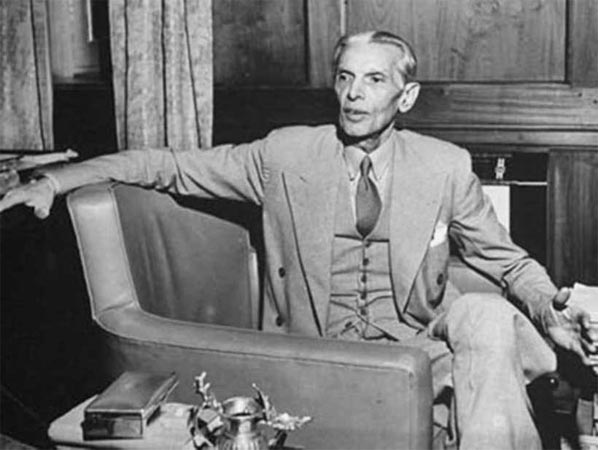
 As Pakistan approaches 2026, marking the 150th birth anniversary of Quaid-e-Azam Muhammad Ali Jinnah, the occasion demands more than commemorative events. It calls for a renewed national conversation on Pakistan’s ideological foundations at a time when misinformation, disinformation and digital distortion increasingly shape public opinion. In this environment, reclaiming and communicating Pakistan’s original narrative becomes a strategic necessity. Uraan Pakistan, as a vision for national revival and forward movement, must therefore be accompanied by credible, dialogue-based and historically grounded communication.
Islamic teachings provide a strong ethical framework for such narrative building. The Qur’an clearly establishes freedom of belief, declaring that there is no compulsion in religion (Surah Al-Baqarah 2:256), while recognizing diversity as a divine design meant to encourage mutual understanding (Surah Al-Hujurat 49:13). These principles directly counter extremist misinterpretations and externally driven narratives that seek to portray Islam and Pakistan as exclusionary. When communicated responsibly, they reinforce tolerance, coexistence and moral accountability as central to Pakistan’s identity.
The Sunnah of the Holy Prophet Muhammad (peace be upon him) further strengthens this perspective. The Charter of Madinah remains a historic example of pluralistic governance, guaranteeing rights and protections irrespective of faith. The Prophet’s clear warnings against injustice toward non-Muslims affirm that oppression and coercion contradict Islamic values. Quaid-e-Azam drew upon these principles when articulating his vision of Pakistan as a constitutional democracy where citizenship and rights would not be determined by religion. In the present information age, returning to these foundational sources allows Pakistan to counter false narratives with authenticity rather than defensiveness.
Modern communication theory offers valuable insight into how this narrative can be effectively projected. James Grunig’s Excellence Theory of public relations, particularly the two-way symmetrical communication model, emphasizes dialogue, mutual understanding and trust-building. Applied to public diplomacy, this model moves communication beyond one-way messaging and toward genuine engagement with domestic and foreign publics. Countering fake news is most effective when communication listens as much as it speaks and addresses concerns rather than dismissing them.
Grunig’s emphasis on long-term relationship building is particularly relevant for Pakistan’s outreach under Uraan Pakistan. Credibility is not established through episodic campaigns but through consistent, transparent and values-based engagement. In today’s interconnected world, non-state actors such as universities, civil society organizations, media professionals and youth platforms play an increasingly influential role in shaping perceptions. Their involvement reflects contemporary public diplomacy, where trust often emerges from people-to-people interaction rather than official statements alone.
In this context, the role of Information Group officers becomes especially significant as Pakistan enters 2026. Officers serving in the Ministry of Information and Broadcasting are positioned at the frontline of the state’s response to disinformation. Through institutional mechanisms such as the MOIB Fact Checker, they contribute to verifying information, countering false narratives and protecting the integrity of public discourse. Their professional responsibility extends beyond information dissemination to safeguarding national credibility in an era of digital manipulation.
At the operational level, the Pakistan Information Department in Karachi has demonstrated how narrative building can translate into meaningful public engagement. The initiative to screen PTV’s abridged production “Jinnah se Quaid” reflects a conscious effort to reconnect youth with the intellectual and constitutional journey of Quaid-e-Azam, counter historical distortion and promote unity through cultural storytelling. Such initiatives show how state communication can evolve from reactive messaging to proactive engagement.
The screenings engaged students from DHA Suffa, Szabist, MiTE. Students from Sindh Madressatul Islam University, the alma mater of Jinnah, were also introduced to Quaid-e-Azam’s ideological evolution through contextual discussions alongside the screening. These academic engagements underline the importance of universities as spaces for informed dialogue and resilience against misinformation.
For Pakistan’s youth, who increasingly encounter fragmented and misleading narratives through digital platforms, Quaid-e-Azam’s 150th birth anniversary offers an opportunity for intellectual reconnection. Narrative building grounded in verified history, dialogue and constitutional values can foster unity, critical thinking and national confidence. This approach aligns not only with Grunig’s two-way communication model but also with Quaid-e-Azam’s belief in reasoned discourse and democratic engagement.
As Pakistan commemorates Quaid-e-Azam at 150, the challenge is not merely to remember the past but to communicate it effectively in the present. Aligning ideology with information, history with verification and vision with dialogue will determine Pakistan’s ability to navigate the information age. If Uraan Pakistan is to truly uplift the nation, it must be supported by a credible narrative ecosystem led by responsible institutions, informed citizens and Information Group officers committed to truth, trust and national cohesion.