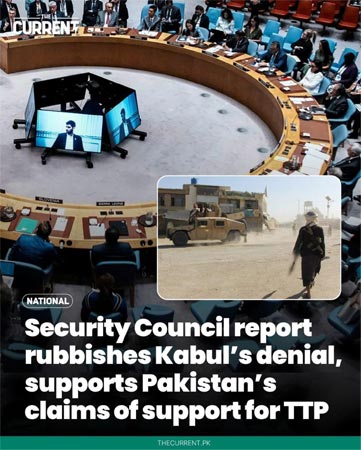
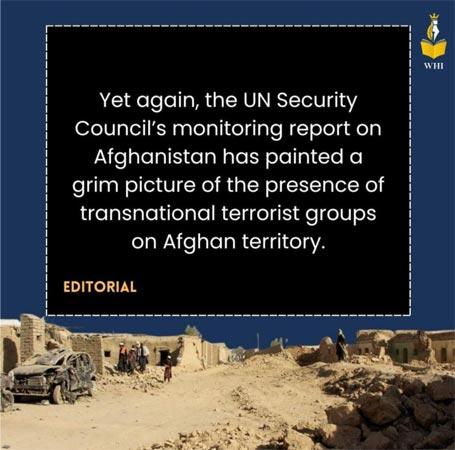
 Sixteenth Report of United Nations Security Council’s Analytical Support and Sanctions Monitoring Team was released on 8 December 2025, offering one of the most authoritative and troubling assessments to date of Afghanistan’s security environment under the Taliban Regime. Contrary to repeated assurances by Kabul that Afghan territory is not being used for militant activity, UN report concludes unequivocally that such claims are “not credible.” Instead, Afghanistan continues to function as a central hub for regional and international terrorist organizations, with direct consequences for Pakistan and broader regional stability.
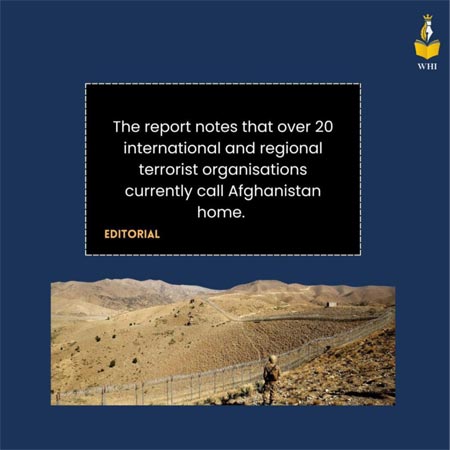
According to the UNSC Sanctions Monitoring Team, more than 20 terrorist organizations are currently operating from Afghan soil. These include Tehrik-e Taliban Pakistan (TTP), Al-Qaida, Islamic State in Iraq and the Levant-Khorasan (ISIL-K), Al-Qaida in the Indian Subcontinent (AQIS), Eastern Turkistan Islamic Movement/Turkistan Islamic Party (ETIM/TIP), Jamaat Ansarullah, the Islamic Movement of Uzbekistan (IMU), and newer entities such as Ittihad-ul-Mujahideen Pakistan.
With the notable exception of ISIL-K, most of these groups maintain cooperative or non-confrontational relations with the Taliban Regime. The report notes varying degrees of tolerance, protection and facilitation, allowing these organizations to recruit, train, fundraise and plan operations with relative freedom.
One of the most alarming findings of the report is the systematic integration of terrorist elements into the Taliban Regime’s security architecture. Former fighters from multiple extremist organizations have reportedly been absorbed into local security forces, valued for their combat experience. This practice however, has allowed extremist ideologies and operational networks to penetrate the regime’s institutions.
The Monitoring Team assesses that Al-Qaida members and sympathizers hold positions within Taliban security and intelligence structures. This convergence blurs the line between state authority and terrorist organizations, effectively embedding global jihadist networks within Afghanistan’s governing framework.
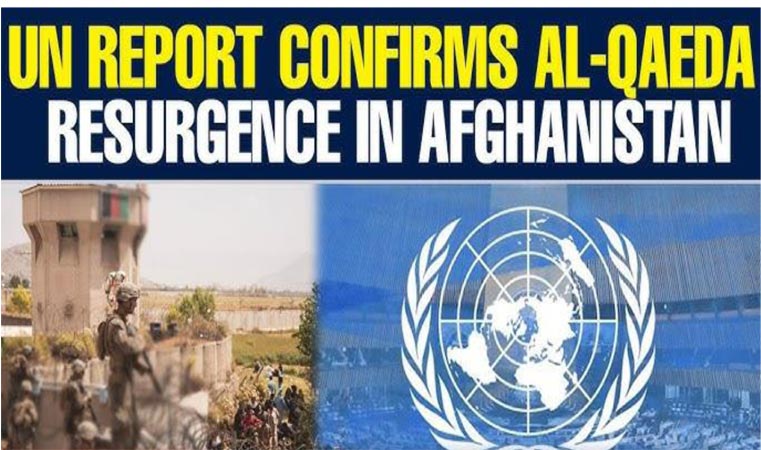
The report confirms that Al-Qaida’s position in Afghanistan remains largely unchanged from previous assessments. The group continues to act as a strategic enabler, offering ideological guidance, training, operational advice, and logistical support to allied militant groups.
Senior Al-Qaida figures reportedly reside in Kabul, while others operate from eastern and southeastern provinces under influence of the Haqqani Network. While the Taliban Regime reportedly seeks to restrain Al-Qaida’s external operations to avoid international repercussions, it continues to host and protect the organization.
A particularly significant development was highlighted in summer 2024, when Sayf al-Adl, Al Qaida’s de facto leader, publicly declared Afghanistan a safe haven and urged supporters worldwide to relocate there. This statement reaffirmed Afghanistan’s role as both the symbolic and operational homeland of Al-Qaida, reinforced by bay’at (oaths of allegiance), battlefield alliances and intermarriages, especially within Haqqani Network.
Al-Qaida in the Indian Subcontinent remains active in southeastern Afghanistan, particularly in Haqqani-controlled areas. In March 2025, Osama Mahmoud was formally named AQIS “Amir,” while Atif Yahya Ghouri, based in Paktika, oversees day to-day operations. UNSC has estimated that AQIS strength is at 200-300 fighters and that it is growing its operational alignment with TTP. AQIS has increasingly redirected its focus towards Pakistan, providing training and operational support that deepens the security threat along Pakistan’s western border.

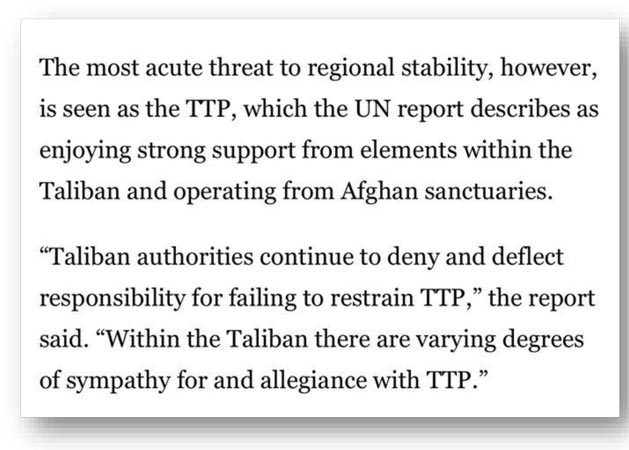
For Pakistan, the most destabilizing threat identified in report is TTP. Taliban Regime continues to harbour TTP leadership and fighters across provinces such as Khost, Kunar, Nangarhar, Paktiya and Paktika, despite recognizing that TTP violence severely strains relations with Islamabad. TTP is assessed to have approximately 6,000 fighters in Afghanistan. The report documents Taliban financial support, including monthly payments reportedly amounting to three million Afghans to family of TTP leader Noor Wali Mehsud.
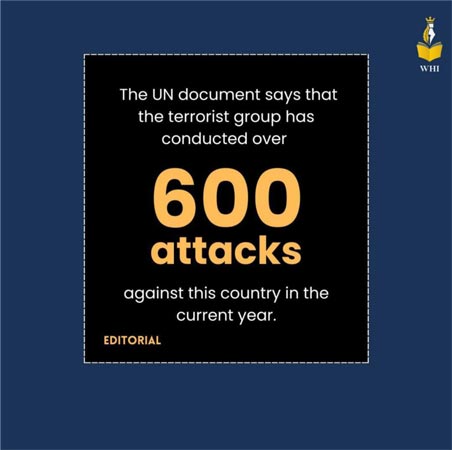
In 2025 alone, TTP carried out more than 600 attacks inside Pakistan, many involving complex operations using vehicle-borne improvised explosive devices, suicide bombers, and coordinated assault teams. Notably, majority of suicide attackers were Afghan nationals, underscoring cross-border nature of threat.
One of the most concerning revelations in UNSC report is the proliferation of drone technology among militant groups operating from Afghanistan. Member States reported drone attacks against Pakistani military installations in Balochistan and Punjab, marking a significant escalation in militant capabilities. The report further states that Al-Qaida emissaries may be directly involved in drone research, manufacturing and training, in coordination with Taliban Regime. Drone production facilities are reportedly operating from former military bases in Kabul and Logar, focusing on improving payload capacity and accuracy. The Taliban’s own efforts to develop a low-cost air capability, alongside terrorist expertise, represent a dangerous convergence.
Although hostile to the Taliban Regime, ISIL-K remains the most globally oriented threat emanating from Afghanistan. The group retains the intent and capability to conduct international attacks, as demonstrated by previous operations in Iran and Russia. ISIL-K has expanded recruitment among Central Asians, indoctrinated children in Afghan madrasas and experimented with artificial intelligence, cryptocurrency financing and 3D printed weapons.
Crucially, UNSC notes that ISIL-K’s external networks were disrupted through international intelligence cooperation without Taliban participation. Despite possessing information, the Taliban Regime reportedly refused to cooperate or share intelligence.
The report also highlights the expansion of ETIM/ TIP into Badakhshan and the Wakhan Corridor, with explicit incitement against Chinese interests and Jamaat Ansarullah’s continued efforts to destabilize Tajikistan and Central Asia. In some cases, foreign militants have reportedly received Afghan passports and salaried positions within Taliban security structures.
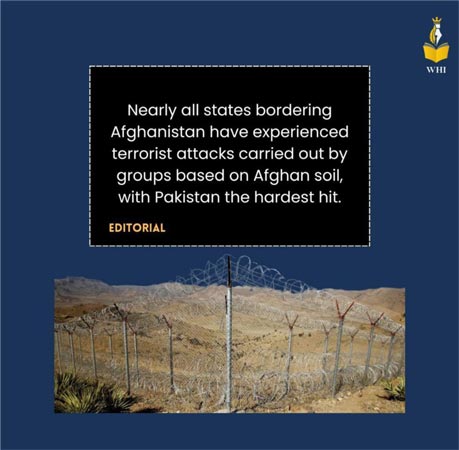
The UN Monitoring Team’s findings leave little ambiguity. Under Taliban Regime, Afghanistan has evolved into a consolidated ecosystem of terrorism, combining sanctuary, training, financing, ideological reinforcement and increasingly sophisticated technology. For Pakistan, the empowerment of TTP and AQIS poses an immediate and ongoing security threat. For the wider region including Central Asia, China, Iran and beyond, the risks of spillover continue to grow.a
The report implicitly challenges international community to reassess its engagement with Taliban Regime, grounding policy not in assurances from Kabul but in documented realities on the ground.