 “The Muslim women never feared retribution or punishment at the hands of any Hindu.”
—Chapter VIII (Para 449)
“They had a perverted idea of woman chivalry. It was the suicidal Hindu idea of chivalry to women which saved the Muslim women (simply because they were women).”
—Chapter VIII (Para 452)
“A serpent, whether male or female, if it comes to bite must be killed. The enemy women, had by that very devilish act, lost their womanhood, and their right to chivalrous treatment, and deserved nothing but only the most stringent punishment”
—Chapter VIII (Para 460)
Six Glorious Epochs of Indian History Vinayak Damodar Savarkar
These excerpts do not belong to an ordinary individual. They come from Vinayak Damodar Savarkar, the very founder of Hindutva. The hatred dripping from his words is unmistakable and non negotiable. This is not a matter of misinterpretation or historical context; it is a clear articulation of an ideology that normalizes dehumanization and justifies violence-particularly against Muslim women. The hatred embedded in these ideas did not remain confined to history books. It has steadily seeped into political discourse and social behavior, shaping the toxic environment India faces today-where Muslim women are routinely dehumanized, threatened, and targeted. The present climate of hostility is not accidental; it is the direct consequence of an ideology that sanctifies hatred and legitimizes cruelty under the guise of nationalism.
The Ideological Foundation
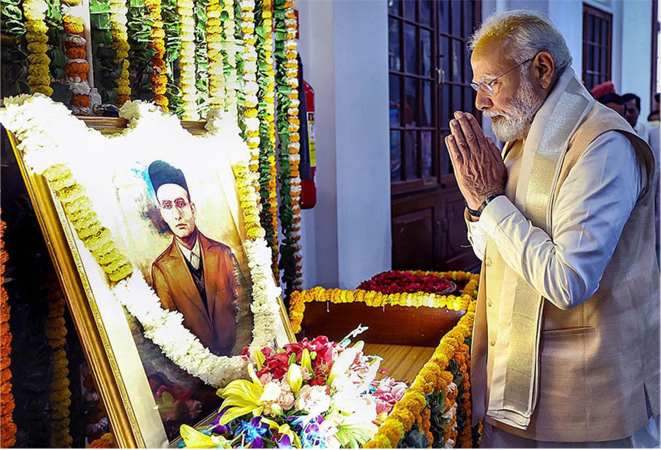
The contemporary crisis of violence against Muslim women in India is not merely a collection of random criminal acts; it is the physical manifestation of a century-old ideological framework. The foundational blueprint for this conduct can be traced to the primary architect of Hindutva, Vinayak Damodar Savarkar. In his book, ‘Six Glorious Epochs of Indian History’, Savarkar explicitly argues for the use of sexual violence as a legitimate retaliatory and political tool. In Chapter 8, under the heading “Perverted Concept of Chivalry,” Savarkar critiques historical Hindu rulers like Shivaji for their “suicidal” sense of virtue in protecting captured Muslim women. He posits that hindus must successfully use the rape and abduction of women as a strategy for expansion and humiliation. This ideology effectively stripped Muslim women of their humanity, transforming their bodies into a symbolic territory for “sexual” violence. To Savarkar, “manliness” and “national honor” were to be reclaimed by discarding chivalry in favor of ruthless sexual subjugation.
The Recent “Hijab” Incident
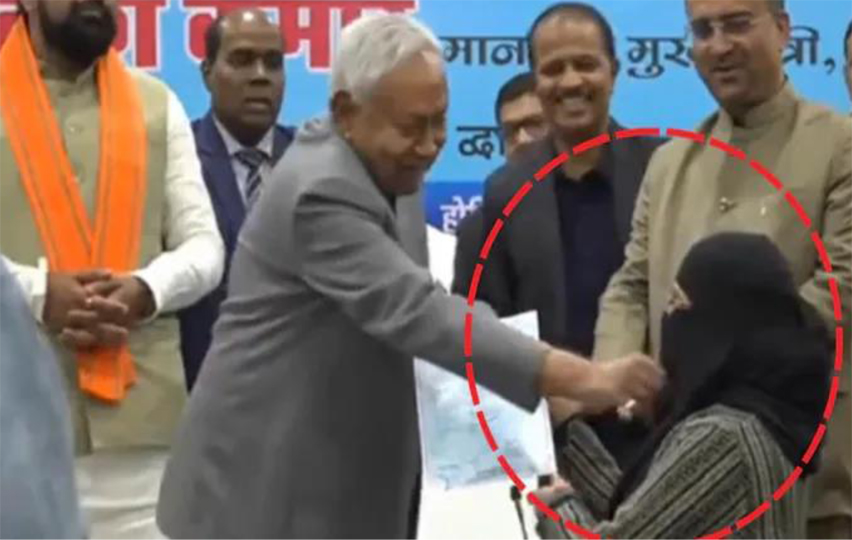
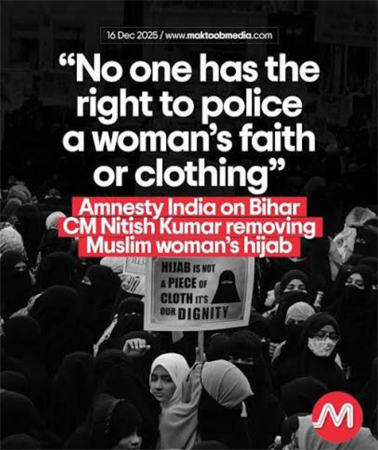
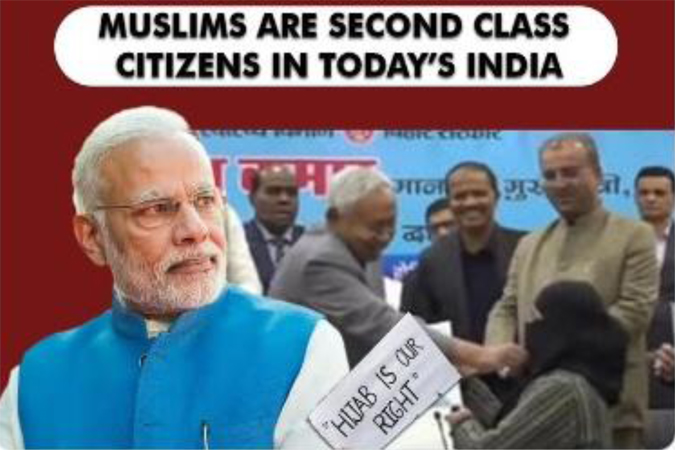
Savarkar’s theory of “distorted morality” has been institutionalized under the BJP-RSS regime. On December 15, 2025, this was brutally displayed at the Chief Minister’s Secretariat in Patna during the Samvaad event. Bihar Chief Minister Nitish Kumar, a key political ally of the BJP, was captured on video forcibly pulling down the Hijaab of Dr. Nusrat Parveen, a newly appointed doctor.
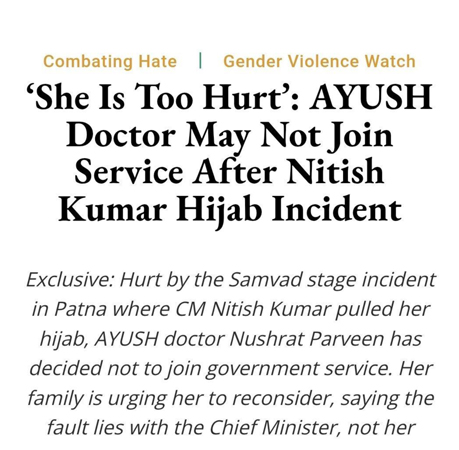
As Dr. Parveen approached the stage to receive her appointment letter, Kumar reportedly gestured toward her veil, asked, “What is this?” and proceeded to physically unmask her. The video shows the doctor visibly distressed and trembling. Deputy CM Samrat Choudhary, who was standing behind him, appears to intervene and restrain Nitish, while Health Minister Mangal Pandey and the CM’s Principal Secretary, Deepak Kumar were seen laughing. Following the event, Dr. Parveen-a victim of public harassment by the head of the state-reportedly declined to join her post, effectively ending her government career before it began.
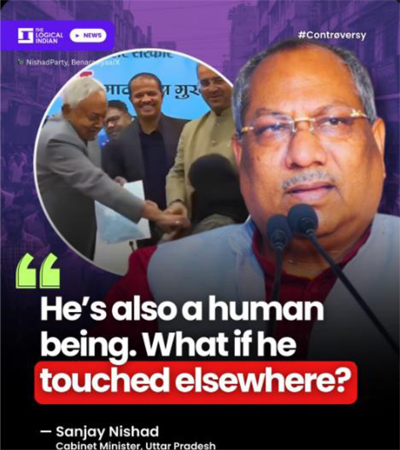
The political defense of this act was even more revealing. Sanjay Nishad, a cabinet minister from Uttar Pradesh, defended Nitish Kumar’s misconduct with a remark that shocked everyone:
“What happened if the veil was removed?
What would have happened if he had touched
somewhere else?”
This statement represents the ultimate “audacity” of the Hindutva ecosystem. It implies that a Muslim woman should be “relieved” that her violation was limited to her clothing, while simultaneously signaling that the state possesses the power to “touch her elsewhere” if it so chooses. This rhetoric treats the Muslim woman’s body as a site where consent and privacy are non-existent.
International Uprising and Legal Violations
The assault in Bihar is a flagrant violation of the Indian Constitution:
n Article 21: Guarantees the right to life, privacy, and personal dignity.
n Article 25: Protects the freedom to practice one’s religion, which includes the wearing of religious attire like the hijab.
n Section 74 of the Bharatiya Nyaya Sanhita (BNS): Criminalizes assault or use of criminal force against a woman with the intent to outrage her modesty.
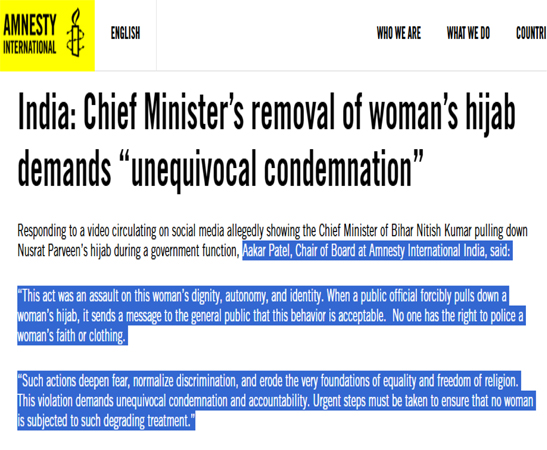
Amnesty International India issued a stark warning stating that the CM’s actions were “an assault on a woman’s dignity, autonomy, and identity.”
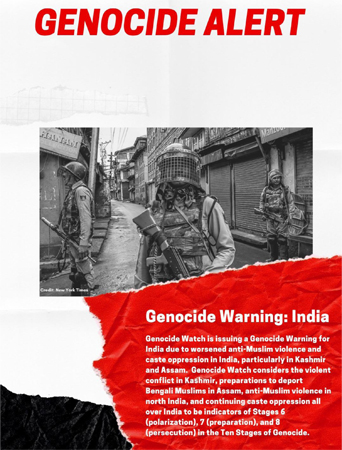
Genocide Watch and the Lemkin Institute for Genocide Prevention have placed these events within the “8th Stage of Genocide” (Persecution), noting that when high-ranking officials film and laugh at the public humiliation of minority women, they are normalizing a genocidal culture.
A Detailed Account of Systematic Misconduct
The incident in Bihar is the culmination of years of targeted hostility. The following record details the trajectory of this “War on Muslim Women”:
1. The Legacy of the 2002 Gujarat Riots
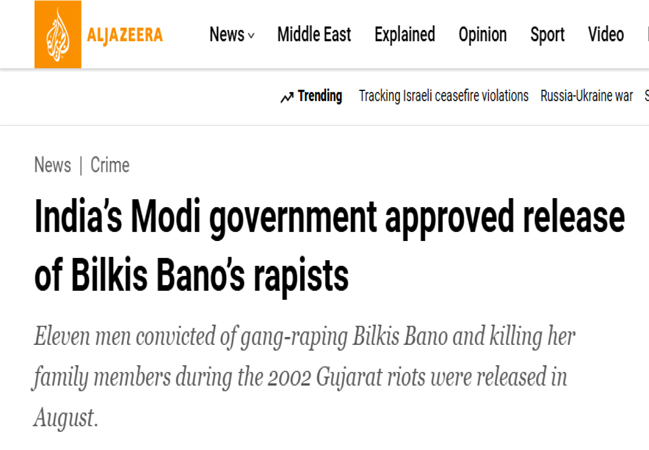
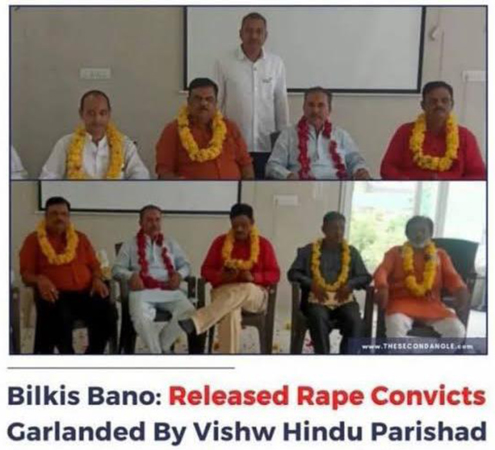
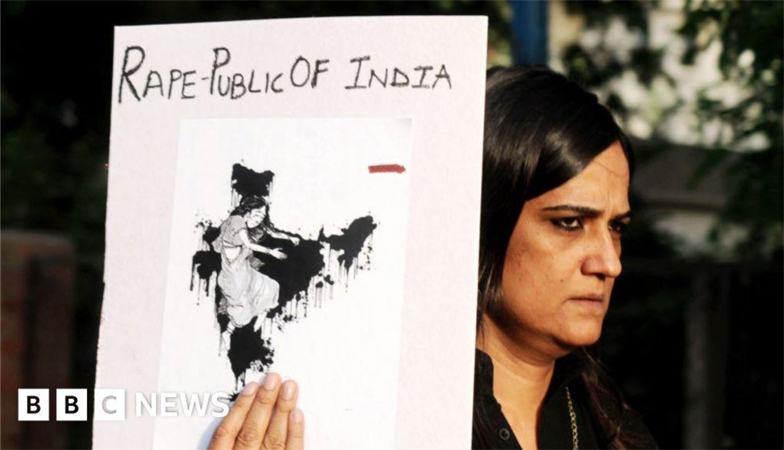
The most horrific application of Savarkar’s “retaliatory rape” theory occurred during the 2002 Gujarat pogroms. Thousands of Muslim women were gang raped and murdered. The case of Bilkis Bano-who was gang-raped while pregnant and saw her family murdered-became a symbol of this brutality. The BJP government’s 2022 decision to release her rapists (who were greeted with garlands) signaled a total breakdown of the rule of law and the triumph of Hindutva impunity.
2. Digital Auctions and Deepfake Violence
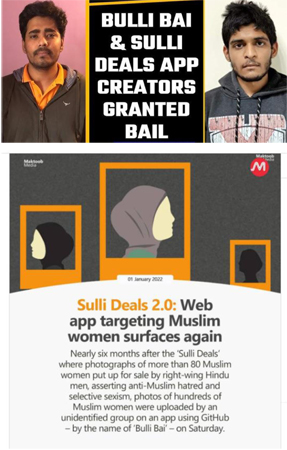
In 2021 and 2022, apps like “Sulli Deals” and “Bulli Bai” surfaced, where photos of prominent Muslim journalists and activists were uploaded for an “online auction.”
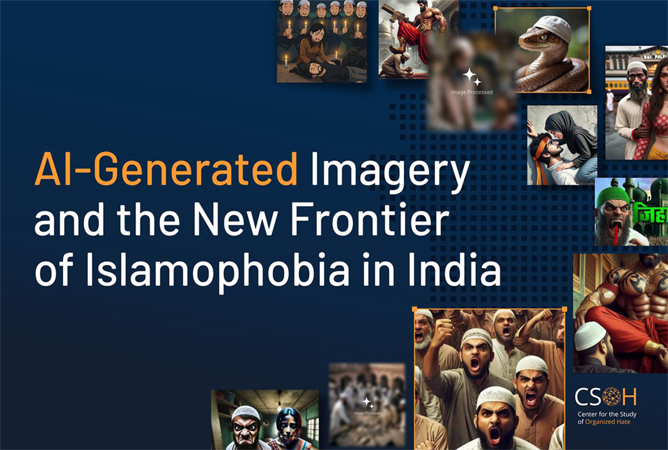
This trend has evolved into “Digital Lynching” in 2025, with widespread use of AI-generated deepfake pornography to humiliate and silence vocal Muslim women.
3. Calls for Mass Rape and Necrophilia
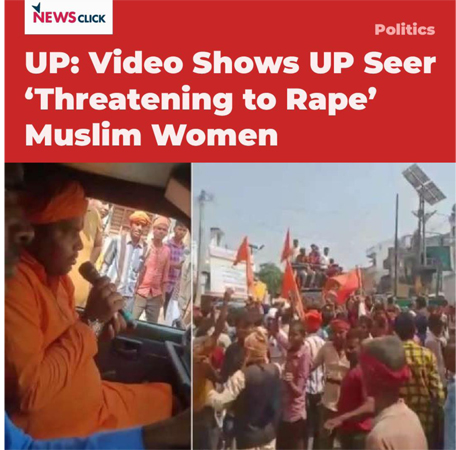
The rhetoric of Hindutva leaders has reached a level of depravity seldom seen in modern history. Bajrang Muni Das Publicly threatened to kidnap and rape Muslim women in the presence of police officers.
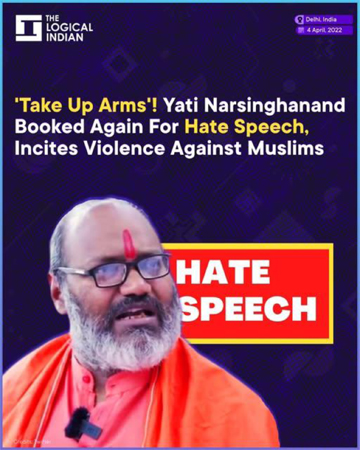
Yati Narsinghanand frequently refers to Muslim women as population bombs and has called for their mass enslavement.
Other extremist leaders have publicly stated that “Muslim dead women should be pulled from their graves and raped,” a necrophilic call for violence that illustrates the absolute dehumanization inherent in the ideology.
4. The Hijab Victimization
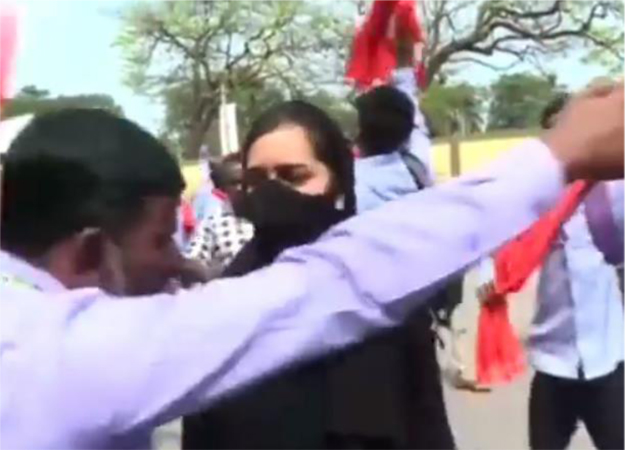
From December 2020 to early 2025, a nationwide campaign to bar Muslim students from education through hijab bans has unfolded. In Udupi, Karnataka, students like Muskan Khan were harassed by mobs of men in saffron scarves.
By October 2025, cases like that of a 13-year-old girl in Kerala, expelled for her hijab, prove that the state is effectively using “educational exclusion” as a tool for religious erasure.
The Statistical Reality
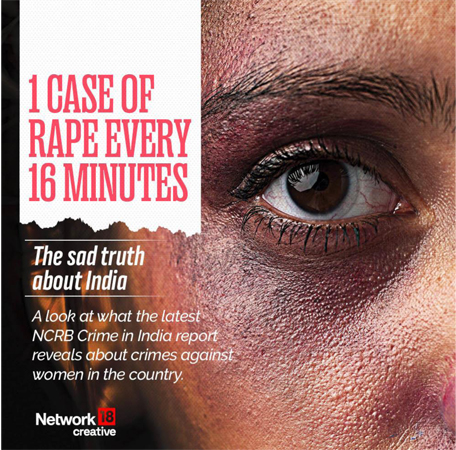
According to NCRB 2025 projections, India remains one of the most dangerous places for women, with 26,337 rapes expected this year. Between 2014 and 2022, nearly 300,000 rapes were officially recorded, while underreporting remains as high as 71%.
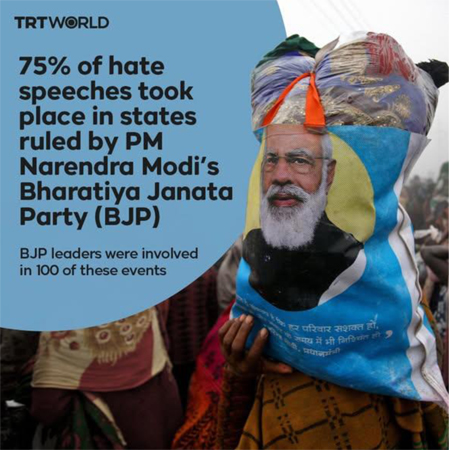
These crimes are overwhelmingly dominated by BJP ruled states:
n Rajasthan: 5,600 cases
n Uttar Pradesh: 4,000 cases
n Madhya Pradesh: 3,100 cases
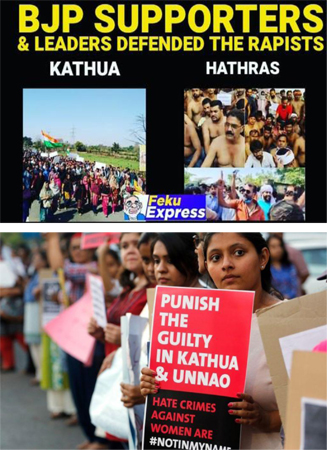
Research by Human Rights Watch and Persecution Tracker (2025) highlights that while all women are vulnerable, Muslim and Dalit women face a “double burden” of violence. Police often refuse to file FIRs for Muslim victims, while political leaders frequently mobilize in support of Hindu perpetrators, as seen in the Kathua and Unnao rape cases.
Israel: The Transnational Mirror
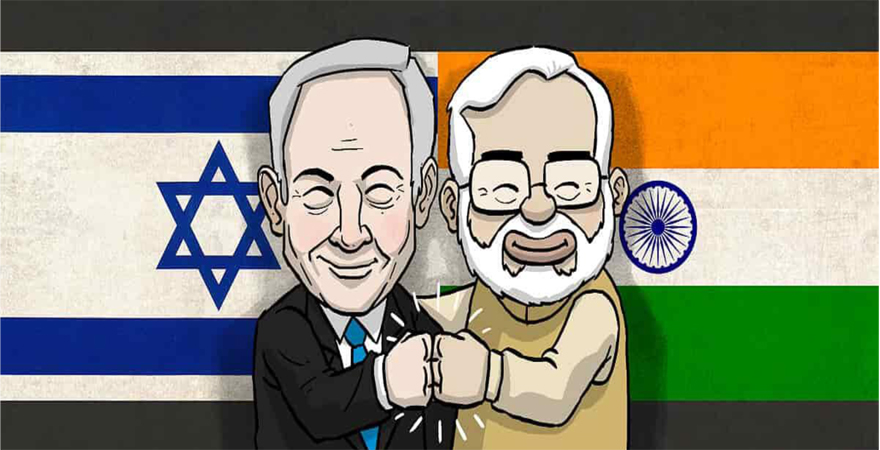
The systematic degradation of Muslim women in India finds a disturbing contemporary parallel in Israel’s treatment of Palestinian women.
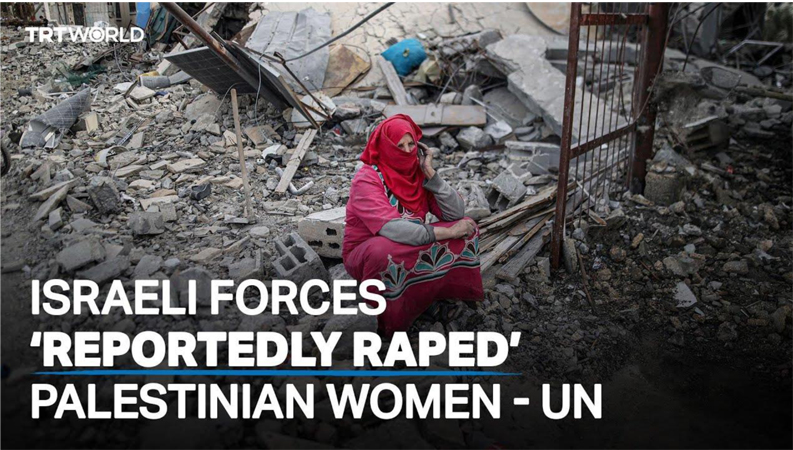
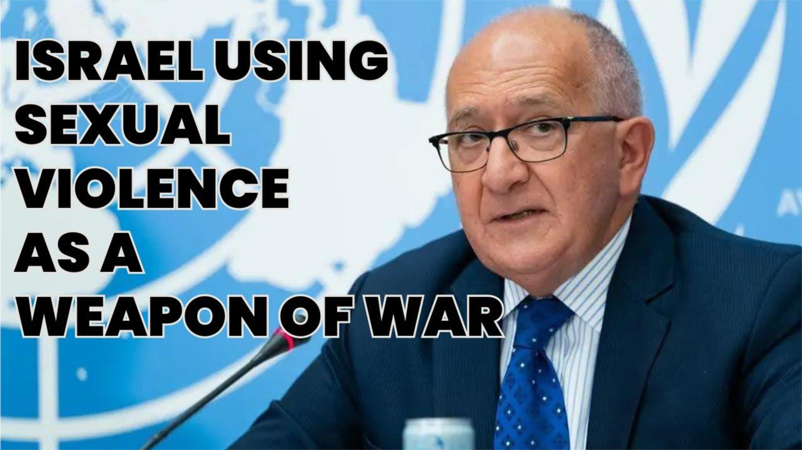
Just as the Hindutva ideology uses the bodies of Muslim women to “redeem” national pride, international commissions (such as the UN OHCHR March 2025 report) have documented Israel’s “systematic use of sexual and reproductive violence” as a strategy of war.
In both contexts, sexual violence is used as a human shield for the state’s ideological projects. By dehumanizing the women of the “other,” both regimes seek to fracture the social fabric of the targeted community, ensuring that their existence is defined by fear and submission rather than dignity and rights.
Final Words
Savarkar’s dismissal of “woman-chivalry” as a “suicidal” Hindu weakness did more than reflect personal prejudice-it supplied ideological permission for future atrocities. By implying that the rise of a Hindu nation requires the withdrawal of protection from Muslim women, Hindutva recast cruelty as national duty. This is why contemporary abuses-from the public unmasking of Muslim doctors to the online “auction” of women-are not treated as aberrations by the ruling ecosystem, but as the logical fulfillment of a masculinized, exclusionary nationalism. Under the weight of such filmed and celebrated crimes, India’s claim to be the “world’s largest democracy” collapses, as the hijab and the female body are transformed into sanctioned targets of state-enabled misogyny.