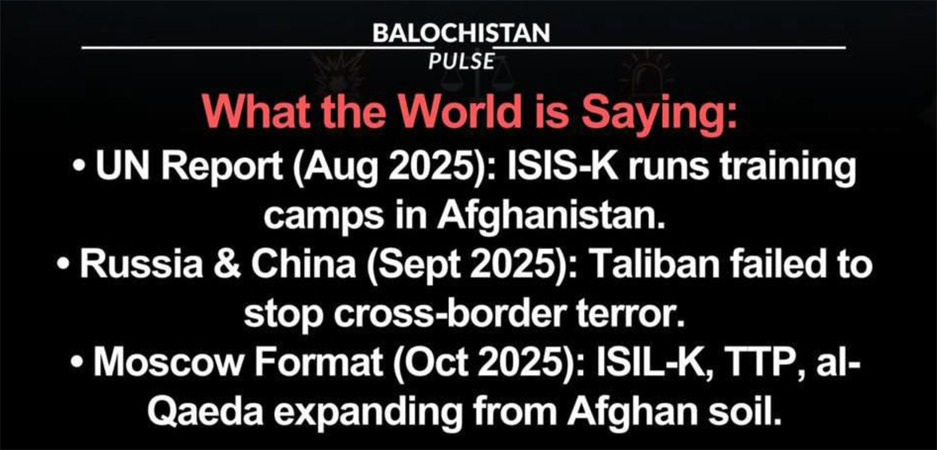
 Proofs of Taliban regime actively supporting, facilitating, sheltering and funding international terrorist groups are surfacing with each passing day. Quarterly UN Monitoring Team Reports are repeatedly providing evidence of growth of international terrorist organizations in Afghanistan.
Similarly, SIGAR reports are pointing towards the same fact. Pakistan was already suffering from its effects, now terror has reached other countries as well. In last week of Nov 25, Danish deputy permanent representative, Sandra Jensen Landi in her statement in UNSC, warned that the TTP poses a “serious threat” to Central and South Asia. She stated that approx 6,000 TTP fighters are operating on Afghan soil, and accused the “de facto authorities” in Afghanistan of giving them “logistical and substantial support.”
Terrorism Emanating from Afghanistan
In 2024 and 2025, terrorist groups based in or operating from Afghanistan-most notably Islamic State Khorasan (ISKP) and Tehrik-i-Taliban Pakistan (TTP)-have intensified their involvement in both regional and global attacks. Reports from early 2025 indicate that the TTP is now the fastest-growing terrorist group globally.
Quadcopter attack on Chinese workers in Tajikistan from Afghanistan on 27 Nov is only the latest manifestation of apprehension that the country has become hub of international terrorist organizations, once again. Meanwhile an Afghan immigrant killed two National Guard soldiers in Washington DC on 26 Nov. Director FBI, Kash Patel said that Rahmaullah Lakawani, the perpetrator, was in touch with groups located in Afghanistan.
Islamic State Khorasan (ISKP)
ISKP has transitioned from a localized insurgent group into a major transnational threat, using Afghanistan as a base to coordinate external operations.
n Russia (Moscow Attack): In March 2024, ISKP militants carried out a mass shooting and arson at Crocus City Hall, killing approximately 140 people.
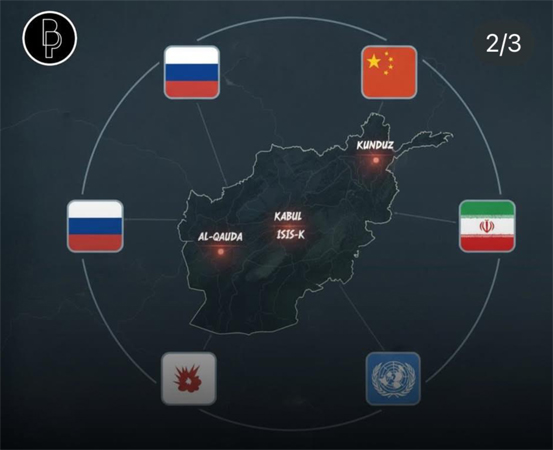
n Iran: In January 2024, the group conducted a twin bombing in Kerman during a memorial for Qassem Soleimani, resulting in over 90 deaths.
n Europe: Security agencies have disrupted multiple ISKP-linked plots in Europe throughout 2024 and 2025, often involving operatives from Central Asian diaspora groups recruited online.
n Internal Afghanistan Attacks: The group continues to target Afghan minorities and Taliban officials, including the May 2024 killing of three Spanish tourists in Bamiyan.
Tehrik-i-Taliban Pakistan (TTP)
The TTP maintains a significant presence in Afghanistan, where it enjoys “greater operational freedom” and safe havens provided by the interim Taliban government.
n Pakistan Insurgency: The TTP was responsible for a surge in violence in Pakistan, with over 500 attacks recorded in 2024 alone. Notable incidents include:
n Bannu Cantonment: July 2024 attack by the Hafiz Gul Bahadur Group (a TTP affiliate).
n Convoy Attacks: In 2025, a TTP suicide bomber targeted a Pakistan Armed Forces convoy, killing 16 soldiers.

n Foreign Nationals: The TTP and its affiliates have increasingly targeted Chinese nationals working on infrastructure projects in Pakistan to disrupt regional economic ties.
Al-Qaeda and AQIS
While Al-Qaeda’s central leadership remains weakened, its regional arm, Al-Qaeda in the Indian Subcontinent (AQIS), remains embedded with the Afghan Taliban.
n Operational Role: AQIS reportedly operates training camps and safehouses in Afghanistan as of late 2024.
n Strategic Focus: It currently focuses on providing strategic guidance and propaganda to local affiliates rather than direct large-scale external operations, though it has expressed increased appetite for opportunistic attacks globally.
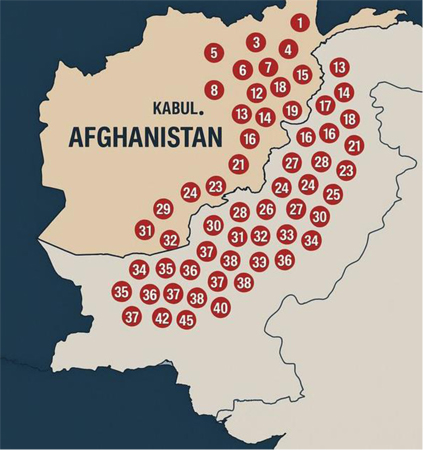
According to Russia’s Permanent Representative to the United Nations, Vassily Nebenzia, terrorist groups – notably Islamic State – Khorasan Province (ISKP / “Daesh-Khorasan”) – are expanding their influence in Afghanistan. He warned that these militants “are deliberately fueling tensions” in the country, receiving foreign financing, and could use weapons abandoned by Western forces – risking spillover of terrorist activity into Central Asia and beyond. According to latest UN estimates there are around 13,000 foreign fighters in Afghanistan (TTP-6,250, ISKP-3000, AQ-400, AQIS 500, IMU-300, ETIM-300, Jamaat Ansarullah (Tajikistan)-300, Others-2500. Meanwhile, fighters of Daesh are transiting to Afghanistan from Syria and Iraq. Some of these fighters are also moving to CARs using Kunduz as staging point.
Uprising Against The Taliban Regime
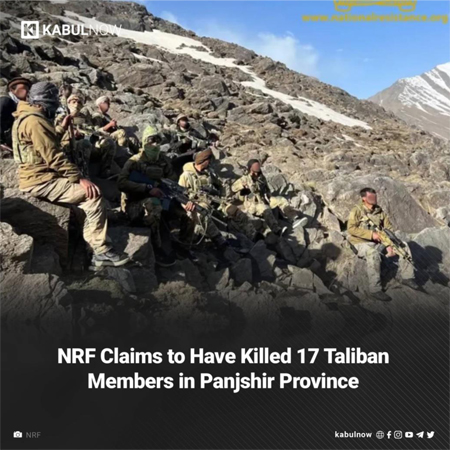
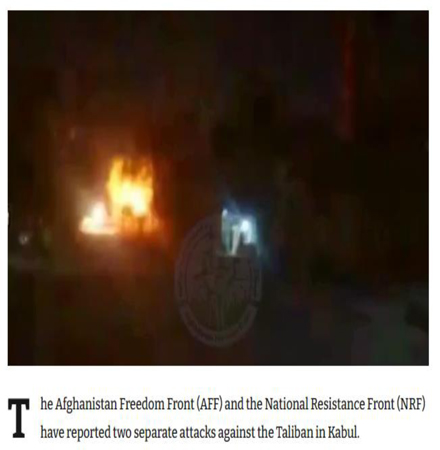
The rebellion against the Taliban regime in northern Afghanistan is intensifying. In the past three days, three attacks were carried out in two provincial capitals, resulting in 11 Taliban members killed, including one commander. The militants from the NRF and AFF targeted the governor’s house security unit in Badakhshan and the Taliban recruitment center in Kunduz. According to the source, the first attack took place on Thursday evening in Kunduz’s sixth security district on a checkpoint, in which 3 Taliban were killed and one wounded. Two motorcycle-riding attackers threw hand grenades at the checkpoint after dusk and managed to escape successfully. Among those killed was the post in-charge, Hashmatzada. The National Resistance Front (NRF) has claimed responsibility for this attack.
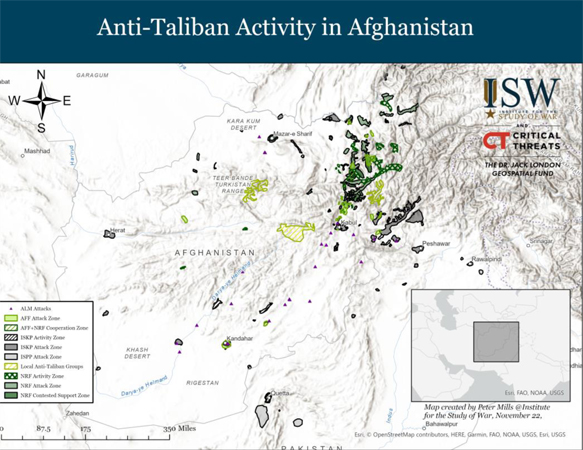
The second attack was also carried out on Friday at the same evening time, but the target was the Taliban recruitment office. 2 militants attacked this recruitment office located in Kunduz’s red zone with hand grenades and escaped by blending into the fleeing crowd on foot. According to Taliban sources, In this attack, 5 Taliban personnel were killed, including the recruitment office in-charge commander Qari Obaida. The Afghanistan Freedom Front (AFF) has claimed responsibility for this attack.
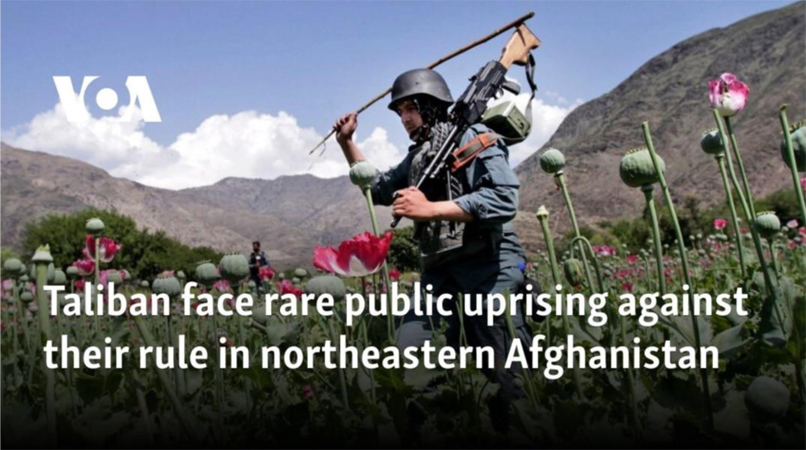
The third and largest attack was carried out in Badakhshan, where on Saturday, the militants targeted the reserve unit camp of the governor’s security near the governor’s house in the provincial capital Faizabad at a time when Taliban personnel were going from there to change the security shift at the governor’s house in the evening. The number of attackers was two, and they were riding motorcycle. They threw a total of three grenades at the security camp’s gate and a nearby American-made Taliban Ranger vehicle. In this attack, 5 Taliban personnel were killed, including post commander Tayeb Qandhari. The attackers managed to escape successfully, but due to the Taliban’s retaliatory firing, one passerby was killed and three were wounded. AQIS has also affiliated itself with TTP under commander Usama Mahmood. Fighters of AQAP are also moving from ME to Afghanistan.
In short, Afghanistan has once again become a magnet for foreign fighters. Various terror organizations, weakened and battered due to military action in other countries are now resuscitating in Afghanistan. These organizations have different agendas. Some have specific regional goals while others like Daesh and AQ have global objectives. As these groups regain strength, they will start attacking their intended targets as per their goals. Attack on Chinese workers in Tajikistan from Afghanistan is manifestation of the same. Kabul regime which is already ideologically pre-disposed towards all militant groups, is fast losing its ability to control these foreign terror groups, even if it wants to. With war in Afghanistan over, tens of thousands of Taliban fighters have now become unemployed. They are joining TTP and other groups in throngs. Rampant unemployment and extreme poverty are also driving young Afghans to these terror groups.
Why TTA Avoiding The Regional CT Engagements?
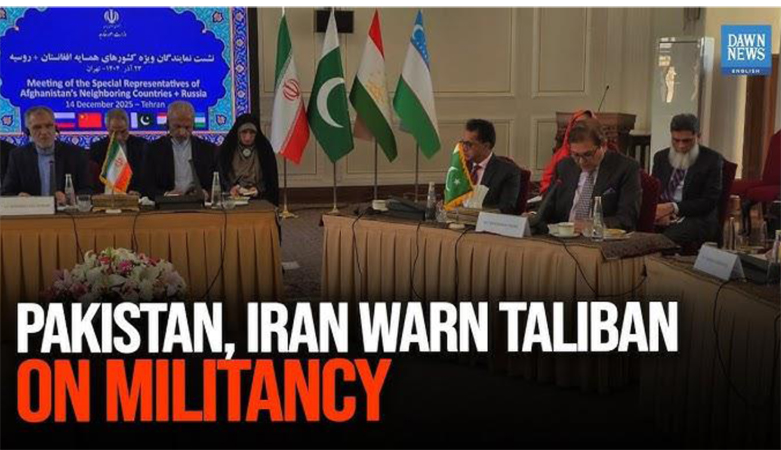
Afghanistan’s decision to stay away from the Tehran regional meeting has important implications for the evolving regional security landscape. The refusal reinforces growing concerns among neighboring states that the Afghan Taliban leadership remains reluctant to engage in collective, multilateral scrutiny, particularly on issues of cross-border militancy and regional terrorism.
For countries such as Pakistan, Iran, China, Russia, and Central Asian states, the primary concern is the continued presence and operational freedom of terrorist groups, including TTP, ISKP, and other transnational networks operating from Afghan soil. By declining participation, Kabul has missed an opportunity to directly address these concerns in a regional forum and to reassure neighbors through dialogue and transparency.
The move may further deepen mistrust and push regional actors to intensify bilateral or multilateral coordination without Afghan participation, potentially marginalizing Kabul in future regional security mechanisms. It also strengthens the perception that the Taliban prefers selective engagement over comprehensive regional accountability.
Final Words

Seeing the unflinching bond of TTA with terrorist groups, Pakistan should continue with consistent advocacy for regional cooperation against terrorism, support for dialogue-based solutions, and the balanced approach towards constructive engagement with reluctant Kabul regime beyond verbal promises. Recent announcement from 1000 Afghan scholars in condemnation of cross-border terrorist attacks is welcome step, however, TTA regime has to prove its will against terrorist groups not with words but with verifiable actions.