 Transparency International Pakistan (TIP) has released its National Corruption Perception Survey (NCPS) 2025. It is a crucial domestic exercise designed to gauge public perception regarding corruption and institutional performance across the country.
While the survey highlights persistent public concerns, its findings reveal several significant, positive shifts that underscore Pakistan’s ongoing trajectory towards better governance, economic stabilization, and reduced day-to-day corruption pressure.

The NCPS 2025 expanded its sample size considerably from 1600 in 2023 to 4000 respondents across 20 districts. Thus, now it provides an even more robust and representative nationwide snapshot of the public mood, encompassing 55% men, 43% women, and 2% transgender individuals, with a diverse mix of urban (59%) and rural (41%) participants. This comprehensive approach lends greater credibility to the observed trends of improvement.

A Clear Reduction in Day-to-Day Bribery
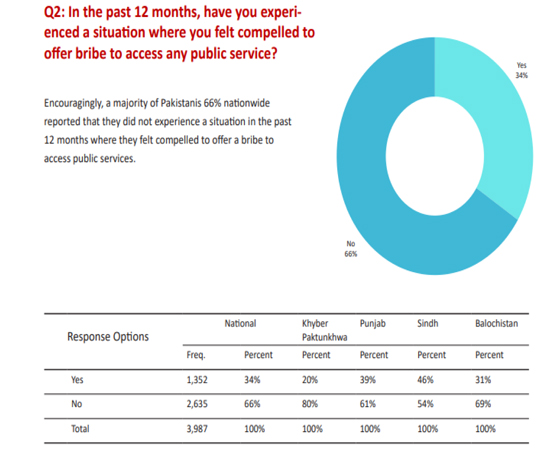
One of the most encouraging takeaways from the NCPS 2025 is the reported decrease in the direct experience of bribery by the average citizen. Two Out of Three Citizens Avoid Bribery.

A powerful majority of Pakistanis-66% of respondents-reported that they did not encounter a situation in the last 12 months where they felt compelled to pay a bribe for any public service. This data point is a strong indicator that while systemic corruption remains a significant challenge, the pressure to pay bribes for routine, essential public services is not universal. It demonstrates that two out of every three citizens in Pakistan navigated their daily government interactions over the past year without resorting to illicit payments. This notable finding reflects a tangible, positive change in citizen institution interaction. Only a third of citizens (34%) reported experiencing bribery over the past year.
Acknowledging Economic Stabilization
The survey provides a strong public endorsement of the difficult but necessary economic stabilization policies pursued by the government.
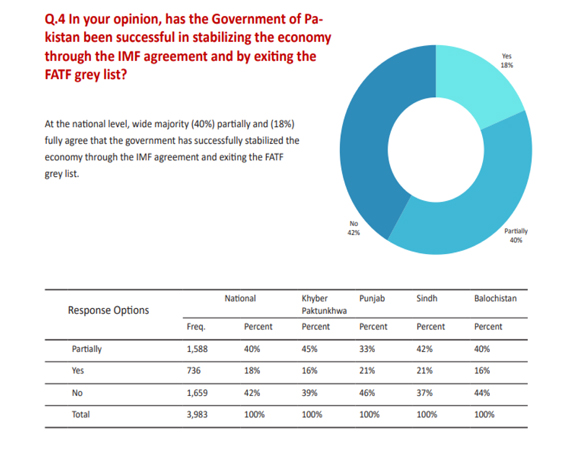
8 Public Recognition of Stability Efforts: Approximately 60% of Pakistanis either fully or partially agreed that the government was successful in stabilizing the economy through the crucial International Monetary Fund (IMF) program and the country’s successful exit from the Financial Action Task Force (FATF) Grey List.
8 Economy Moving Towards Growth:
This recognition shows public understanding and acknowledgment of the efforts to pull the national economy out of its most vulnerable state. The report itself notes that the national economy is moving ‘from instability towards stability and from stability towards development.’
8 Improved Purchasing Power:
Further reflecting an improving economic direction, 43% of Pakistanis reported an improvement in their purchasing power. Nearly half of the population that is feeling better off economically is a vital sign of a positive momentum in the economy’s direction.

Institutional Progress & Momentum in Reforms
While the survey identified sectors like Police, Tendering and Procurement, and the Judiciary as those with the highest negative perception, the institutional scan also revealed measurable improvements in how the public views key service delivery bodies. The Police sector, historically viewed with high levels of skepticism, saw a 6% positive shift in public perception. This is a significant improvement, reflecting the positive impact of institutional reforms focused on enhancing behavior and service delivery. This improvement in the public mood suggests that police modernization and behavioral change initiatives are yielding practical results on the ground.
Other vital sectors that showed an improvement in public perception include:
8 Education
8 Land and Property
8 Local Government
8 Taxation
These improvements across various institutions signal that reform initiatives are gaining traction and that citizens are starting to experience better service delivery and greater transparency in their interactions with the state machinery.
A Roadmap for Deeper, People-Driven Reforms
The NCPS 2025 offers more than just a critique; it provides a concrete, public-backed blueprint for reform that the government and institutions can follow to deepen the anti-corruption drive.
8 Demand for Stronger Oversight:
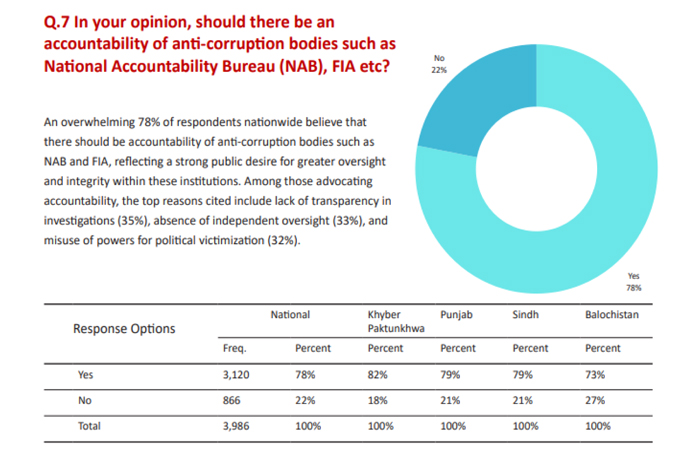
A significant 78% of citizens want anti-corruption oversight bodies, such as the National Accountability Bureau (NAB), to be more accountable and transparent themselves. This is not a call for the delegitimization of watchdogs but a strong mandate for their internal reform, ensuring that even the most powerful institutions operate under the rule of law.
8 Whistleblower’s Protection:
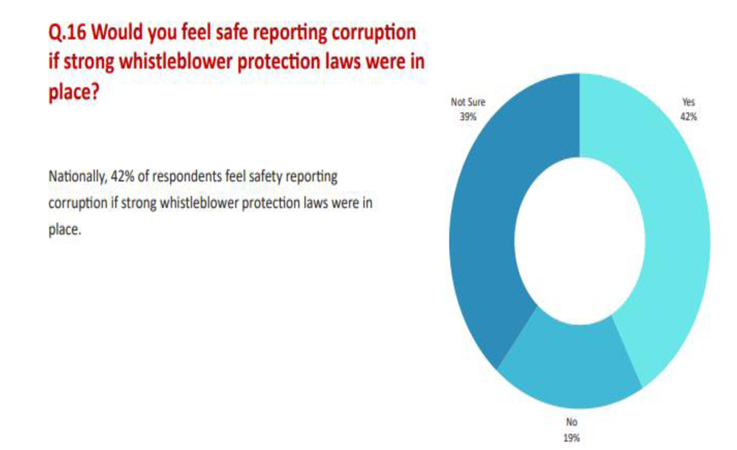
A crucial finding is that 42% of citizens would be prepared to report corruption if stronger whistleblower protection laws were enacted. This demonstrates that the public is ready to partner with the government to clean up the system, provided a framework of safety and anonymity is established.
8 Clear Policy Directives:
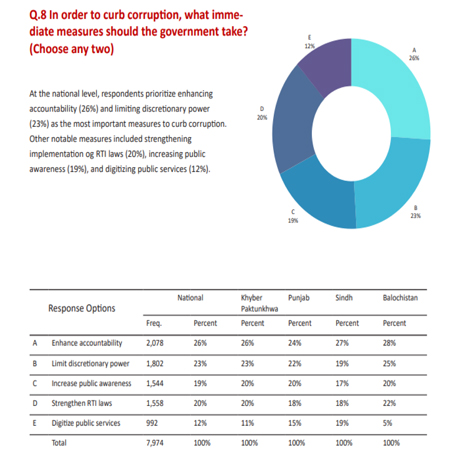
The public’s primary recommendations for combating corruption include: strengthening accountability, limiting the discretionary powers of officials, reinforcing Right to Information (RTI) laws, and digitizing public services. These are actionable policy points for every government and institutional leader.
8 Demand for Cleaner Politics:
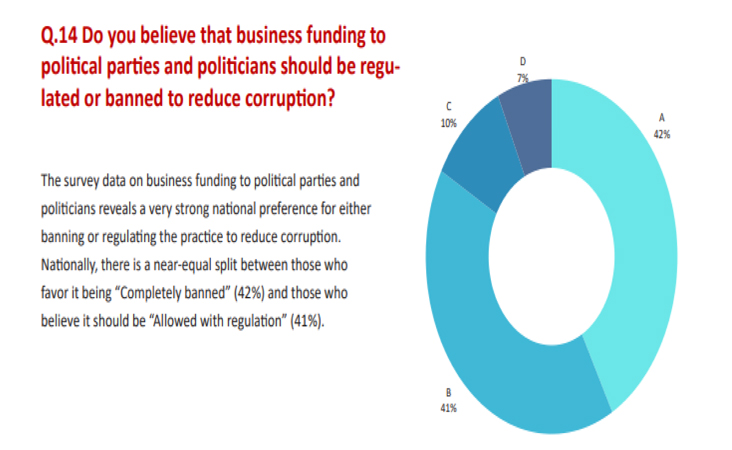
An overwhelming 83% of respondents desire either a complete ban or strict regulation on the business funding of political parties, showcasing a clear public mandate for transparent political financing and a reduction of “dirty money” in the political sphere.
Final Words
The Transparency International Pakistan NCPS 2025 is a positive indicator of Pakistan’s progress. It confirms that the government’s tough decisions on the economy have earned public acknowledgment, and more importantly, that institutional reforms are translating into a lower incidence of bribery in the daily lives of most Pakistanis. The two-thirds majority of citizens who reported no experience with bribery over the last year is a powerful metric of success. The report’s findings are a clear signal that the overall environment is one of stabilization and reform, giving institutions a solid foundation and a public-backed roadmap to build a truly transparent and accountable future. Pakistan is on a positive trajectory, evidenced by reduced daily corruption pressure and growing public confidence in its economic and institutional reforms.