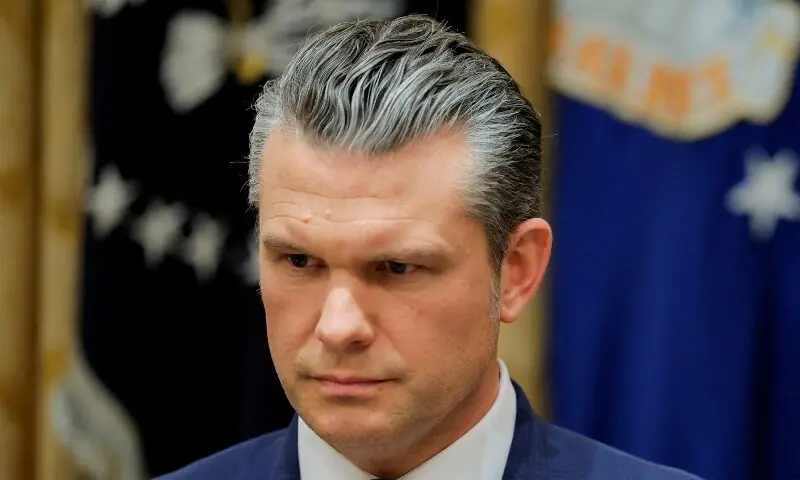
WASHINGTON: The Pentagon’s independent watchdog has concluded that US Defence Secretary Pete Hegseth’s use of the commercial messaging app Signal to discuss military strikes on Yemen could have put American troops at risk, US media reported on Wednesday.
Read More: Israel strikes Huthi power site in Yemen
The investigation by the Department of Defense Inspector General, while transmitted to Congress, found that Hegseth did not violate classification rules, as he possesses the authority to declassify information, according to sources familiar with the probe.
BREAKING: A Pentagon watchdog concluded that Sec. Hegseth risked exposing classified information that could have endangered U.S. troops when he relayed details about a planned military strike in Yemen using the Signal messaging app, according to sources. https://t.co/7SOVTqnvc8 pic.twitter.com/Z64qk45heI
— ABC News (@ABC) December 3, 2025
The inquiry was triggered after the Atlantic magazine revealed in March that its editor, Jeffrey Goldberg, was inadvertently added to a Signal chat where US officials, including Hegseth and then-national security adviser Mike Waltz, discussed operations against Iran-backed Huthi rebels in Yemen. The chat contained details about the timing of strikes and information on aircraft and missiles, while Waltz shared real-time intelligence on the aftermath.
While the Pentagon spokesman Sean Parnell described the review as a “TOTAL exoneration of Secretary Hegseth,” the findings may reignite debate over his conduct. Hegseth had also created a second Signal chat to discuss the strikes with family members, raising further scrutiny.
A Pentagon investigation has faulted Defense Secretary Pete Hegseth for using Signal on his personal device to transmit sensitive information about planned strikes in Yemen, saying it could have endangered US troops if intercepted https://t.co/UOeCQEMx3g
— Reuters (@Reuters) December 4, 2025
The Huthi rebel group had escalated attacks on shipping in the Red Sea and Gulf of Aden following Israel’s 2023 offensive in Gaza, forcing ships to take lengthy detours around southern Africa. US forces launched retaliatory air strikes against the Houthis in March 2025, continuing under Trump’s administration until a ceasefire was reached in early May with Omani mediation.
Read More: Israel launches airstrikes in Yemen, 9 killed in Sanaa and Al-Jawf
Trump resisted calls to remove Hegseth, largely blaming Waltz, who was replaced as national security adviser and later appointed US ambassador to the United Nations. Analysts say the episode highlights ongoing concerns about operational security and the use of commercial messaging platforms in sensitive military communications.