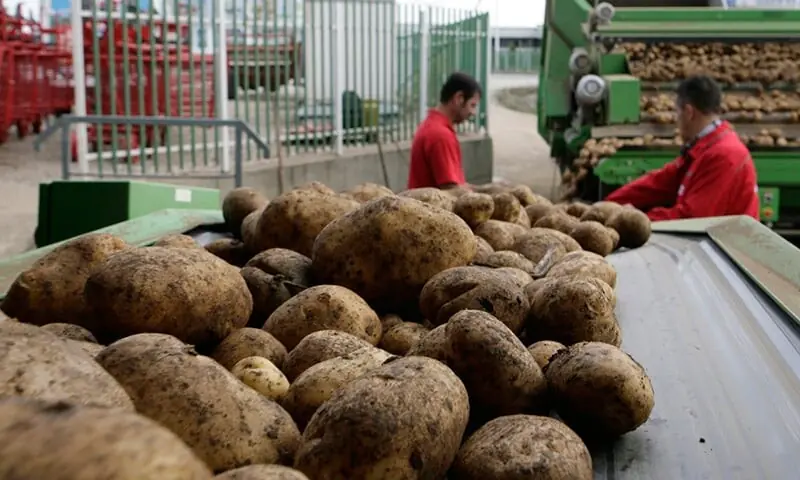
Potato prices in Pakistan have plunged sharply after the suspension of trade with Afghanistan halted exports, creating an oversupply in local markets. Traders reported that the continued closure of border crossings at Torkham and Chaman since October has caused domestic prices to fall by more than 70 percent. This decline has placed severe financial pressure on farmers who rely heavily on Afghan demand.
The border shutdown followed intense clashes between Pakistan and Afghanistan over rising militant attacks, which further disrupted long-standing trade routes. As the suspension stretches on, it is hurting Pakistan’s economy more, especially since the country enjoyed a trade surplus of over $750 million with Afghanistan last fiscal year. Consequently, the sudden loss of a key buyer has destabilised the country’s largest vegetable market.
Read more : Pakistan potato market crashes amid Afghan border closure
Farmers expressed concern that potato prices have dropped as much as 77 percent, threatening both the old stock and the new crop entering the market. The Pakistan Kissan Ittihad president explained that a 60-kilogram potato bag once sold for Rs2,600 but now fails to recover even the storage cost of Rs600. He urged the government to resolve the border dispute immediately, warning that farmers are suffering unsustainable losses.
Additionally, Afghanistan serves not only as a major buyer but also as a vital transit route for Pakistan’s vegetable exports to Central Asia and Russia. With that corridor blocked, large volumes of surplus potatoes are stuck in the country despite Pakistan producing more than it consumes. Recent official data shows Pakistan harvested 9.4 million tons of potatoes last year, marking a notable 12 percent increase from the previous season.
Meanwhile, traders are worried about the rapid drop in wholesale prices as the new crop arrives while old stocks remain unsold. One Islamabad trader noted that the wholesale price of a 5-kilogram bag has fallen by nearly 60 percent to just Rs80. He added that without quick action, market saturation could worsen, leaving farmers unable to recover production costs.