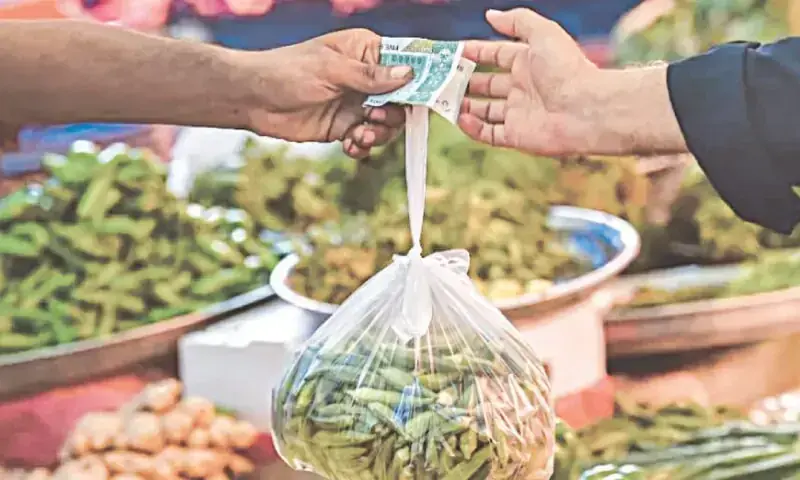
ISLAMABAD – Short-term inflation, measured by the Sensitive Price Index (SPI), rose 4.32 per cent year-on-year in the week ending November 27, driven by higher prices of edible oil, perishable food items, and energy products, official data showed on Friday. This marks the 17th consecutive week of upward movement in SPI-based inflation.
Read More: Rising prices push Pakistan’s weekly inflation up 0.73%
The increase, compared to the preceding week, was 0.73 per cent. Prices of essential perishable commodities, including tomatoes, onions, potatoes, and wheat flour, contributed significantly to the spike. Rising costs of LPG cylinders and electricity also played a role in pushing inflation higher.
Border closures with Afghanistan disrupted the supply of key vegetables, resulting in higher retail prices. Additionally, sustained increases in sugar and meat prices reversed the slight downward trend observed in recent weeks. Meat prices, in particular, have been steadily rising over the past several weeks.
The SPI-based inflation has recorded an upward trend for the 17th consecutive week.https://t.co/zWZhJVf6pA
— Dawn Business (@dawn_business) November 29, 2025
SPI data shows that, during the week under review, prices of 14 items increased, 12 decreased, and 25 remained stable compared to the previous week. Analysts noted that while some price fluctuations are seasonal, the combined effect of energy and food inflation is putting pressure on household budgets.
The SPI trend highlights continued volatility in short-term inflation. Earlier in 2023, SPI inflation had peaked at a record 48.35 per cent year-on-year in early May, after exceeding 40 per cent for an 11-week period. By late August, it had fallen to 24.4 per cent, only to surge again past 40 per cent during the week ending November 16.
Read More: Weekly inflation rises as tomato prices soar 57%
Economists warn that continued disruptions in supply chains and energy markets could sustain higher short-term inflation in the coming weeks.