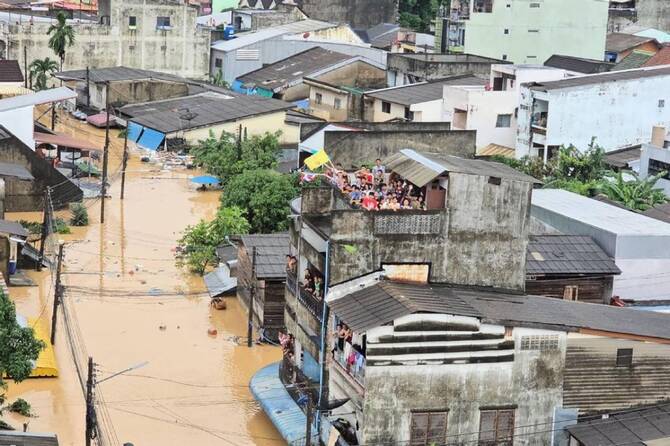
Severe floods triggered by a week of relentless rain have killed 33 people in Thailand and two in Malaysia, while millions continue to face dangerous conditions. Moreover, rescuers prepared drones to airdrop food as receding waters opened narrow windows for relief operations. Thousands remain in evacuation centres after being trapped for days by water levels reaching up to 2 metres.
As floodwaters slowly pull back, Thailand and Malaysia are stepping up rescue and aid deliveries to isolated communities. Additionally, authorities revealed that nearly 3 million people across nine Thai provinces have been affected, with Hat Yai suffering the worst damage. Disaster teams evacuated 3,000 residents from the city, including critically ill patients airlifted from a partially flooded hospital.
Read more : Scam centres in Southeast Asia on the rise despite crackdowns
Thailand’s military has increased its response by deploying helicopters, planes, and truck convoys to deliver food, boats, and medical supplies. Furthermore, the country’s only aircraft carrier, Chakri Naruebet, is supporting rescue missions by providing air assistance and essential goods. Rescue teams are also relying on satellite internet due to telecom outages, making drone deliveries crucial for reaching cut-off areas.
Meanwhile, Indonesia is battling devastation caused by a powerful tropical cyclone in North Sumatra that triggered landslides and flash floods, killing at least 28 people with 10 still missing. Rescue operations are hindered by destroyed bridges, power outages, and fast-moving waters carrying heavy debris. Meteorologists say these extreme weather events may be linked to interacting storm systems and rising sea temperatures.
Read more : ‘Call for stronger Pakistan-ASEAN economic cooperation’
In Malaysia, floods across seven states prompted the evacuation of more than 34,000 people, while about 500 nationals remain stranded in Thailand’s Hat Yai. Rising waters trapped residents in rural areas, forcing authorities to use container trucks for evacuation due to impassable roads. Survivors described climbing onto rooftops and waiting in strong currents as rescue boats fought through dangerous conditions.