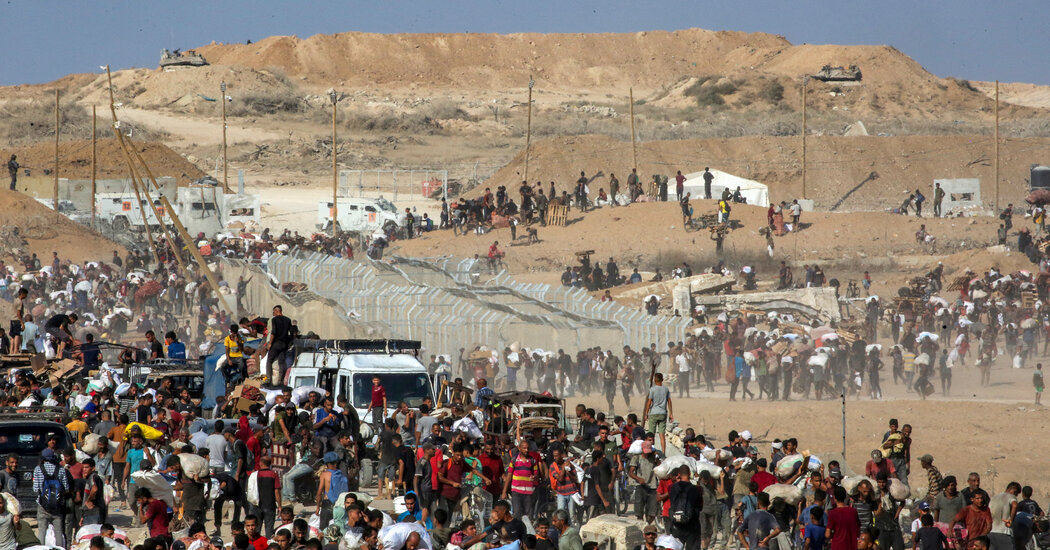
The Gaza Humanitarian Foundation (GHF), an aid distributor supported by the United States and Israel, announced on Monday that it is closing its operations following months of intense criticism and deadly incidents near its distribution hubs. The organisation had suspended activities after the October 10 ceasefire and faced growing pressure over its role in Gaza’s fragile humanitarian system.
Moreover, the GHF began providing food assistance in late May, placing most of its aid sites in southern Gaza, far from densely populated areas. This forced Palestinians to walk long distances to reach the hubs, and hundreds were shot dead near the sites during early distribution days, with the Israeli military acknowledging it opened fire at civilians approaching soldiers.
Read more : Slow progress as Gaza truce faces new strains
GHF Executive Director John Acree said that a US-led multinational coordination centre managing President Donald Trump’s Gaza peace plan would now expand the aid model GHF created. He explained that the foundation was always meant to be temporary and that it had “succeeded in its mission” by demonstrating alternative ways to deliver humanitarian support in the enclave.
Additionally, GHF began operating nearly three months after Israel imposed a full blockade on goods entering Gaza, a period that later saw famine declared in parts of the territory. European officials criticised the organisation for bypassing the United Nations and established humanitarian agencies, calling it unreliable and poorly coordinated.
Read more : Gaza families struggle to recover loved ones buried under rubble
The foundation’s future became even more uncertain after Trump’s 20-point peace plan barred any aid groups linked to Hamas or Israel from distributing relief, effectively eliminating GHF’s mandate. While US officials thanked the group for its work, Hamas welcomed its closure and demanded accountability for what it described as “crimes” against Palestinians during aid deliveries.
Furthermore, GHF reported delivering 187 million meals over nearly six months, averaging less than one meal per day per resident of Gaza’s two million people. Despite repeated attempts to involve UN agencies in its operations, the organisation struggled to gain legitimacy and announced its shutdown after failing to secure long-term support or approval.