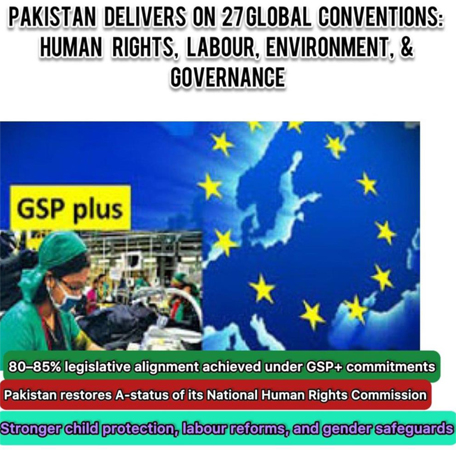
 Pakistan’s indispensable Generalized Scheme of Preferences Plus (GSP+) status is under intense scrutiny. GSP+ is a special incentive for developing countries to pursue sustainable development and good governance in exchange for zero import duties on approximately two-thirds of their export tariff lines.
For Pakistan, the EU remains its largest export destination, with this status allowing duty-free access for around €6 billion worth of goods annually, mainly apparel, home textiles, and surgical instruments.
This trade incentive is conditional upon the effective implementation of 27 core international conventions on human rights, labor standards, environmental protection, and good governance. Economically, GSP+ has been a clear success, contributing to a cumulative export gain of €3.6 billion since 2014 and protecting millions of jobs. Recently, export earnings from the EU rose to $3.17 billion in July-October, underscoring the scheme’s critical importance to the national economy.
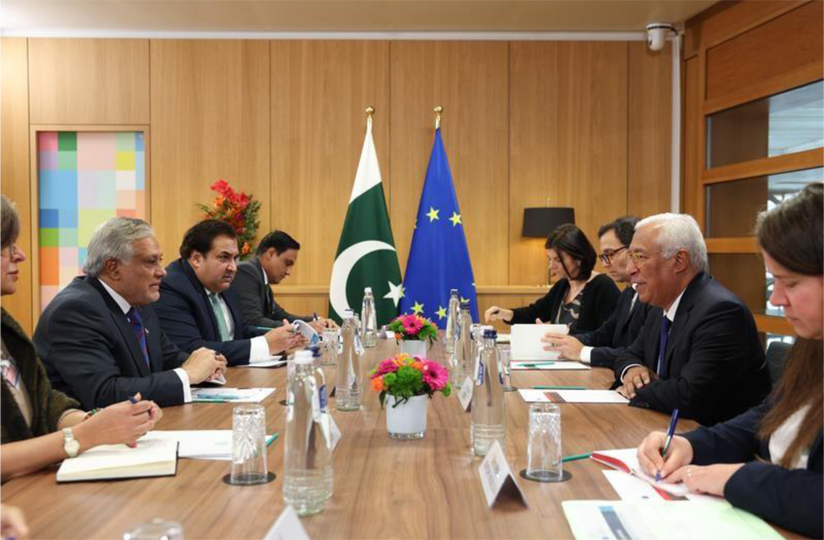
The review mission follows a period of sustained highlevel engagement. Deputy Prime Minister and Foreign Minister Ishaq Dar met with EU Council President Antonio Costa to discuss the scheme ahead of the monitoring visit.
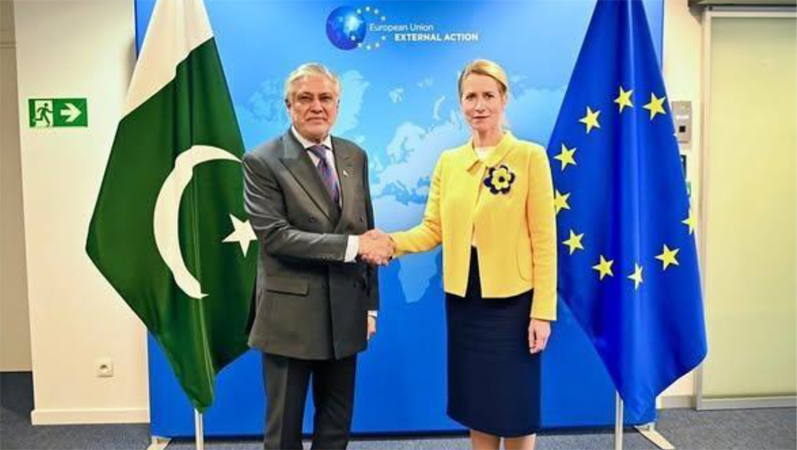
Further building on this, the 7th Strategic Dialogue was convened, co-chaired by FM Dar and EU High Representative Kaja Kallas, where both sides reaffirmed their commitment to a forward-looking partnership, anchoring the GSP+ arrangement as a key driver for sustainable growth and job creation.
The EU’s monitoring mechanism is rigorous, requiring Pakistan to accept regular monitoring and comply with biennial reporting. The EU’s focus areas for Pakistan’s compliance are clear, prioritizing following key areas which include:
n Enforced disappearances and torture prevention
n Death penalty
n Freedom of expression and belief and minority rights
n Violence against women and transgender persons
n Labor inspectorates, child/forced labor, and freedom of association
n Combating climate change and the fight against corruption
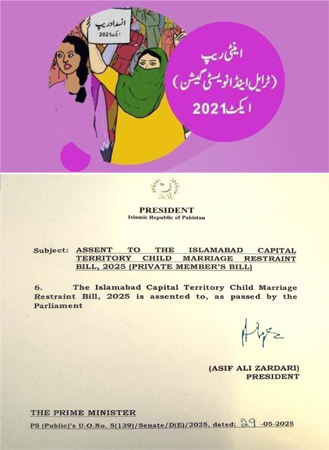
Pakistan has responded to the GSP+ conditionality by building a robust national compliance architecture, achieving an estimated 80-85% legal alignment. This engagement has resulted in significant legislative progress since 2018, which includes key acts like the Anti-Rape (Investigation and Trial) Act (2021), the Domestic Violence Acts (2020-22), the Transgender Persons (Protection of Rights) Act (2018), and the Zainab Alert Act (2020). The Islamabad Capital Territory Child Marriage Restraint Act 2025 also raised the legal marriage age to 18 in the capital.
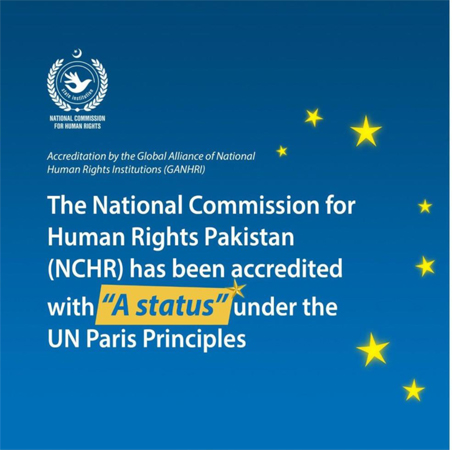
Moreover, the National Commission for Human Rights (NCHR) regained its highest “A” status accreditation in May 2025, meeting international independence benchmarks. Efforts on transparency are also evident, with over 8,700 cases of enforced disappearances traced or resolved by the Commission of Inquiry.

Despite acknowledging “continuous progress” in areas like women’s rights and environmental conservation as noted in the Fourth GSP Report, the debate is often complicated by geopolitical factors. The Pakistani government maintains that the human rights narrative is increasingly politicized and used as a strategic tool.
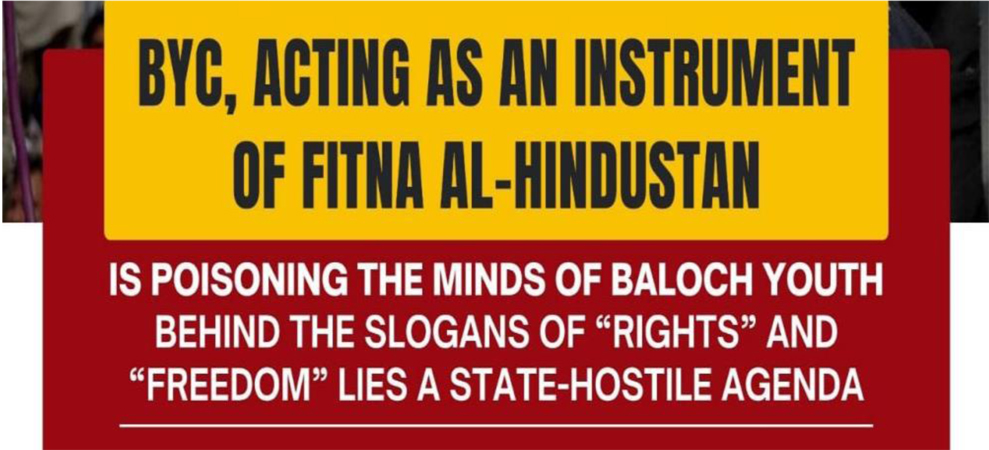
A significant concern raised by Pakistan is the alleged use of the rights discourse by sub-kinetic proxies to mask anarchist and separatist agendas, particularly those connected to banned ethnic terrorist groups. The government stresses that issues related to terrorism and extremism should not be viewed through a human rights lens, as these groups manipulate the discourse to constrain the state’s legitimate counter-terrorism responses.
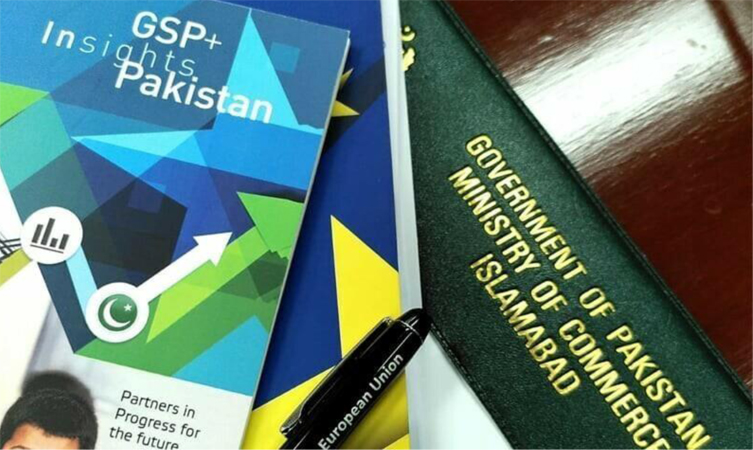
The GSP+ is contingent on continuous and effective implementation. With €1.5-2 billion in annual dutyfree exports and millions of jobs at stake, the pressure on the EU mission is significant. The choice for European policymakers is not about rewarding slow progress, but about recognizing difficult progress achieved under severe fiscal, security, and climate constraints. A decision to maintain Pakistan’s GSP+ status would be a validation of the scheme’s core logic: that trade preferences can successfully anchor and incentivize sustained institutional reform in developing countries.