
Tens of millions of people across Southeast Asia face rising health risks as more than 2,400 mines release toxic chemicals such as mercury and cyanide into major rivers, a new study finds. The Mekong, Salween, and Irrawaddy are among the most affected waterways.
In northern Thailand, local farmer Tip Kamlue can no longer use the Kok River for irrigation due to contamination warnings. She has been forced to rely on groundwater for growing crops like pumpkins, garlic, and corn, dramatically affecting her livelihood.
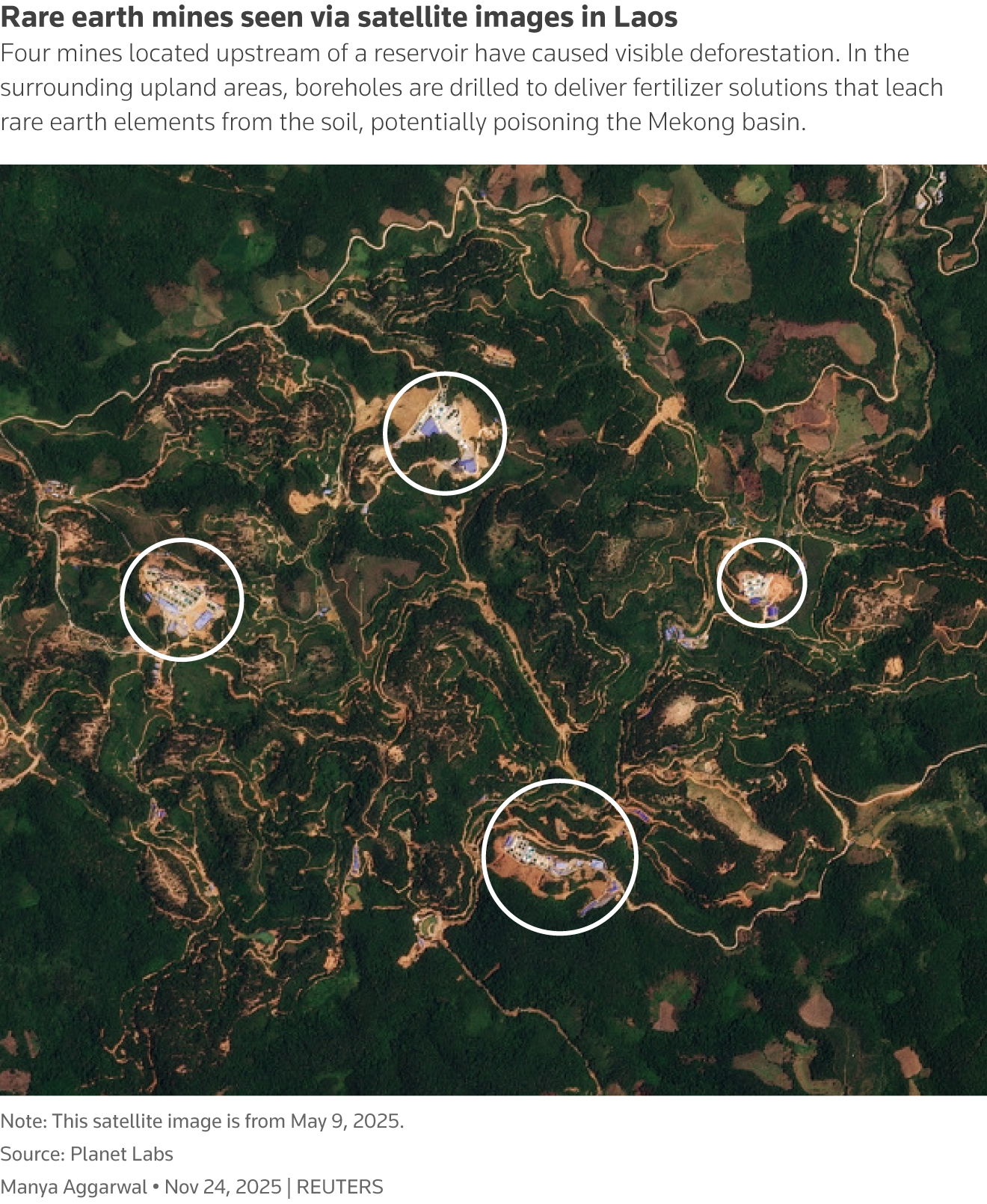
The Stimson Center research is the first comprehensive analysis of potentially polluting mines in mainland Southeast Asia. Researchers identified 366 alluvial sites, 359 heap leach sites, and 77 rare earth mines draining into the Mekong basin using satellite imagery and on-site assessments.
Read more : Scam centres in Southeast Asia on the rise despite crackdowns
Many of the heap leach and alluvial sites extract gold, nickel, copper, and manganese. Rare earth mines, often backed by Chinese investors, release chemicals including ammonium sulfate, sodium cyanide, and mercury, threatening millions downstream and the global supply chain for agricultural products.
Contamination is particularly severe in areas near Myanmar’s rare earth mines, where arsenic and heavy rare earths such as dysprosium and terbium have been detected. Researchers warn that unless mining is controlled, pollution levels could rise sharply, affecting food safety and public health.
In response, Thailand has formed three task forces to monitor river health, coordinate with neighboring countries, and support communities along affected rivers. Farmers like Tip continue to appeal for urgent action to restore rivers and protect livelihoods.