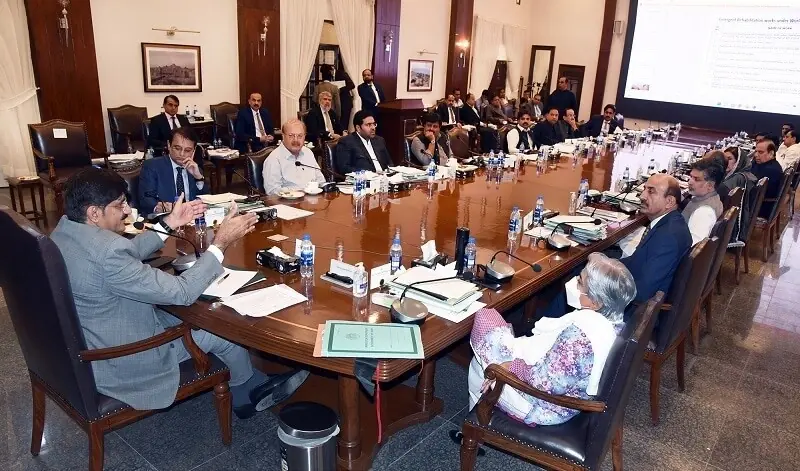
KARACHI: The Sindh government has decided to abolish 14 Anti-Terrorism Courts (ATCs) across the province due to a declining caseload and improved law and order. These courts will now be re-designated as anti-narcotics courts to address the surge in drug-related offences. The decision was approved during a cabinet meeting chaired by Chief Minister Syed Murad Ali Shah.
Read More: SC expresses displeasure over narcotics control authorities
According to the home department’s proposal, 13 of Karachi’s 20 ATCs and one ATC in Hyderabad will be converted into special courts to expedite narcotics cases. New anti-narcotics courts will be established across all divisions, including Karachi, Hyderabad, Mirpurkhas, Shaheed Benazirabad, Sukkur and Larkana. The remaining ATCs will be reorganised to ensure swift disposal of pending terrorism cases.
The cabinet also approved the establishment of the Sindh Centre for Excellence on Countering Violent Extremism, aimed at preventing terrorism, militancy and subversive activities under the recently enacted provincial law. Additional decisions included creating a community health company and launching the Sindh government cloud to improve governance and service delivery.
A major fiscal approval came in the form of a $15 million grant for the new 12-storey Emergency Tower at Jinnah Postgraduate Medical Centre (JPMC). The Patients’ Aid Foundation and donor consortium have pledged $20 million for its construction, while the provincial government will provide funds for equipment and utilities in two instalments.
Read More: Sindh to set up centre of excellence to counter violent extremism
The cabinet also reviewed multiple land and infrastructure matters, including approvals for the Sindh IT Tower at the Habib Insurance/HBL heritage building and the allotment of residential plots to members of the Karachi Press Club in Hawksbay, New Malir and Taiser Town.